How to Seal Rodent Entry Points Right
Table of Contents
If you can fit a pencil into a gap, a mouse may already see it as an open door. That is why learning how to seal rodent entry points matters so much in Calgary homes and commercial buildings, especially once temperatures drop and rodents start looking for heat, food, and shelter.
Understanding How to Seal Rodent Entry Points Right is vital for preventing future infestations.
Sealing entry points is one of the most effective ways to stop repeat infestations. It also happens to be one of the most misunderstood. Many property owners spot a hole, stuff it with whatever is nearby, and assume the problem is handled. A week later, the scratching is back.
Following the steps on How to Seal Rodent Entry Points Right can save you time and money in the long run.
Do not overlook How to Seal Rodent Entry Points Right when preparing your home for winter.
Learning How to Seal Rodent Entry Points Right is crucial for effective pest control.
For effective pest control, remember How to Seal Rodent Entry Points Right is critical.
The issue is not effort. It is method. Rodent-proofing only works when you identify the full access route, choose materials rodents cannot chew through, and seal the area in a way that holds up through weather, moisture, and daily building movement.
Before taking action, consider How to Seal Rodent Entry Points Right to address the root of the problem.
Why rodents keep getting in
Mice and rats are persistent for a reason. Buildings offer stable warmth, hidden nesting areas, and reliable food sources. In residential properties, that often means kitchens, basements, garages, utility rooms, and attic spaces. In commercial settings, the risk expands to storage areas, loading zones, dumpsters, ceiling voids, and mechanical rooms.
Most entry points are not dramatic holes in plain sight. They are small gaps around utility lines, worn weather stripping, cracks in foundations, open soffits, damaged vents, and spaces under doors. Older buildings are especially vulnerable, but newer construction is not immune. Shrinkage, settling, and rushed exterior finishing can leave enough space for rodents to exploit.
28. How to Seal Rodent Entry Points Right for long-term success?
Combine exclusion strategies with routine monitoring.
25. What maintenance is required after How to Seal Rodent Entry Points Right?
Continue regular inspections to ensure seals remain intact.
Remember, knowing How to Seal Rodent Entry Points Right can prevent costly repairs.
That is why exclusion work has to start with inspection, not sealant.
23. How to Seal Rodent Entry Points Right with sustainable practices?
Use eco-friendly materials that are also rodent-proof.
29. How to Seal Rodent Entry Points Right when dealing with a serious infestation?
Seek professional help to address the issue comprehensively.
How to seal rodent entry points without missing the real problem
Start outside. Rodents almost always enter from the exterior first, then move through wall voids, crawlspaces, and ceilings. Walk the perimeter slowly and check at ground level and above eye level. Pay close attention to where pipes, cables, and conduits penetrate the structure. Inspect foundation cracks, door thresholds, siding transitions, rooflines, and vent openings.
Inside, look for signs that point back to entry activity. Droppings near walls, greasy rub marks, gnawing, nesting material, and scratching sounds near utility chases all help narrow down where rodents are traveling. In commercial buildings, review service rooms, food prep areas, receiving doors, and storage spaces where activity may be easier to miss during the day.
One important caution: do not seal active entry points until you understand whether rodents are still inside. If you close the structure while animals remain in wall voids or attics, you can create a worse problem. They may chew new exits, spread deeper into the building, or die in inaccessible spaces. In many cases, trapping and removal should come first, followed by exclusion.
The best materials for rodent-proof sealing
Not every patch material is rodent-proof. Caulk alone is rarely enough. Expanding foam alone is also a common failure point unless it is paired with a chew-resistant barrier.
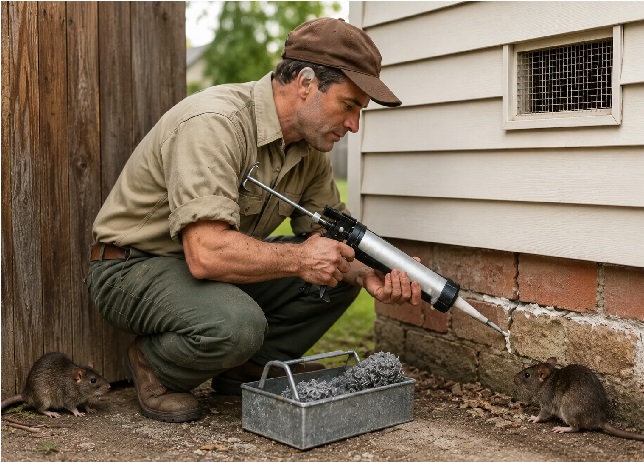
The most reliable materials include steel wool combined with sealant for very small gaps, copper mesh for openings around pipes and utility penetrations, galvanized hardware cloth for larger holes, sheet metal for high-pressure areas, and metal door sweeps for gaps under exterior doors. Cement-based patching can work well on masonry and foundation defects, while heavy-duty flashing is useful where siding or trim leaves exposed edges.
Material choice depends on the location. A pipe penetration on an exterior wall needs a different repair than a broken garage door seal or a roof vent gap. Moisture exposure matters. So does freeze-thaw movement, which is a real concern in Alberta. A quick patch that looks fine in mild weather may fail fast once temperatures swing.
Areas that deserve extra attention
Utility penetrations
Plumbing, gas, electrical, and HVAC lines are some of the most common rodent access points. Install chew-resistant mesh into the gap first, then seal around it with an exterior-grade product suited to the surface. The goal is to block both movement and chewing.
Door gaps and thresholds
How to Seal Rodent Entry Points Right
A surprising number of infestations start under side doors, garage man doors, and commercial rear access doors. If light shows through at the bottom or corners, rodents may be able to get in. Replace worn sweeps, adjust the threshold, and make sure the door closes tightly against the frame.
24. How do I know if my sealant is effective for How to Seal Rodent Entry Points Right?
Regular checks and monitoring can help assess effectiveness.
Vents and exhaust openings
Dryer vents, roof vents, and crawlspace vents need proper covers that still allow airflow. Screens should be metal, securely fastened, and fine enough to block entry without becoming a lint or debris trap. Avoid makeshift coverings that interfere with ventilation.
31. How often should I review my approach to How to Seal Rodent Entry Points Right?
Seasonal reviews can help maintain effectiveness.
Foundation and siding gaps
Cracks in foundation walls, missing mortar, and gaps where siding meets concrete are all common weak spots. These repairs need durable materials matched to the building surface. If the opening is part of a bigger structural issue, sealing alone is not the fix.
Roofline, soffits, and eaves
By following How to Seal Rodent Entry Points Right, you create a more secure environment.
27. What role does weather play in How to Seal Rodent Entry Points Right?
Weather can impact the integrity of your seals, so choose durable materials.
Rats and some mice species can access upper parts of a structure more easily than many owners expect. Loose soffits, open fascia edges, and damaged roof returns can all create hidden access. These areas are often missed during quick inspections.
26. How to Seal Rodent Entry Points Right effectively?
Combine sealing with sanitation and food source management.
20. Why is it vital to understand How to Seal Rodent Entry Points Right?
Knowledge can lead to effective prevention and control strategies.
Common mistakes that make exclusion fail
The first mistake is sealing only the hole you noticed. Rodents usually have more than one option. If one gap closes, they test the next weak point.
Proper knowledge of How to Seal Rodent Entry Points Right is essential for all property owners.
The second is using soft materials by themselves. Plastic mesh, basic foam, and thin rubber are not long-term barriers. They may slow rodents down, but they rarely stop them.
15. Why is seasonal monitoring important for How to Seal Rodent Entry Points Right?
Rodent activity can fluctuate with seasons, necessitating regular checks.
The third is ignoring sanitation and attractants. Exclusion is critical, but if food waste, bird seed, pet food, or cluttered storage remains accessible, pressure on the building stays high. Rodent control works best when sealing, trapping, cleanup, and habitat reduction happen together.
16. What is the first step in How to Seal Rodent Entry Points Right?
Inspect the exterior of the building for vulnerabilities.
21. How to Seal Rodent Entry Points Right before winter?
Check all entry points and ensure they are sealed properly.
17. How to Seal Rodent Entry Points Right during winter?
Ensure all gaps are sealed before the cold months to prevent entry.
The fourth is overlooking seasonal movement. Entry points that seem inactive in summer can become high-traffic routes in fall and winter. Calgary properties often see rodent pressure increase as outdoor shelter disappears and temperatures drop.
30. What tools are essential for How to Seal Rodent Entry Points Right?
Use high-quality sealants, tools for inspection, and monitoring equipment.
22. Is it possible to seal entry points if rodents are present?
Do not seal until rodents are removed to prevent trapping.
When DIY works and when it does not
Some sealing jobs are manageable for a careful homeowner or site manager. Replacing a door sweep, screening a basic vent opening, or sealing a visible pipe gap with the right materials can be straightforward.
But there are limits. Multi-unit buildings, restaurants, warehouses, and older homes often have hidden travel routes that are difficult to map without experience. Roofline access, crawlspace defects, interior wall void activity, and recurring infestations usually require a more thorough approach. If droppings continue after sealing, or if you hear activity in multiple parts of the building, the issue is bigger than one visible hole.
That is where a professional inspection saves time. A trained technician looks at the structure the way a rodent uses it, which is very different from a standard maintenance walk-through. Pest Pro Exterminator handles this with inspection, targeted control, and exclusion planning built around long-term prevention rather than temporary fixes.
How to keep sealed entry points from reopening
Exclusion is not one-and-done. Buildings move. Weather wears materials down. Service work can reopen protected gaps. Good prevention means checking previous repair points during seasonal maintenance.
19. How often should I revisit How to Seal Rodent Entry Points Right?
Regular inspections can prevent future issues.
11. What steps should I follow on How to Seal Rodent Entry Points Right?
Follow a thorough inspection, choose appropriate materials, and seal each gap effectively.
For homes, inspect the exterior at least twice a year and after major weather events. For commercial properties, especially food service, apartments, and industrial sites, routine monitoring is even more important. A missing sweep or damaged vent cover can turn into a bigger rodent issue fast.
18. Can I use any sealant for How to Seal Rodent Entry Points Right?
Choose rodent-proof materials that withstand chewing and weather.
13. Can I really prevent rodents by following How to Seal Rodent Entry Points Right?
Yes, effective exclusion is key to long-term rodent control.
It also helps to reduce pressure around the structure. Keep vegetation trimmed back, store materials off the ground, manage garbage tightly, and limit food sources near entry zones. If the outside environment stays attractive to rodents, your building remains a target even after repairs.
How to seal rodent entry points the smart way
The smart approach is not just to close holes. It is to understand where rodents are entering, whether they are already established inside, and which materials will actually hold up in that part of the structure. That may mean a simple repair, or it may mean combining trapping, sanitation changes, and exterior exclusion work in stages.
14. What can I do today to start How to Seal Rodent Entry Points Right?
Begin with a thorough inspection of your property.
If you want lasting results, think like this: every gap has a reason it opened, and every rodent problem has a reason it keeps coming back. Solve both, and the repairs are far more likely to last.
A sealed building is not just cleaner and quieter. It is easier to protect, easier to maintain, and much less likely to turn a small warning sign into a full infestation.
Frequently Asked Questions (FAQ)
12. How does learning How to Seal Rodent Entry Points Right benefit me?
It helps you maintain a rodent-free environment and reduces the risk of damage.
Make sure to learn How to Seal Rodent Entry Points Right to avoid potential infestations.
1. Why is sealing rodent entry points important?
Sealing rodent entry points helps prevent mice and rats from entering your home, reducing the risk of contamination, property damage, and repeat infestations. Rodent exclusion is one of the most effective long-term prevention strategies.
2. What materials are best for sealing rodent holes?
Common materials include steel wool, copper mesh, hardware cloth, cement patch, and high-quality exterior sealant. These materials help block rodents from chewing or squeezing through gaps.
3. How small of an opening can a mouse fit through?
A mouse can fit through an opening as small as 6 mm, about the size of a pencil. Rats can enter through slightly larger gaps, making small cracks and openings a serious concern.
4. Where are the most common rodent entry points in a home?
Common access points include foundation cracks, garage door gaps, utility line penetrations, roof vents, soffits, damaged siding, crawlspaces, and door sweeps.
5. Can rodents chew through sealant or foam?
Yes. Standard foam alone is not enough. Rodents can chew through weak materials, which is why steel mesh or hardware cloth should be used as reinforcement.
6. Should I seal rodent holes if I still have active mice inside?
No. Sealing active entry points before removing rodents can trap them inside walls or attics, creating odor, sanitation, and secondary pest issues. Removal should come first.
7. How often should I inspect my home for rodent entry points?
A full inspection should be done at least twice a year, especially in spring and fall when rodent pressure increases.
8. Can I seal rodent entry points myself?
Small gaps can be handled by homeowners, but larger infestations or hidden access points usually require professional inspection and exclusion work.
9. What are signs rodents are using an entry point?
Look for droppings, grease marks, gnaw marks, shredded insulation, nesting materials, and scratching noises near walls or ceilings.
10. Does sealing entry points completely solve a rodent problem?
Sealing is critical, but the best rodent control combines exclusion, trapping, sanitation, and monitoring for full long-term protection.