The Biology of Thatch Ants: Life Cycle, Colony Structure and Nesting Habits
Table of Contents
What Are Thatch Ants?
Thatch ants are members of the genus Formica, with the western thatching ant (Formica obscuripes) being a well-known thatch-building species found in parts of Alberta and western North America. They are primarily outdoor ants and are recognized for constructing distinctive above-ground nests made from grass, pine needles, leaves, twigs, and other plant materials.
Unlike ants that commonly establish colonies inside buildings, thatch ants are generally associated with lawns, grasslands, forest edges, parks, fields, and natural landscapes. Their large thatched nests can sometimes become highly visible and may remain active in the same general location for many years.
Thatch Ant Identification
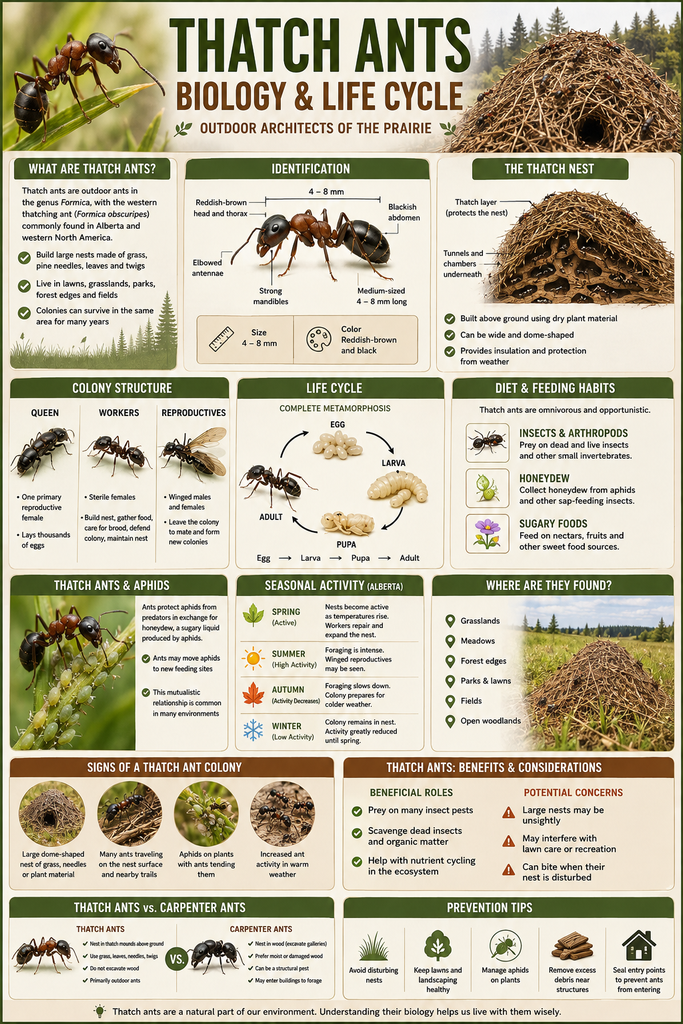
Thatch ants are medium-sized ants, with workers generally ranging from approximately 4 to 8 mm, although size can vary among individuals and related Formica species. Their bodies are commonly reddish-brown and black, giving them a distinctive two-tone appearance.
Workers have strong mandibles and are capable of moving rapidly when their nest is disturbed. Large numbers of workers may emerge from the nest when people, animals, or equipment approach the colony.
The Famous Thatch Nest
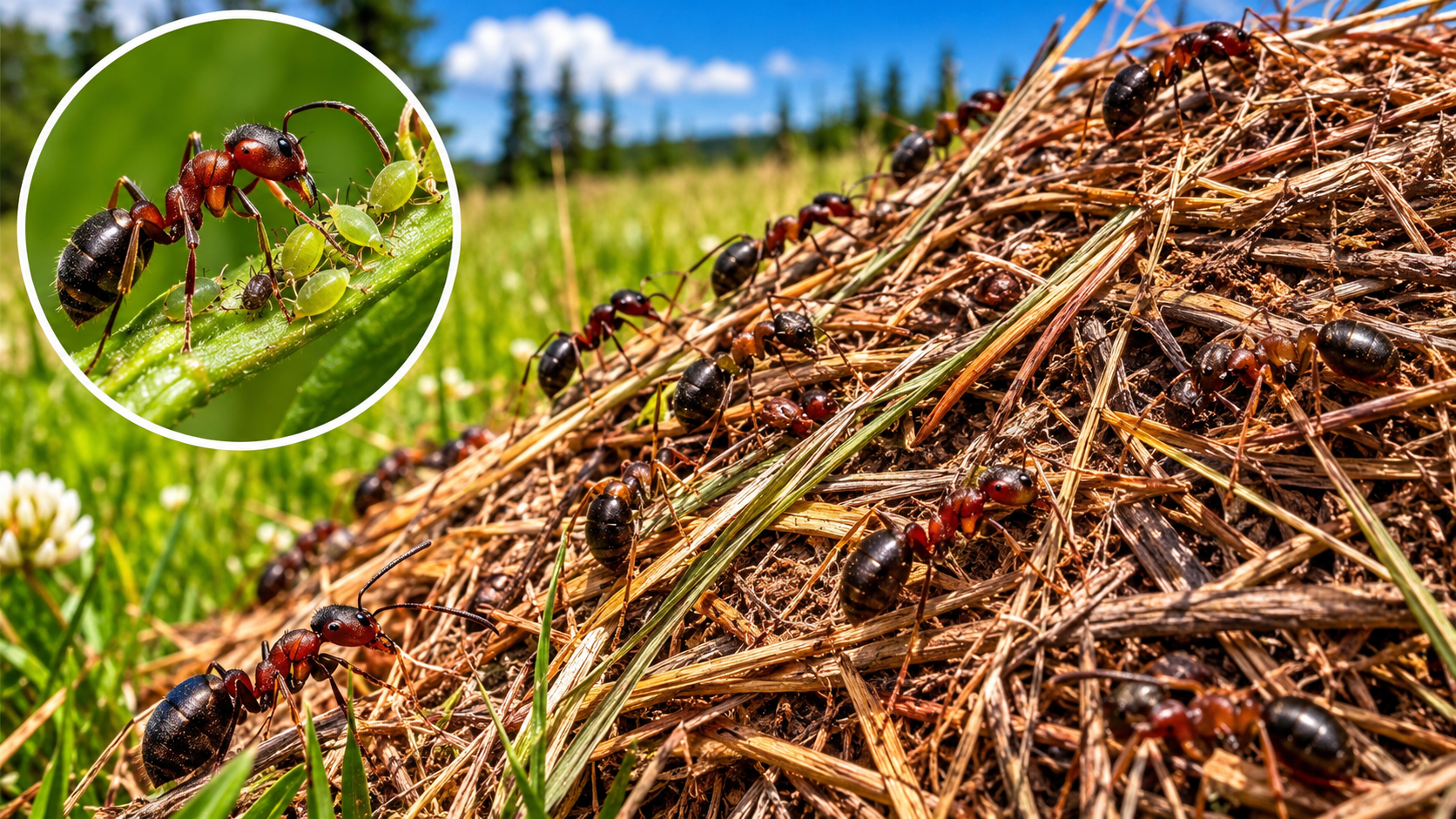
One of the most remarkable characteristics of thatch ants is their ability to construct large nests above the ground. Workers collect dry grasses, pine needles, leaves, stems, and other plant debris and carefully arrange these materials into a mound.
The thatch layer helps protect the colony from changing environmental conditions. Beneath the visible mound are tunnels and chambers where the ants maintain brood and carry out colony activities.
A mature nest can become quite large compared with the individual ants that construct it. The impressive mound is essentially a carefully maintained structure built from thousands of tiny pieces of plant material.
Colony Structure
A thatch ant colony contains different forms of ants, including workers, queens, and reproductive individuals. Workers perform most of the activities necessary for colony survival, including nest construction, foraging, brood care, nest maintenance, and defense.
The queen’s primary role is reproduction. Workers care for the eggs and developing young, helping the colony maintain its population.
Some Formica colonies can become very large, and established colonies may contain substantial numbers of workers. Colony organization allows the ants to divide tasks efficiently and respond quickly to environmental changes.
What Do Thatch Ants Eat?
Thatch ants are omnivorous and opportunistic feeders. Their diet can include insects, other small arthropods, honeydew produced by aphids, and other sugary food sources.
A significant part of their foraging behavior involves collecting honeydew from aphids and other sap-feeding insects. The ants may protect or tend aphids in exchange for this carbohydrate-rich food source.
They also prey on insects and other small arthropods, providing an important ecological role as predators and scavengers.
Thatch Ants and Aphids
The relationship between ants and aphids is an interesting example of mutualistic behavior. Aphids feed on plant sap and produce a sugary liquid called honeydew. Thatch ants collect this honeydew as a food source.
In return, ants may protect aphids from predators and sometimes move them to suitable feeding locations. This relationship can influence where thatch ant colonies forage and why ant activity may sometimes be concentrated around vegetation containing aphids.
Life Cycle of Thatch Ants
Like other ants, thatch ants undergo complete metamorphosis, developing through four stages:
Egg → Larva → Pupa → Adult
The queen produces eggs that hatch into larvae. Worker ants care for and feed the larvae until they develop into pupae. The pupae eventually emerge as adult ants.
The colony’s workers then perform different tasks depending on the needs of the colony, including caring for brood, maintaining the nest, defending the colony, and collecting food.
Seasonal Activity in Alberta
Thatch ants are strongly influenced by Alberta’s seasonal climate. Their colonies are generally active during the warmer months and become much less active as temperatures fall.
During spring, colonies become active as temperatures rise. Workers begin repairing and expanding the nest and resume regular foraging.
Summer is generally a period of substantial activity, with workers frequently traveling between the nest and nearby food sources. Winged reproductive ants may also become noticeable during the warmer season.
As autumn approaches, activity gradually decreases. During winter, the colony remains protected within the nest and enters a period of reduced activity until warmer conditions return.
Where Are Thatch Ants Found in Alberta?
Thatch ants are primarily associated with outdoor environments. They may be encountered in grasslands, meadows, open forests, forest edges, parks, yards, fields, and other areas containing suitable vegetation and nesting conditions.
Their large thatched nests are often easier to notice than the ants themselves. A mound constructed from dry vegetation can stand out in grassy or natural areas.
Are Thatch Ants a Pest?
Thatch ants are generally considered outdoor ants rather than structural pests. They play useful ecological roles by preying on insects, scavenging, moving organic material, and interacting with aphids and other insects.
However, large colonies near buildings, walkways, recreational areas, or landscaped properties can sometimes become a nuisance. Workers may enter nearby structures while searching for food, although this does not necessarily mean the colony is nesting inside the building.
Understanding their biology is important before attempting control because eliminating individual foraging ants does not necessarily address the outdoor colony.
Thatch Ants vs. Carpenter Ants
Thatch ants and carpenter ants can sometimes be confused because both can be relatively large and may have reddish and black coloration. However, their biology and nesting habits are very different.
Carpenter ants are associated with wood and may excavate galleries in damp or damaged wood for nesting. Thatch ants, on the other hand, construct prominent outdoor nests using plant materials such as grass, needles, leaves, and twigs.
Correct identification is therefore important when determining whether ants around a property represent a structural concern or a normal outdoor colony.
Frequently Asked Questions About Thatch Ants
Are thatch ants common in Alberta?
Thatch ants are found in parts of Alberta and are primarily associated with outdoor habitats such as grasslands, fields, parks, forest edges, and other natural areas.
Why are they called thatch ants?
They are called thatch ants because workers construct their nests using dry plant materials such as grass, needles, leaves, stems, and small pieces of vegetation.
How big do thatch ants get?
Workers are generally medium-sized ants, commonly around 4–8 mm, although size can vary between species and individuals.
What do thatch ants eat?
They feed on a variety of foods, including insects, small arthropods, honeydew from aphids, and other sugary or organic food sources.
Do thatch ants farm aphids?
Thatch ants can maintain relationships with aphids and other honeydew-producing insects. The ants collect honeydew as a food source and may protect aphids from predators.
Do thatch ants damage houses?
Thatch ants are primarily outdoor nesting ants and do not normally excavate structural wood like carpenter ants. However, colonies established close to buildings may become a nuisance.
Do thatch ants live inside homes?
They generally prefer outdoor nesting locations. Individual workers may occasionally enter buildings while searching for food, but finding a few ants indoors does not necessarily indicate an indoor colony.
Do thatch ants bite?
They can defend their colony with their mandibles and may bite when disturbed. Large colonies can become defensive when their nest is approached.
What happens to thatch ants during Alberta’s winter?
Their activity decreases substantially during cold weather. The colony remains protected within its nest until temperatures become favorable again in spring.
Are thatch ants beneficial?
Yes. They can play an important ecological role by preying on insects, scavenging organic material, and participating in relationships with honeydew-producing insects such as aphids.
How can I tell a thatch ant nest from a carpenter ant nest?
A thatch ant nest is typically a visible mound constructed from plant materials such as grass, needles, and leaves. Carpenter ants generally nest in wood and excavate smooth galleries inside the nesting material.
Conclusion
Thatch ants are fascinating outdoor ants that have developed an impressive nesting strategy. Their ability to construct large mounds from vegetation, organize complex colonies, collect honeydew, and prey on insects makes them an important part of Alberta’s ecosystems. Although their large nests can occasionally become a nuisance around homes and landscaped properties, they are fundamentally different from structural wood-nesting ants such as carpenter ants. Understanding their biology and nesting habits is the first step toward correctly identifying them and determining whether management is actually necessary.