Bald-Faced Hornets in Calgary, Alberta: Identification, Biology, Nests & Pest Control
Table of Contents
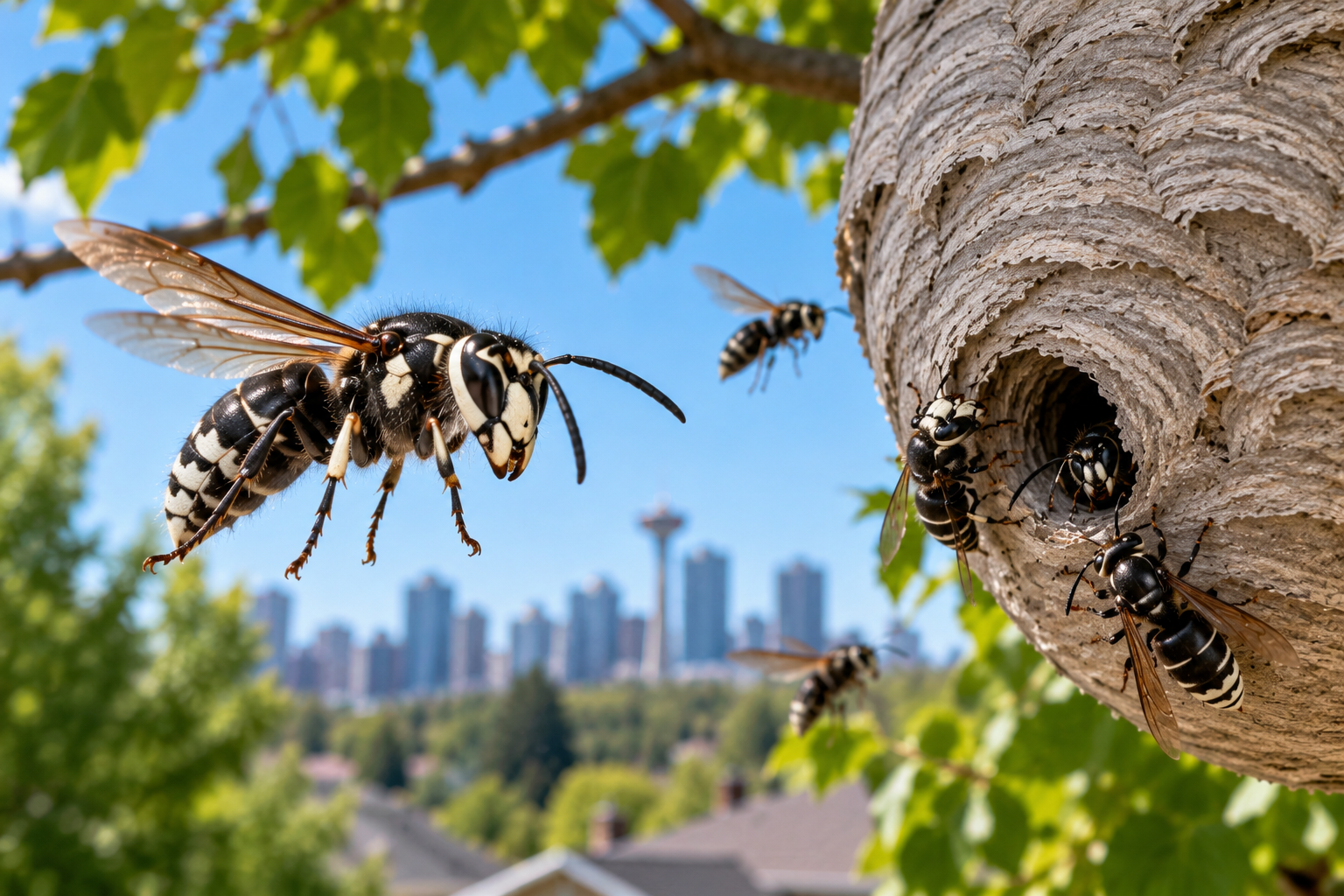
Bald-faced hornets are a distinctive type of social wasp that can be found in Calgary and other parts of Alberta. Despite their common name, bald-faced hornets are actually a species of yellowjacket, scientifically known as Dolichovespula maculata. They are recognized by their mostly black bodies, white or ivory markings, and large enclosed paper nests.
Bald-faced hornets can build nests in trees, shrubs, under roof overhangs, around structures, and other protected locations. When a nest is located close to a home, business, walkway, playground, or other high-traffic area, professional bald-faced hornet control in Calgary may be necessary.
What Are Bald-Faced Hornets?
The bald-faced hornet, Dolichovespula maculata, is a social wasp belonging to the family Vespidae. It is commonly called a hornet because of its relatively large size and distinctive appearance, but biologically it is classified within the yellowjacket group.
Unlike some yellowjackets that frequently nest underground or inside wall cavities, bald-faced hornets commonly construct large aerial paper nests. These nests are usually attached to trees, shrubs, buildings, or other elevated structures.
A mature colony can contain numerous workers that forage for food and defend the nest.
How to Identify a Bald-Faced Hornet
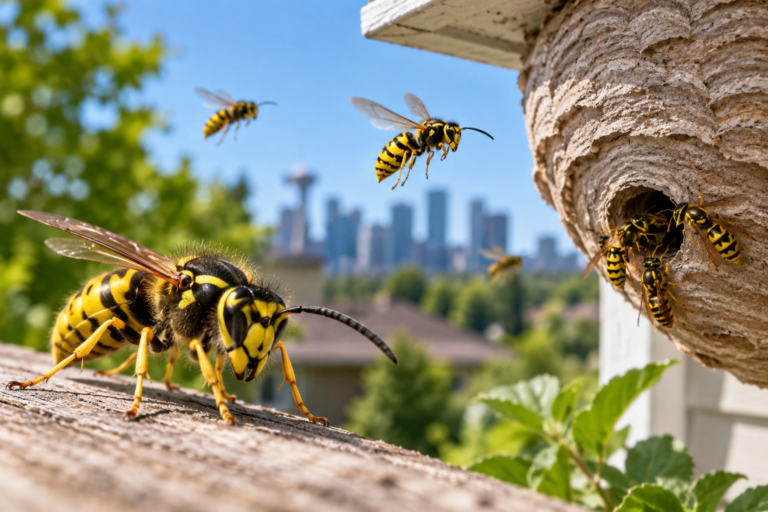
Bald-faced hornets are relatively easy to distinguish from many other wasps because of their striking black-and-white coloration.
Common Identification Features
- Predominantly black body
- White or ivory markings on the face
- White markings on the thorax
- White bands or markings toward the end of the abdomen
- Long wings
- Social colony behaviour
- Large enclosed paper nest
- Frequently nests above ground
The white facial markings are responsible for the common name “bald-faced” hornet.
Because several wasp species occur in Alberta, professional identification can be useful when determining the appropriate pest-management approach.
Bald-Faced Hornet Biology
Bald-faced hornets are social insects that live in colonies. Their colonies contain a reproductive queen and workers that perform different functions within the nest.
Workers are responsible for activities such as:
- Foraging for food
- Feeding developing larvae
- Maintaining the nest
- Expanding the nest structure
- Protecting the colony
- Searching for suitable food resources
The colony develops throughout the warmer months, and nest activity can become increasingly noticeable as the season progresses.
What Does a Bald-Faced Hornet Nest Look Like?
One of the easiest ways to recognize bald-faced hornet activity is by the appearance of the nest.
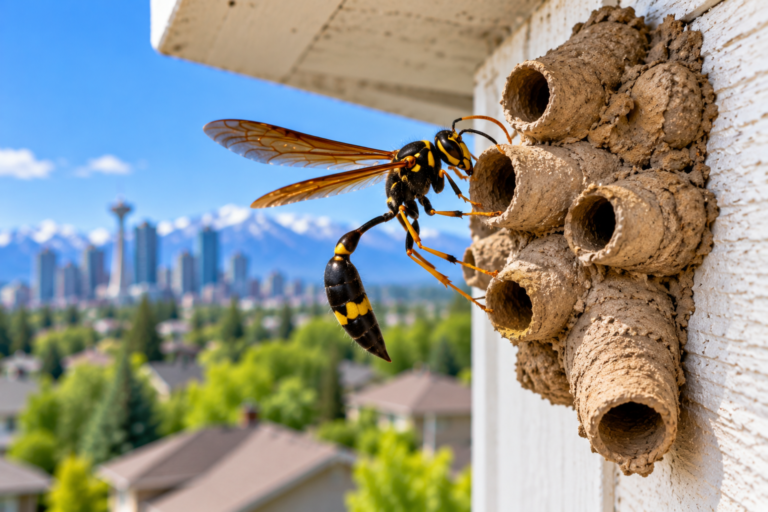
Their nests are generally constructed from chewed plant material mixed with saliva, creating a paper-like material. The completed nest is usually enclosed and has a rounded or oval appearance.
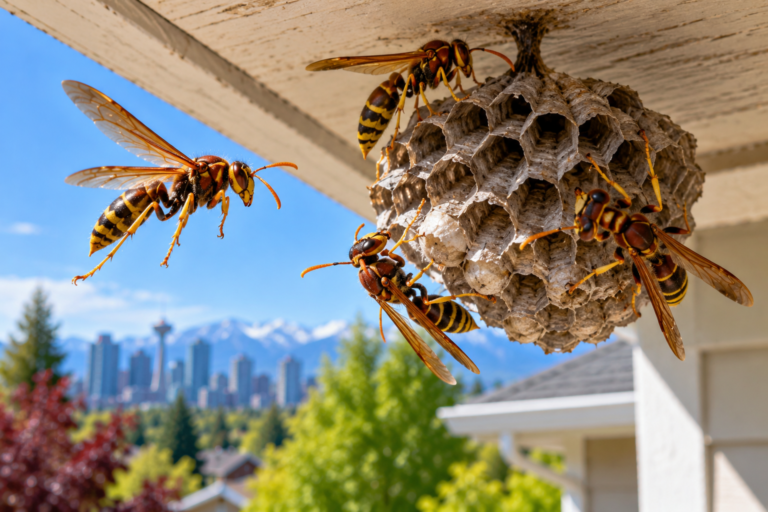
A bald-faced hornet nest may have a papery, layered exterior with a relatively small entrance.
Where Are Bald-Faced Hornet Nests Found?
Common locations include:
- Tree branches
- Shrubs
- Bushes
- Under roof overhangs
- Eaves
- Building structures
- Utility structures
- Garages
- Sheds
- Other elevated protected locations
Nest location can vary considerably depending on the surrounding environment.
Where Are Bald-Faced Hornets Found in Calgary?
Bald-faced hornets can occur throughout Calgary and surrounding areas of Alberta where suitable nesting locations and food resources are available.
They may be encountered around:
- Residential properties
- Parks
- Commercial buildings
- Restaurants
- Schools and recreational areas
- Gardens
- Trees and shrubs
- Construction areas
- Rural and suburban properties
Because their nests are often elevated, homeowners may notice the nest before they notice individual wasps.
Why Are Bald-Faced Hornets Attracted to Properties?
Bald-faced hornets forage for different types of food depending on the needs of the colony.
Workers may seek out sugary substances and other carbohydrate sources, while developing larvae require protein-rich food.
Potential food sources around properties can include:
- Fallen fruit
- Garbage
- Food waste
- Insects
- Outdoor food
- Sweet beverages
- Compost
- Other organic material
Maintaining good sanitation and reducing accessible food sources can help reduce conditions that attract foraging wasps.
Bald-Faced Hornet Activity Around Homes
A bald-faced hornet nest located in a tree at the back of a property may cause little interaction with people. However, a nest located close to a doorway, patio, deck, driveway, walkway, or children’s play area can create a much greater pest-management concern.
Workers defend the colony when they perceive a threat to the nest.
For this reason, bald-faced hornet nests should not be disturbed unnecessarily.
Why Bald-Faced Hornets Defend Their Nests
Like other social wasps, bald-faced hornets have a colony-defense system.
When workers detect a potential threat near their nest, they can become defensive and may leave the nest to investigate the disturbance.
The defensive response is one reason professional pest-control technicians use appropriate precautions when dealing with active wasp colonies.
The level of activity can vary depending on the colony, nest location, weather, and type of disturbance.
Bald-Faced Hornets vs. Yellowjackets
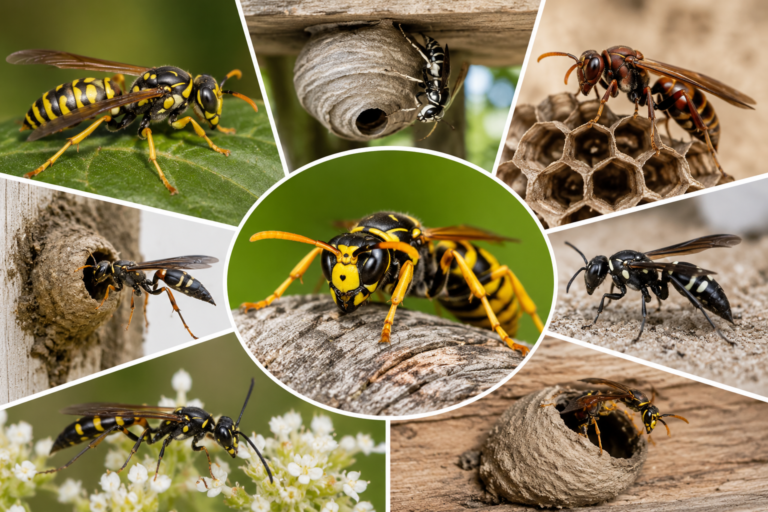
Bald-faced hornets are actually a type of yellowjacket, although they look very different from the familiar yellow-and-black yellowjackets commonly seen around food and garbage.
| Feature | Bald-Faced Hornet | Typical Yellowjacket |
|---|---|---|
| Scientific name | Dolichovespula maculata | Several species |
| Main colour | Black and white | Usually yellow and black |
| Nest | Enclosed aerial paper nest | Varies by species |
| Common nest locations | Trees, shrubs, structures | Ground, cavities, structures |
| Colony | Social | Social |
| Foraging | Insects, sugary foods and other resources | Sugars, proteins and other resources |
Correct identification is important because nesting behaviour varies among wasp species.
Bald-Faced Hornets and Commercial Properties
Businesses may experience bald-faced hornet activity around landscaping, building exteriors, outdoor seating areas, garbage-storage areas, and other locations.
Restaurants, hotels, apartment buildings, warehouses, and property-management sites may benefit from including wasp inspections within a broader commercial pest management program.
A commercial pest-control inspection can identify potential nesting locations and conditions that may contribute to recurring wasp activity.
Bald-Faced Hornet Prevention Tips
Property owners can take several steps to make their properties less attractive to foraging wasps.
1. Keep Garbage Containers Closed
Use secure garbage lids and avoid leaving food waste exposed.
2. Clean Food and Beverage Spills
Sweet beverages and food residue can attract foraging wasps.
3. Remove Fallen Fruit
If fruit trees are present, regularly remove fallen or damaged fruit.
4. Maintain Landscaping
Regularly inspect trees, shrubs, eaves, and other elevated areas for developing nests.
5. Inspect Building Exteriors
Check areas around rooflines, eaves, sheds, garages, and other structures for potential nesting locations.
6. Avoid Disturbing Active Nests
If you discover a bald-faced hornet nest near a frequently used area, avoid approaching or disturbing it and consider contacting a qualified pest-control professional.
Professional Bald-Faced Hornet Control in Calgary
When a bald-faced hornet nest is located close to people or inside a high-traffic area, professional pest management can help address the problem.
A bald-faced hornet exterminator in Calgary can assess the property, identify the wasp species, locate the nest, evaluate the surrounding area, and determine an appropriate treatment strategy.
Professional pest management is particularly useful when nests are located:
- Near entrances
- Above walkways
- Around patios
- Near children’s play areas
- On commercial buildings
- Around busy outdoor areas
- In difficult-to-access locations
At Pest Pro Exterminator, inspections can focus on identifying the source of wasp activity and determining whether additional conditions around the property may contribute to the problem.
When Is Bald-Faced Hornet Control Necessary?
Not every bald-faced hornet nest requires the same response. Location is an important factor.
A nest positioned high in an isolated tree may create less human interaction than one located immediately beside a frequently used entrance.
Professional assessment can consider:
- Nest location
- Human traffic
- Wasp activity
- Accessibility
- Property use
- Potential exposure to workers, residents, customers, or visitors
This site-specific approach helps determine the appropriate pest-management strategy.
Bald-Faced Hornets in Alberta: Seasonal Activity
Bald-faced hornet colonies are seasonal. Activity generally increases as colonies develop during the warmer portion of the year.
Homeowners may notice:
Spring:
Queens establish new colonies and begin nest construction.
Summer:
Worker numbers increase and the nest expands as the colony develops.
Late Summer and Fall:
Colony activity can become highly noticeable, with numerous workers foraging and defending the nest.
The timing of activity can vary depending on weather and local environmental conditions.
Frequently Asked Questions About Bald-Faced Hornets
1. Are bald-faced hornets actually hornets?
Despite their common name, bald-faced hornets are classified as a type of yellowjacket. Their scientific name is Dolichovespula maculata.
2. What do bald-faced hornets look like?
They are predominantly black with distinctive white or ivory markings on the face, thorax, and abdomen.
3. What does a bald-faced hornet nest look like?
Their nests are enclosed, paper-like structures that are usually oval or rounded. They are commonly attached to trees, shrubs, eaves, or other elevated locations.
4. Where do bald-faced hornets build nests?
They commonly build aerial nests in trees, shrubs, building structures, roof overhangs, eaves, sheds, and other elevated locations.
5. Are bald-faced hornets found in Calgary?
Yes. Bald-faced hornets can be found in Calgary and throughout suitable areas of Alberta.
6. Why are bald-faced hornets around my house?
They may be present because a colony has established nearby or because your property provides food sources such as insects, sugary substances, fallen fruit, garbage, or other organic material.
7. Why are bald-faced hornets attracted to garbage?
Garbage can contain food residue, sugary substances, meat, and other organic materials that provide potential food resources for foraging wasps.
8. Can bald-faced hornets build nests on buildings?
Yes. Although trees and shrubs are common nesting locations, bald-faced hornets can also construct aerial nests on or around buildings and other structures.
9. Should I disturb a bald-faced hornet nest?
It is best to avoid unnecessary disturbance of an active nest. If the nest is located near a doorway, walkway, patio, workplace, or other frequently used area, consider contacting a qualified pest-control professional.
10. How do I get rid of bald-faced hornets in Calgary?
Effective pest management begins with identifying the wasp and locating the active nest. A professional pest-control technician can inspect the property and determine an appropriate treatment approach.
11. When should I call a bald-faced hornet exterminator?
Professional assistance may be appropriate when an active nest is located close to people, buildings, entrances, outdoor gathering areas, or other high-traffic locations.
12. Do bald-faced hornet colonies stay active all year?
No. Their colonies are seasonal. Activity develops during the warmer months and changes as the colony progresses through its annual cycle.
Bald-Faced Hornet Control Calgary
Bald-faced hornets are an important part of Alberta’s insect ecosystem, but an active nest located near a home or business can create a significant pest-management concern. Their distinctive black-and-white appearance, enclosed aerial nests, and social colony behaviour make them relatively easy to recognize when the nest is visible.
Understanding bald-faced hornet biology, nesting behaviour, seasonal activity, and food sources can help Calgary homeowners and businesses identify potential problems early.
If you discover an active bald-faced hornet nest near your home or business, professional wasp and hornet control in Calgary can help determine the safest and most appropriate way to manage the situation.
Pest Pro Exterminator – Calgary Wasp & Hornet Control
Pest Pro Exterminator provides residential and commercial pest-control services in Calgary and surrounding communities. Our pest-management services can address wasps, yellowjackets, hornets, ants, cockroaches, bed bugs, rodents, and other common pests.