Why Are Mice Entering My House in Calgary?
Table of Contents
Understanding the Causes, Risks, and Prevention Strategies
Mice are among the most common household pests in Calgary, particularly during the fall and winter months. Many homeowners are surprised to find rodents inside their homes and often assume poor housekeeping is to blame. In reality, mice are opportunistic animals that seek shelter, food, and water wherever they can find them. Even clean, well-maintained homes can experience mouse activity if entry points are present. Understanding why mice enter homes can help homeowners take preventive measures before a minor issue develops into a larger infestation.
Why Do Mice Enter Homes?
Mice enter homes primarily because they are searching for resources that are more difficult to find outdoors. As the weather becomes colder, food becomes scarce and outdoor shelters become less suitable for survival. Homes provide a stable environment with consistent temperatures, protection from predators, and access to food and nesting materials.
Unlike some pests that only enter buildings occasionally, mice can remain indoors for extended periods if they find favourable conditions. Once established, they often create nesting sites in hidden areas and continue to reproduce throughout the year.

How Calgary’s Climate Influences Mouse Activity
Calgary experiences significant seasonal temperature changes, which influence the behaviour of local rodent populations. During the warmer months, mice typically live outdoors in fields, parks, riverbanks, and natural vegetation. As temperatures begin to decline in autumn, they actively search for warmer environments before winter arrives.
Heavy snowfall and freezing temperatures reduce access to natural food sources, encouraging mice to move into homes, garages, sheds, and commercial buildings. This seasonal migration explains why many homeowners notice an increase in rodent activity between September and March.
Urban development can also contribute to mouse activity. Construction projects, land clearing, and changes to natural habitats may displace rodent populations, causing them to seek new shelter in nearby neighbourhoods.
How Do Mice Get Inside?
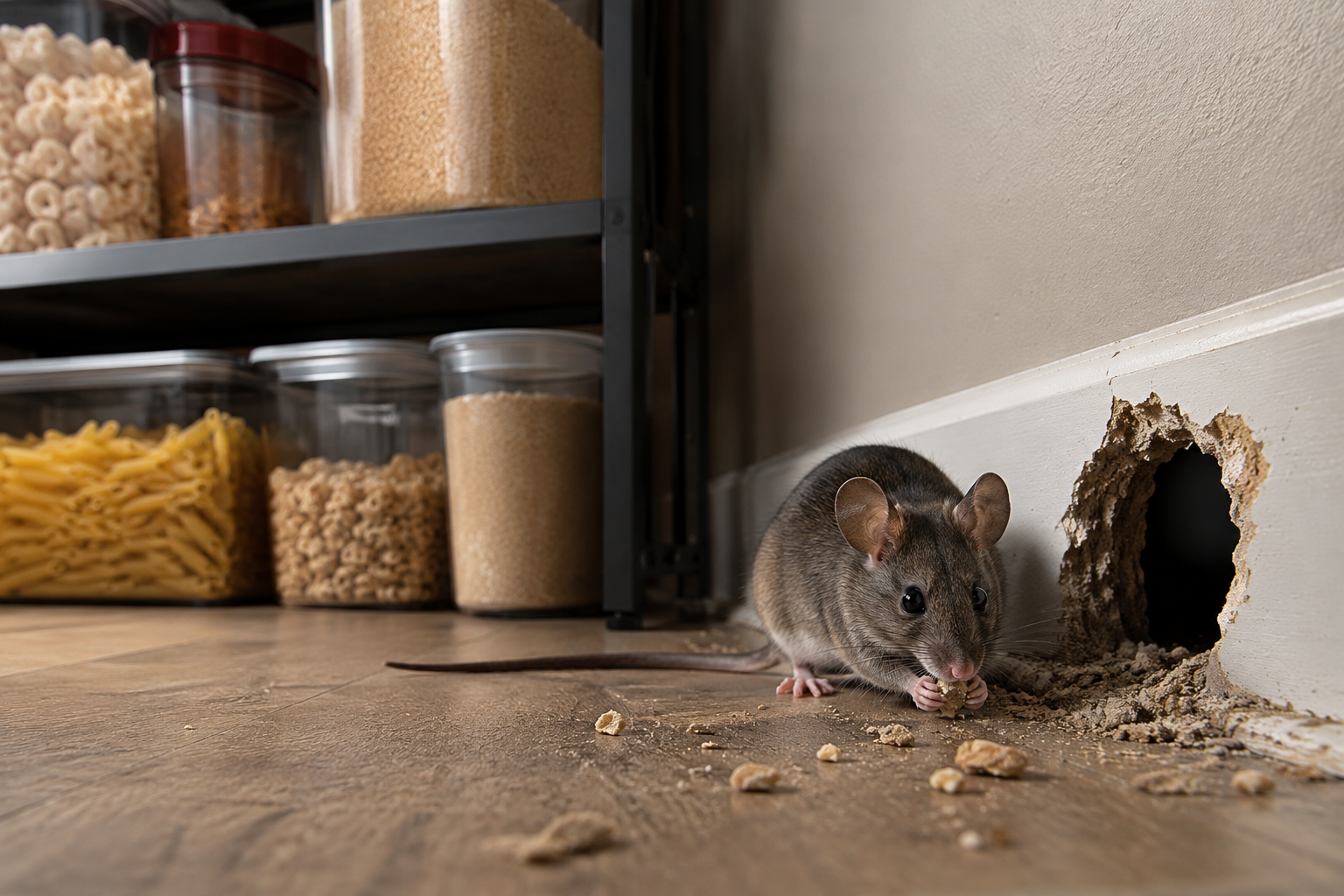
One of the reasons mice are so successful at invading buildings is their remarkable ability to squeeze through extremely small openings. An adult house mouse can fit through an opening approximately 6 millimetres (¼ inch) wide by compressing its body.
Common entry points include:
- Cracks in foundations
- Gaps around plumbing pipes
- Utility line penetrations
- Damaged weather stripping
- Garage door gaps
- Roof and attic vents
- Dryer and exhaust vents
- Basement window frames
- Openings beneath exterior doors
- Spaces around electrical conduits
Buildings naturally develop small cracks and gaps over time due to settling and seasonal expansion and contraction, making regular inspections an important part of home maintenance.
What Attracts Mice?
Food Availability
Food is one of the strongest attractants for mice. Their excellent sense of smell allows them to locate food even in small quantities. Common attractants include crumbs under kitchen appliances, unsealed pantry items, pet food, bird seed, garbage, compost bins, and food waste.
Although mice consume only small amounts each day, they prefer locations where food is consistently available and easy to access.
Water Sources
Like all mammals, mice require water to survive. Even small amounts of moisture can support a rodent population.
Common water sources include:
- Leaking plumbing
- Condensation around pipes
- Pet water bowls
- Basement moisture
- Dripping faucets
- Water heater leaks
- Poorly ventilated crawl spaces
Addressing moisture problems not only discourages mice but also helps prevent mould and other household issues.
Shelter and Nesting Areas
Mice seek quiet, protected areas where they can build nests without disturbance. These locations are often hidden from view, allowing infestations to develop unnoticed.
Common nesting locations include:
- Attics
- Wall cavities
- Basements
- Storage rooms
- Garages
- Utility rooms
- Suspended ceilings
To construct nests, mice gather soft materials such as shredded paper, insulation, fabric, cardboard, and dryer lint.
Signs of Mouse Activity
Because mice are primarily nocturnal, homeowners may not see them directly. Instead, infestations are often detected through indirect signs.
Droppings
Small, dark droppings are commonly found inside cupboards, drawers, pantries, under sinks, and along walls. Fresh droppings appear dark and moist, while older droppings become dry and brittle.
Noises
Scratching, scurrying, or gnawing sounds inside walls, ceilings, or attics are often heard at night when mice are most active.
Gnaw Marks
Mice continuously gnaw because their teeth grow throughout their lives. Damage may appear on food packaging, wood, plastic, drywall, and electrical wiring.
Grease Marks
Repeated travel along walls leaves dark smudge marks created by natural oils in a mouse’s fur.
Unusual Odours
Established infestations may produce a persistent musky odour caused by urine and nesting materials.
Why Are Mice Considered a Problem?
Although mice are relatively small, they can have a significant impact on both homes and human health.
Property Damage
Mice chew on a wide variety of materials, including wood, drywall, insulation, plastic, and electrical wiring. Damaged insulation reduces a home’s energy efficiency, while chewed electrical wiring may increase the risk of electrical faults.
Stored belongings such as clothing, books, furniture, and cardboard boxes may also be damaged by nesting or gnawing.
Food Contamination
As mice travel through kitchens and food storage areas, they can contaminate food with urine, droppings, and hair. Food packaging that has been chewed or contaminated should generally be discarded.
Health Concerns
Mice can carry bacteria, parasites, and other microorganisms that may contaminate household environments. Their droppings and urine should be cleaned carefully using appropriate protective measures rather than sweeping or vacuuming dry material, which can disperse contaminated dust into the air.
Why One Mouse May Indicate More
Homeowners sometimes assume that seeing a single mouse is an isolated event. However, mice are social animals that often live in groups when suitable nesting conditions exist.
Since mice reproduce rapidly under favourable conditions, a single sighting may indicate additional mice are present but remain hidden. For this reason, early investigation is generally recommended whenever mouse activity is observed.
Preventing Mice from Entering Your Home
Preventing mice is often more effective than dealing with an established infestation. Reducing access to food, water, shelter, and entry points can significantly lower the likelihood of rodents entering a home.
Homeowners can reduce their risk by:
- Sealing cracks and gaps around foundations and utility penetrations.
- Installing door sweeps on exterior doors.
- Repairing damaged weather stripping.
- Storing food in sealed containers.
- Cleaning food spills promptly.
- Keeping pet food in airtight bins.
- Reducing clutter in storage areas.
- Trimming vegetation that touches the home.
- Keeping garbage containers tightly closed.
- Inspecting the home’s exterior regularly for new entry points.
Routine maintenance is one of the most effective long-term strategies for preventing rodent problems.
When Is Professional Help Needed?
Small, isolated mouse problems may sometimes be resolved through improved sanitation and exclusion. However, repeated sightings, frequent droppings, persistent noises, or evidence of nesting may indicate a more established infestation that requires a comprehensive inspection.
Professional pest management typically focuses on identifying entry points, locating nesting areas, monitoring activity, and implementing integrated control measures designed to reduce both current and future rodent activity.
Final Thoughts
Mice enter Calgary homes because they are searching for the essentials needed to survive: warmth, food, water, and shelter. Seasonal weather changes, accessible entry points, and favourable indoor conditions all contribute to increased rodent activity, particularly during the colder months.
Understanding the behaviour of mice and recognizing the early signs of an infestation allows homeowners to take preventive action before significant damage occurs. Regular home maintenance, proper food storage, moisture control, and sealing potential entry points remain the most effective ways to reduce the likelihood of mice entering your home. By addressing these factors early, homeowners can create an environment that is far less attractive to rodents throughout the year.
add FQA
Frequently Asked Questions (FAQ)
1. Why are mice entering my house all of a sudden?
A sudden increase in mouse activity is often related to seasonal weather changes, nearby construction, reduced outdoor food sources, or new openings in your home’s exterior. During Calgary’s colder months, mice actively search for warm, sheltered environments where they can find food and water.
2. Can mice enter a clean house?
Yes. Clean homes are not immune to mouse infestations. While good sanitation helps reduce food sources, mice are primarily attracted by shelter, warmth, and accessible entry points. Even a well-maintained home can become infested if small gaps or cracks allow rodents to enter.
3. What time of year are mice most active in Calgary?
Mouse activity typically increases during the fall and winter when outdoor temperatures begin to drop. However, mice can remain active indoors throughout the year if suitable conditions are available.
4. How small of a hole can a mouse fit through?
An adult house mouse can squeeze through an opening as small as 6 millimetres (¼ inch), roughly the size of a pencil or a dime. This is why sealing even very small gaps around foundations, doors, and utility lines is important.
5. What are the first signs of a mouse infestation?
Common early warning signs include:
- Small black droppings
- Scratching or scurrying noises inside walls or ceilings
- Gnaw marks on food packaging or wood
- Grease marks along baseboards
- Shredded nesting materials
- A persistent musky odour
6. Is seeing one mouse a sign of an infestation?
Not necessarily, but it can indicate that more mice are present. Because mice are nocturnal and reproduce quickly, a single sighting may represent a larger hidden population. It is advisable to inspect your home for additional signs of activity.
7. Are mice dangerous to my family’s health?
Mice can contaminate food, countertops, and storage areas with droppings, urine, and hair. They may also carry bacteria and parasites. Proper cleaning and prompt management of mouse activity can help reduce potential health risks.
8. Can mice damage my home?
Yes. Mice constantly gnaw to keep their teeth worn down. They may damage insulation, drywall, furniture, food packaging, plastic pipes, and electrical wiring. Chewed electrical wires can increase the risk of electrical faults.
9. How can I prevent mice from entering my home?
Some effective prevention measures include:
- Seal cracks and gaps around the exterior.
- Install door sweeps and repair weather stripping.
- Store food in airtight containers.
- Clean food spills promptly.
- Fix plumbing leaks.
- Reduce clutter in garages and storage rooms.
- Trim vegetation touching the house.
- Keep garbage bins tightly closed.
Routine home maintenance is one of the most effective ways to prevent rodent problems.
10. Do ultrasonic mouse repellents work?
Research on ultrasonic repellents has shown mixed results. While they may temporarily affect mouse behaviour, they are generally not considered a reliable long-term solution for eliminating or preventing infestations. Exclusion, sanitation, and integrated pest management practices remain more effective approaches.
11. Should I use poison to get rid of mice?
Rodenticides should be used carefully and in accordance with local regulations and product labels. Improper use can pose risks to children, pets, and wildlife. In addition, poisoned mice may die inside walls or inaccessible areas, leading to unpleasant odours. Many homeowners choose trapping and exclusion methods as part of an integrated pest management strategy.
12. How quickly do mice reproduce?
House mice reproduce rapidly under favourable conditions. A single female can produce multiple litters each year, which means a small mouse problem can grow into a larger infestation if left unmanaged.
13. Where do mice usually build their nests?
Mice commonly nest in quiet, hidden areas such as:
- Wall voids
- Attics
- Basements
- Garages
- Storage rooms
- Behind appliances
- Utility rooms
They use soft materials like shredded paper, insulation, cardboard, fabric, and dryer lint to construct their nests.
14. Can mice survive Calgary winters outdoors?
Some mice can survive outdoors by nesting underground or in protected structures. However, many seek shelter inside homes, garages, sheds, and commercial buildings during Calgary’s harsh winter months where temperatures are more stable.
15. How often should I inspect my home for mouse entry points?
A thorough exterior inspection at least twice a year, particularly in the spring and fall, can help identify new cracks, gaps, or damaged weather seals before mice have an opportunity to enter. Homes near open fields or natural areas may benefit from more frequent inspections.