Oriental Cockroach in Alberta: Habitat, Moisture Problems & Identification
Table of Contents
What Is the Oriental Cockroach?
The Oriental cockroach (Blatta orientalis) is a dark, relatively large cockroach species commonly associated with damp environments. It is sometimes called the waterbug or black cockroach because of its dark coloration and strong association with moisture.
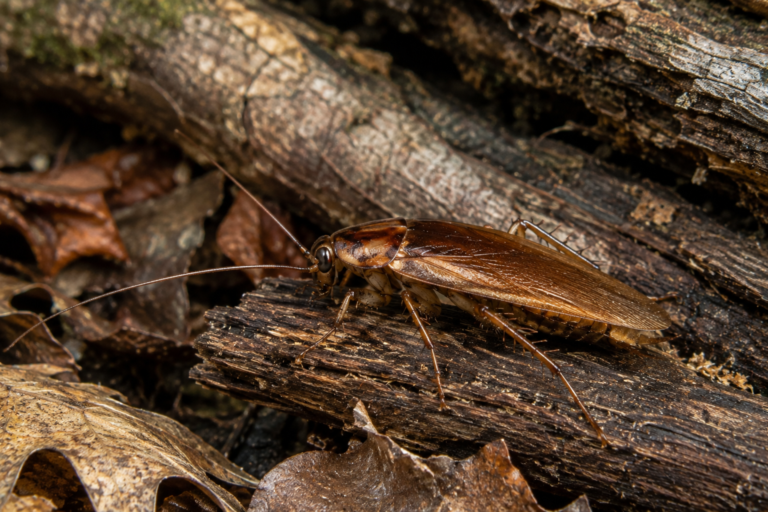
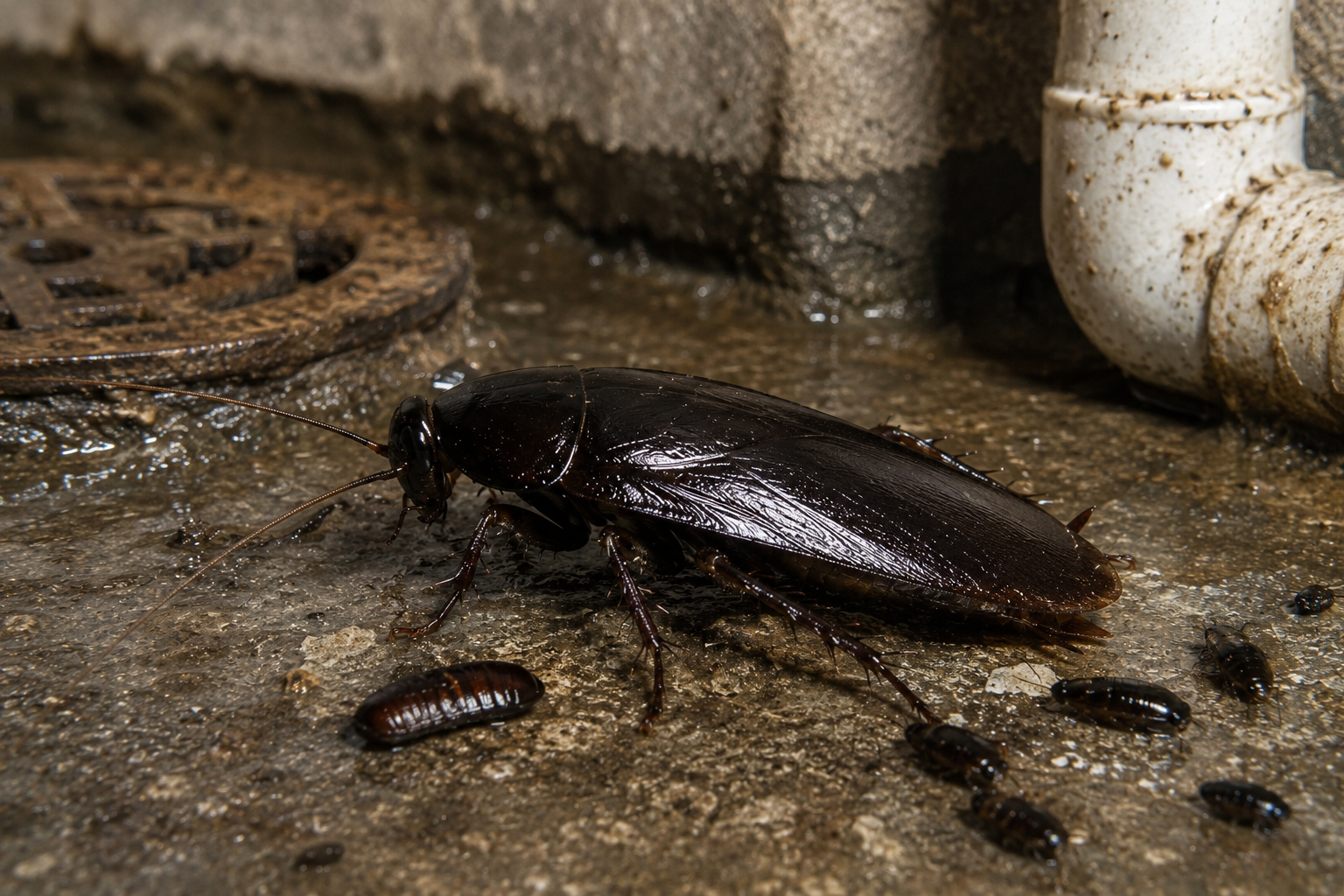
Adults are usually dark brown to almost black and have a shiny appearance. Adult females have short, undeveloped wings, while males have longer wings that cover much of the abdomen. Neither sex is capable of normal sustained flight.
Is the Oriental Cockroach Common in Alberta?
The Oriental cockroach can occur in Alberta, but it is important to distinguish its presence from the most common cockroach species in the province. Alberta Health identifies the German cockroach as the most common cockroach in Alberta.
Oriental cockroaches are more closely associated with cool, dark, damp environments, making their habitat preferences different from those of German cockroaches.
Related Guide: Learn more about [Cockroaches in Calgary: Identification, Biology, Prevention & Control].
Why Is the Oriental Cockroach Called a Waterbug?
The nickname “waterbug” comes from the Oriental cockroach’s strong preference for moist environments.
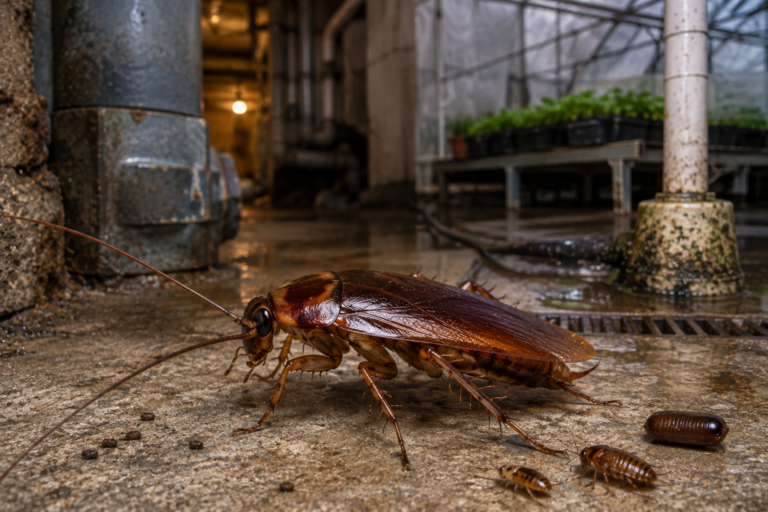
Unlike some cockroach species that can tolerate relatively dry conditions, Oriental cockroaches are particularly associated with locations where moisture is consistently available. These can include drains, damp basements, crawl spaces, sewers, storm drains, and areas containing decaying organic material.
Where Are Oriental Cockroaches Mostly Found in Alberta?
In Alberta, Oriental cockroaches are most likely to be encountered where moisture, shelter, darkness, and organic material are available.
Potential habitats include:
- Damp basements
- Crawl spaces
- Floor drains
- Sewer-connected areas
- Storm drains
- Utility and drainage areas
- Garbage and waste areas
- Areas beneath mulch or vegetation
- Damp spaces around foundations
- Commercial buildings with moisture problems
- Warehouses and service areas
- Other cool, dark, damp locations
Canadian biodiversity information notes that cockroaches in the Blattidae family can occur in artificial environments such as houses, warehouses, greenhouses, and city sewers.
Oriental Cockroaches Outdoors in Alberta
Oriental cockroaches can spend time outdoors when environmental conditions are suitable. They may shelter beneath leaves, mulch, stones, wood, debris, vegetation, or other protected areas where moisture is retained.
However, Alberta’s cold climate limits outdoor activity, particularly during winter. This means that sheltered sites and human structures can become important sources of protection.
During warmer periods, Oriental cockroaches may move between outdoor harbourage and nearby buildings, particularly when food, water, or shelter are available.
Oriental Cockroaches and Alberta Winters
The Oriental cockroach’s preference for cooler conditions distinguishes it from some other cockroach species. However, preference for cool conditions does not mean that it can freely survive Alberta’s extreme outdoor winter temperatures.
Protected locations such as basements, crawl spaces, sewer systems, underground structures, and other sheltered areas can provide considerably more favorable conditions than exposed outdoor environments.
Buildings can therefore provide important overwintering habitat when outdoor conditions become unsuitable.
Oriental Cockroach Biology
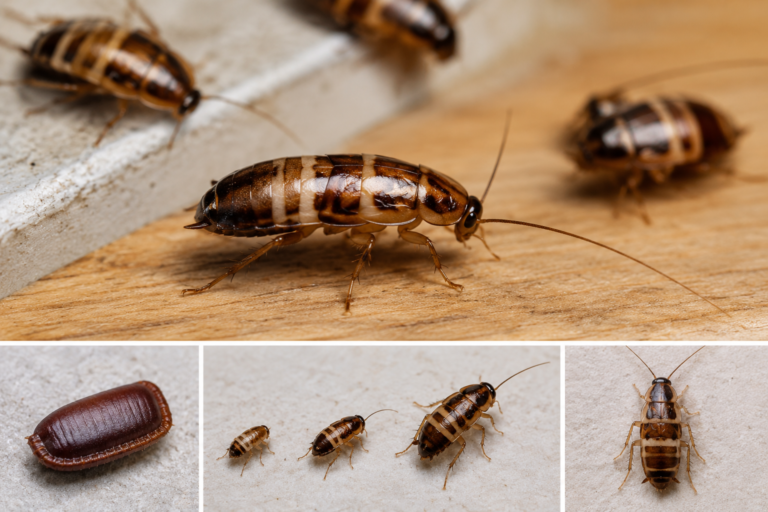
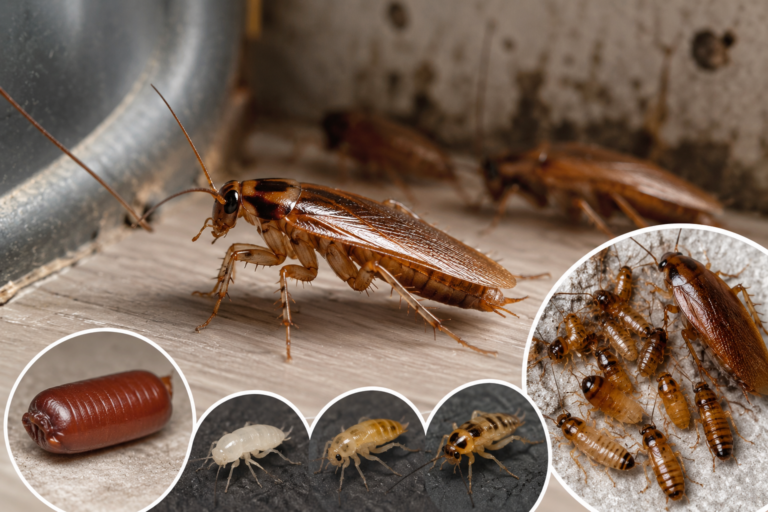
The Oriental cockroach undergoes incomplete metamorphosis, developing through three primary stages:
Egg → Nymph → Adult
Unlike butterflies and many other insects, cockroaches do not have a pupal stage. Nymphs resemble smaller versions of adults and gradually develop through a series of molts.
Development is strongly affected by temperature and environmental conditions. Oriental cockroaches generally develop more slowly than German cockroaches, and their development from nymph to adult can take a year or longer under some conditions.
Oriental Cockroach Egg Cases
Female Oriental cockroaches produce protective egg cases called oothecae.
The egg case is dark reddish-brown to nearly black and contains multiple developing eggs. The female deposits the capsule in a protected location where it can remain relatively undisturbed.
Sheltered areas containing debris, organic material, cracks, or other protected spaces can provide suitable locations for egg cases.
Oriental Cockroach Nymphs
Oriental cockroach nymphs are smaller and wingless. They become progressively darker as they develop through successive nymphal stages.
Nymphs generally remain close to suitable harbourage, particularly where moisture and protection are available.
Finding multiple nymphs can be an important indication that a suitable breeding environment exists nearby.
Adult Oriental Cockroach
Adult Oriental cockroaches are typically dark brown to almost black and have a noticeable shiny appearance. They are generally around 25 to 32 millimetres long, although size can vary.
The sexes can be distinguished by their wings. Males have wings extending over much of the abdomen, while females have only short, rudimentary wing pads.
Can Oriental Cockroaches Fly?
No. Oriental cockroaches are not capable of sustained flight.
Although males have relatively well-developed wings, they do not normally fly. Females have only short, undeveloped wings.
Their limited climbing ability also means they are more commonly associated with lower levels of buildings and ground-level areas rather than upper floors.
Why Do Oriental Cockroaches Prefer Damp Areas?
Moisture is one of the most important environmental factors in Oriental cockroach habitat selection.
They are particularly associated with:
- Leaking pipes
- Floor drains
- Damp foundations
- Wet crawl spaces
- Sewer systems
- Storm drains
- Garbage areas
- Moist organic debris
- Damp basements
Their dependence on moisture helps explain why Oriental cockroach activity can sometimes be concentrated in areas that have drainage or plumbing problems.
What Do Oriental Cockroaches Eat?
Oriental cockroaches are omnivorous scavengers. They can feed on a broad range of organic materials, including decaying plant matter, food waste, garbage, and other organic debris.
Their ability to consume many types of material allows them to exploit both outdoor and indoor environments.
Oriental Cockroaches in Basements
Basements can provide favorable conditions because they may be cooler, darker, and more humid than upper levels of a building.
Areas around floor drains, plumbing, utility penetrations, storage areas, and damp foundation walls can provide shelter and moisture.
Repeated Oriental cockroach activity in a basement should therefore prompt attention to both the insects and the environmental conditions supporting them.
Oriental Cockroaches in Sewers and Drains
Sewer systems, storm drains, and drainage infrastructure can provide dark, moist environments with access to organic material.
Oriental cockroaches are strongly associated with these types of environments. They can potentially move from drainage systems toward nearby structures when suitable pathways are available.
Oriental Cockroaches in Commercial Buildings
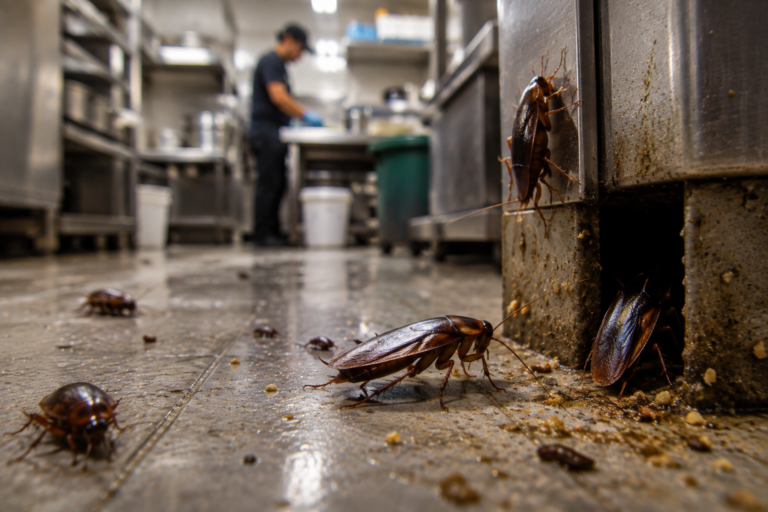
Commercial properties can experience Oriental cockroach activity when moisture, organic waste, drainage problems, or sheltered areas are present.
Important areas for inspection may include floor drains, garbage storage areas, basements, loading areas, utility rooms, plumbing spaces, and other locations where water and organic material accumulate.
Oriental Cockroaches in Alberta Homes
In residential properties, Oriental cockroaches are more likely to be associated with basements, crawl spaces, drains, foundation areas, and other damp locations than with dry upper-floor rooms.
Moisture management is therefore an important part of preventing conditions that support this species.
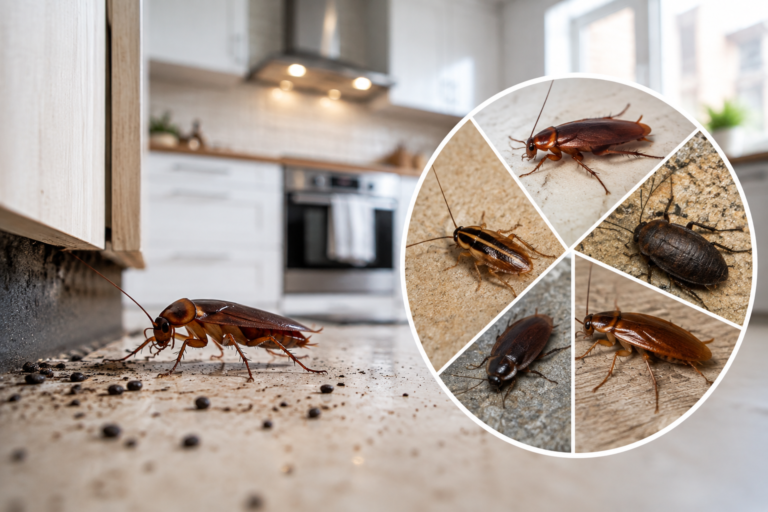
Oriental Cockroach vs. German Cockroach
These two species have very different appearances and habitat preferences.
Oriental cockroach:
- Dark brown to almost black
- Larger-bodied
- Strongly associated with damp environments
- Males have longer wings; females have short wing pads
- Does not fly
- Often found around drains, basements, and sewer-connected areas
German cockroach:
- Much smaller
- Light brown or tan
- Two dark stripes behind the head
- Commonly associated with warm indoor areas such as kitchens
- The most common cockroach type in Alberta according to Alberta Health.
Correct identification is important because species biology and habitat preferences are different.
Why Oriental Cockroach Biology Matters for Pest Control
Understanding Oriental cockroach biology helps explain why finding one near a drain or basement may be different from finding a German cockroach inside a kitchen.
The inspection should consider the species’ relationship with moisture, drainage, shelter, organic material, and building access points.
Integrated pest management should focus on identifying the species, locating harbourage, correcting moisture problems, improving sanitation, reducing access, monitoring activity, and using appropriate professional control measures when necessary.
Alberta Health recommends professional pest control assistance for cockroach infestations and emphasizes identifying the cause of the infestation.
Final Thoughts
The Oriental cockroach is a fascinating species because its biology is closely connected to cool, dark, damp environments. Unlike the German cockroach, which is the most common cockroach in Alberta and is strongly associated with warm indoor environments, the Oriental cockroach is particularly associated with drains, basements, crawl spaces, sewers, damp foundations, and other moisture-rich locations.
In Alberta, its ability to use protected environments is especially important. Outdoor winter conditions can be severe, but underground infrastructure, drainage systems, basements, and other sheltered areas can provide protection from the elements.
Understanding the biology and habitat of Blatta orientalis helps property owners and pest professionals recognize the species, locate potential harbourage, and determine why Oriental cockroach activity is occurring.
Frequently Asked Questions About Oriental Cockroaches in Alberta
Are Oriental cockroaches found in Alberta?
Yes. Oriental cockroaches (Blatta orientalis) can be found in Alberta. They are generally associated with damp, cool, dark, and protected environments rather than dry indoor areas.
What does an Oriental cockroach look like?
Oriental cockroaches are usually dark brown to almost black, with a shiny body. Adults are relatively large, generally measuring about 25–32 mm long.
Why is the Oriental cockroach called a waterbug?
The nickname “waterbug” refers to its strong preference for moist environments. Oriental cockroaches are commonly associated with drains, sewers, damp basements, crawl spaces, and areas with high moisture.
Where are Oriental cockroaches found in Alberta?
They may be found around:
- Damp basements
- Crawl spaces
- Floor drains
- Sewer systems
- Storm drains
- Utility rooms
- Garbage areas
- Damp foundation areas
- Plumbing spaces
- Commercial buildings
- Warehouses and service areas
Can Oriental cockroaches survive Alberta winters?
They generally cannot survive prolonged exposure to Alberta’s extreme outdoor winter conditions. However, protected areas such as sewers, basements, crawl spaces, and underground infrastructure can provide shelter from freezing temperatures.
Can Oriental cockroaches live outdoors in Alberta?
They can use outdoor harbourage during warmer periods where conditions are sufficiently moist and protected. They may shelter beneath mulch, leaves, debris, stones, vegetation, and other materials that retain moisture.
Do Oriental cockroaches live in sewers?
Yes. Sewer and drainage systems can provide highly suitable habitat because they offer darkness, moisture, shelter, and access to organic material.
Can Oriental cockroaches enter houses through drains?
Drainage and plumbing systems can provide potential pathways into buildings. If Oriental cockroach activity repeatedly occurs around drains or lower levels of a building, the drainage system and surrounding plumbing infrastructure should be considered during an inspection.
Can Oriental cockroaches fly?
No. Oriental cockroaches are not capable of sustained flight. Males have longer wings, while females have short wing pads, but neither normally flies.
How big is an Oriental cockroach?
Adult Oriental cockroaches are generally about 25–32 mm long. They are considerably larger and darker than German cockroaches.
What do Oriental cockroaches eat?
They are omnivorous scavengers and can feed on many types of organic material, including food waste, garbage, decaying plant material, and other organic debris.
Where do Oriental cockroaches lay their eggs?
Female Oriental cockroaches produce protective egg cases called oothecae. These may be deposited in protected locations where they are relatively undisturbed, particularly around debris, cracks, sheltered spaces, and areas with favorable moisture conditions.
How long does an Oriental cockroach take to develop?
Oriental cockroaches generally develop more slowly than German cockroaches. Their development can take a year or longer under some environmental conditions, with temperature and other environmental factors affecting development time.
Are Oriental cockroaches the same as German cockroaches?
No. They are different species with different biology and habitat preferences.
Oriental cockroaches are dark, relatively large, and strongly associated with moisture.
German cockroaches are much smaller, light brown or tan, and commonly associated with warm indoor environments such as kitchens. German cockroaches are the most common cockroach type identified in Alberta.
Does finding one Oriental cockroach mean there is an infestation?
Not necessarily. A single cockroach may have entered from another location. However, repeated sightings, nymphs, egg cases, droppings, or activity in multiple areas can indicate an established population or a nearby harbourage area.
Why are Oriental cockroaches often found in basements?
Basements can provide several conditions that Oriental cockroaches prefer: darkness, cooler temperatures, moisture, shelter, plumbing, drains, and organic material.
Can Oriental cockroaches be found in commercial buildings?
Yes. Commercial buildings can provide suitable habitat when moisture and organic material are available. Areas such as floor drains, garbage rooms, loading areas, basements, mechanical rooms, plumbing spaces, and utility areas should be inspected.
How can I prevent Oriental cockroaches?
Reducing moisture is particularly important. Property owners should repair leaks, improve drainage, maintain floor drains, reduce standing water, remove organic debris, manage garbage properly, seal potential entry points, and reduce clutter in damp areas.
When should I call a professional pest control company?
Professional inspection is recommended when cockroach activity is repeated, widespread, occurring in multiple areas, or accompanied by nymphs or egg cases. Proper species identification can help determine where the cockroaches are likely harbouring and what environmental conditions need to be corrected.
If you are dealing with recurring German cockroach activity, learn more about professional Cockroach Control Calgary from Pest Pro Exterminator.