German Yellowjackets in Calgary, Alberta: Identification, Biology, Nests & Pest Control
Table of Contents
German yellowjackets are aggressive social wasps that can become a serious pest problem around homes, businesses, restaurants, parks, and other properties in Calgary and throughout Alberta. They are especially noticeable during late summer and early fall when colonies become larger and worker wasps actively search for food.
Unlike solitary wasps, German yellowjackets live in colonies containing a queen, workers, and reproductive individuals. Their ability to establish nests in wall voids, roof spaces, sheds, underground areas, and other protected locations can make an infestation difficult to detect and control.
If you are seeing increasing numbers of yellowjackets around your property, identifying the species and locating the nest are important steps toward effective yellowjacket pest control in Calgary.
What Are German Yellowjackets?
The German yellowjacket, Vespula germanica, is a social wasp belonging to the family Vespidae. It is an introduced species that has established populations in parts of North America, including western Canada.
German yellowjackets are commonly associated with human environments because they can find abundant sources of food around residential and commercial properties. Garbage, recycling containers, pet food, outdoor meals, sugary drinks, fallen fruit, and food waste can all attract foraging workers.
Their adaptability allows colonies to develop in a variety of locations, making German yellowjacket control an important part of seasonal pest management.
How to Identify German Yellowjackets
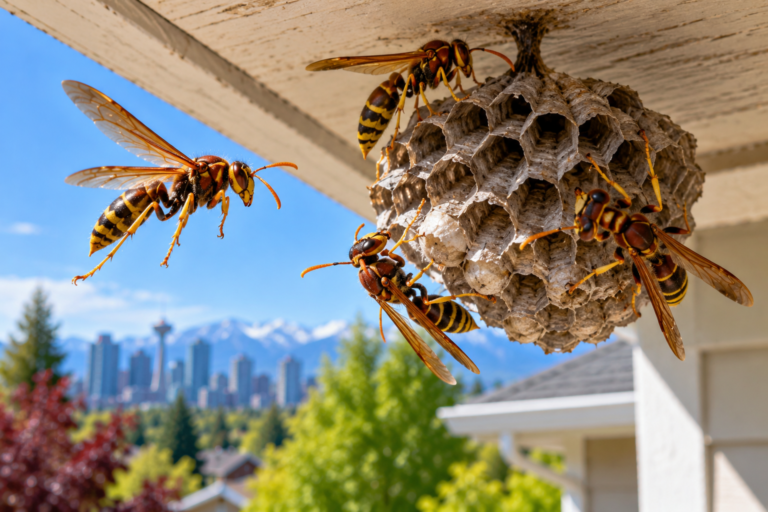
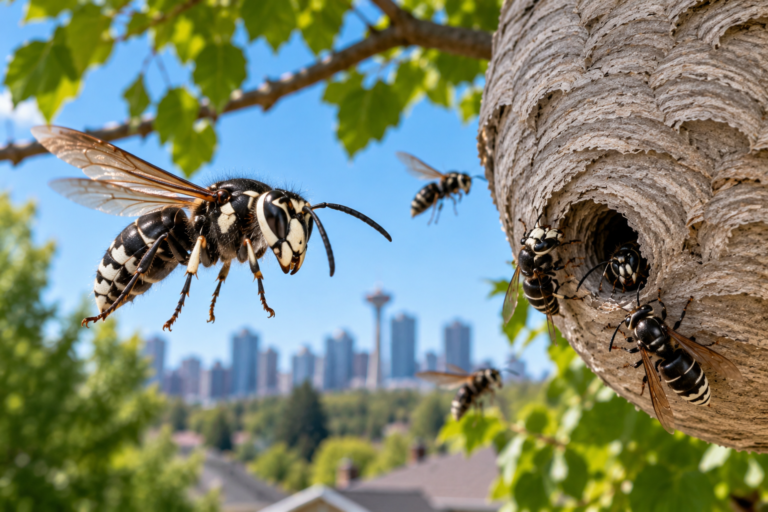
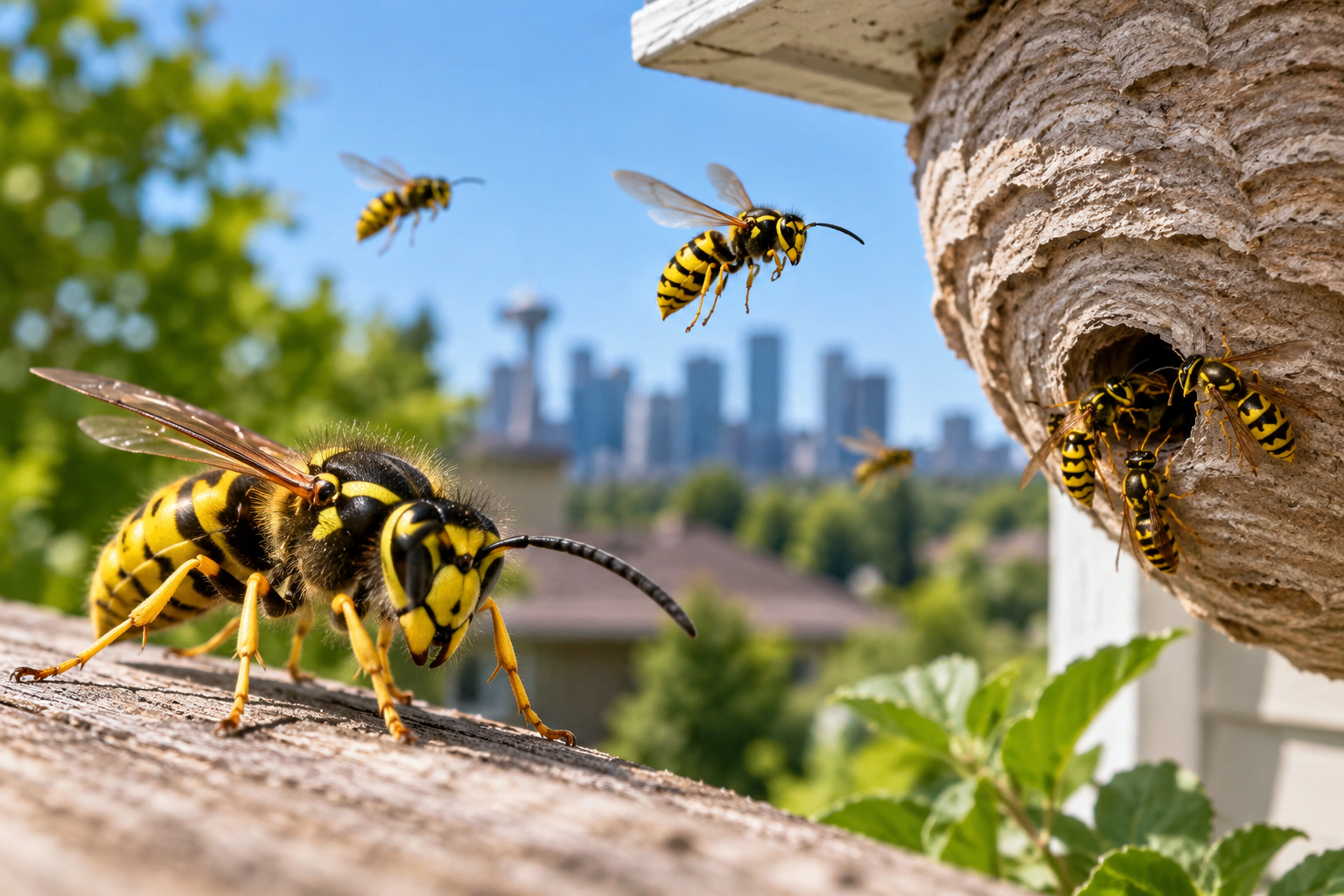
German yellowjackets are generally yellow and black, with a relatively slender body and the characteristic narrow waist associated with wasps.
One useful identification feature is the pattern on the face. German yellowjackets typically have three black spots or markings on the yellow area of the face, although identification should not rely on a single characteristic.
They may be confused with other yellowjacket species because several species have similar yellow-and-black coloration.
Common Identification Characteristics
- Yellow and black body
- Slender wasp-like appearance
- Narrow waist
- Yellow markings on the abdomen
- Black facial markings
- Social colony-forming behaviour
- Workers actively forage for food
- Colonies may occur near buildings and human activity
Correct identification can help determine the most appropriate pest-management approach.
German Yellowjacket Biology
German yellowjackets are eusocial insects, meaning their colonies have a reproductive queen and non-reproductive workers that perform different tasks for the colony.
A colony normally begins with a queen establishing a nest. As the season progresses, workers are produced and take over many responsibilities, including:
- Foraging for food
- Feeding developing larvae
- Expanding and maintaining the nest
- Protecting the colony
- Searching for additional food sources
As the colony grows, the number of worker wasps around a property can increase significantly.
This is one reason a small number of yellowjackets observed in spring can develop into a much larger pest problem later in the season.
Where Do German Yellowjackets Build Their Nests?
German yellowjackets are highly adaptable when selecting nesting locations. Their nests may be located in protected spaces where they are sheltered from weather and disturbances.
Potential nesting locations include:
- Wall voids
- Attics
- Roof spaces
- Eaves and soffits
- Garages
- Sheds
- Utility areas
- Structural cavities
- Underground spaces
- Gaps around buildings
- Landscaping features
- Other protected cavities
A major challenge is that a colony can sometimes be active inside a building without the nest being immediately visible.
For example, workers may enter and exit through a small opening in siding, soffits, roofing, or another structural gap while the main nest remains hidden.
German Yellowjackets in Calgary
German yellowjackets can be encountered around Calgary homes, businesses, restaurants, commercial properties, parks, and recreational areas.
Calgary’s seasonal weather affects insect activity, but yellowjacket problems can become particularly noticeable during the warmer months. Late summer can bring increased activity as colonies reach larger populations and workers spend more time searching for food.
Properties with exposed garbage, food waste, fallen fruit, outdoor eating areas, or structural openings may experience greater yellowjacket activity.
Why Are German Yellowjackets Attracted to Homes?
German yellowjackets are opportunistic feeders and can exploit many food sources associated with human activity.
Common attractants include:
Food and Sugary Drinks
Yellowjackets may be attracted to:
- Soft drinks
- Fruit
- Sweet foods
- Outdoor food
- Meat
- Pet food
- Food scraps
Garbage and Recycling
Garbage containers and recycling bins can provide easily accessible food sources.
Containers that hold beverage residue or food waste can become particularly attractive to foraging wasps.
Fallen Fruit
Fruit trees can contribute to yellowjacket activity when ripe or damaged fruit falls onto the ground.
Structural Openings
Cracks, gaps, vents, and other openings can provide potential access points into protected nesting locations.
German Yellowjacket Nests Can Be Difficult to Locate
One of the biggest challenges with yellowjacket control in Calgary is finding the actual colony.
Seeing yellowjackets around a building does not necessarily mean that the nest is directly underneath the area where the insects are being observed.
Workers can travel from their nest to food sources and may enter buildings through small openings.
For this reason, simply removing visible wasps may not eliminate the colony.
A professional inspection can help determine:
- Where the yellowjackets are entering
- Where activity is concentrated
- Whether the nest is inside or outside the structure
- Whether structural openings may be contributing to the problem
- What treatment approach is appropriate
German Yellowjacket Behaviour
German yellowjackets are social insects with a highly organized colony structure.
Workers continuously forage for resources and return food to the nest. When a reliable food source is discovered, activity around that location can increase.
This explains why a property may suddenly appear to have a large number of yellowjackets after previously seeing very few.
Their defensive behaviour can also become more noticeable when people approach or disturb a nest.
Why Yellowjacket Activity Can Increase in Late Summer
Yellowjacket activity often becomes more obvious as the season progresses because colonies have had time to develop.
During late summer and early fall, workers may become highly active around:
- Garbage bins
- Restaurants
- Patios
- Outdoor events
- Fruit trees
- Picnic areas
- Commercial waste areas
- Residential yards
This seasonal increase can make yellowjacket extermination in Calgary a common pest-control concern.
German Yellowjackets Around Restaurants and Commercial Properties
Restaurants and food-service businesses can be particularly vulnerable to yellowjacket activity because they provide abundant food opportunities.
Potential attractants include:
- Food waste
- Garbage containers
- Recycling
- Outdoor dining areas
- Beverage spills
- Loading areas
- Food preparation waste
Commercial properties should incorporate yellowjacket prevention into their broader commercial pest management program.
Reducing food and garbage attractants, maintaining sanitation, sealing structural openings, and conducting regular inspections can help reduce conditions that support yellowjacket activity.
German Yellowjackets vs. Other Wasps
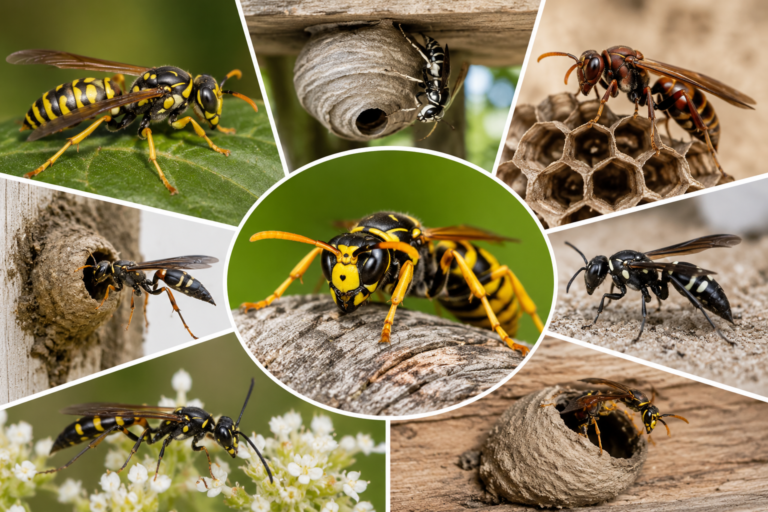
Not every yellow-and-black wasp around a Calgary property is necessarily a German yellowjacket.
Alberta has several wasp species, and their appearance, nesting habits, and behaviour can differ.
Correct identification is important because pest-control strategies should be based on the biology and nesting behaviour of the species involved.
If you are uncertain whether the insects around your property are German yellowjackets, paper wasps, hornets, or another species, a professional pest inspection can help identify the insect.
How to Prevent German Yellowjackets
Property owners can reduce potential attractants by taking several practical steps.
Keep Garbage Containers Clean
Use tightly closed garbage containers and clean food or beverage residue from bins when necessary.
Remove Fallen Fruit
If you have fruit trees, regularly collect fallen or damaged fruit.
Keep Outdoor Food Covered
During outdoor meals, keep food and sweet drinks covered when possible.
Clean Spills Quickly
Sweet beverages and food spills can attract foraging yellowjackets.
Inspect the Building Exterior
Look for gaps around:
- Siding
- Fascia
- Soffits
- Rooflines
- Vents
- Utility penetrations
- Doors and windows
Sealing appropriate entry points can help prevent insects from accessing structural voids.
Professional German Yellowjacket Control in Calgary
When yellowjacket activity is concentrated around a building or appears to originate from a hidden nest, professional pest management may be necessary.
A professional yellowjacket control service in Calgary can involve identifying the species, locating the source of activity, assessing the nesting area, and selecting an appropriate treatment strategy.
At Pest Pro Exterminator, yellowjacket inspections can focus on determining where activity is coming from and whether a nest is associated with the structure or surrounding property.
Treatment should be performed carefully because disturbing an active yellowjacket colony can result in defensive behaviour.
Frequently Asked Questions About German Yellowjackets
1. What are German yellowjackets?
German yellowjackets are social wasps scientifically known as Vespula germanica. They live in colonies and are commonly associated with buildings, garbage areas, food sources, and other human environments.
2. Are German yellowjackets found in Calgary?
Yes. German yellowjackets can be encountered in Calgary and other areas of Alberta, particularly around properties offering food, garbage, shelter, or suitable nesting locations.
3. Where do German yellowjackets build nests?
They can build nests in protected locations such as wall voids, attics, roof spaces, sheds, structural cavities, and underground areas.
4. Why are there so many yellowjackets around my garbage bin?
Garbage and recycling can contain food residues, sugary substances, meat, and other materials that attract foraging yellowjackets.
5. Can German yellowjackets nest inside walls?
Yes. German yellowjackets can establish nests in protected structural cavities, including wall voids.
6. Why are yellowjackets worse in late summer?
Colonies have had more time to grow, resulting in greater numbers of workers foraging for food. This can make yellowjacket activity much more noticeable later in the season.
7. How can I prevent yellowjackets around my home?
Keep garbage sealed, remove fallen fruit, clean food and beverage spills, keep outdoor food covered, and inspect the exterior of the building for potential entry points.
8. Does killing individual yellowjackets eliminate the nest?
Not necessarily. Visible workers may be only a small portion of the colony. If the nest remains active, additional workers can continue to emerge and forage.
9. Can German yellowjackets enter a house?
Yes. They can enter through small openings and may establish or access nests in protected structural spaces.
10. When should I call a Calgary pest-control company for yellowjackets?
Consider professional pest control when yellowjacket activity is persistent, increasing, associated with a suspected nest, or occurring around a location where people are frequently present.
German Yellowjackets: Key Facts
| Feature | German Yellowjacket |
|---|---|
| Scientific name | Vespula germanica |
| Type | Social wasp |
| Family | Vespidae |
| Colour | Yellow and black |
| Colony | Social colony with queen and workers |
| Nest locations | Structural cavities, protected spaces and other suitable locations |
| Food sources | Sugars, proteins and human-associated food waste |
| Common pest locations | Homes, businesses, restaurants and outdoor areas |
| Calgary activity | Primarily noticeable during the warmer season |
| Pest-control concern | Hidden nests and increasing seasonal activity |
Final Thoughts
German yellowjackets are adaptable social wasps capable of establishing colonies in and around residential and commercial properties. Their ability to use structural cavities and abundant human-associated food sources can make infestations difficult to manage without identifying the source of the activity.
For homeowners and businesses searching for German yellowjacket control in Calgary, understanding the insect’s biology, nesting behaviour, food sources, and seasonal activity is an important first step.