How Commercial Pest Management Works: A Complete Guide for Calgary Businesses
Table of Contents
Choosing commercial pest control is an important decision for any Calgary business. Pest activity can affect employees, customers, tenants, inventory, property conditions, and the overall reputation of a company.
A mouse in a storage room, cockroaches in a restaurant kitchen, flies around a garbage area, or wasps near a customer entrance may appear to be a small problem at first. If the underlying conditions are not addressed, however, pest activity can become more difficult and expensive to manage.
The best commercial pest control program is not necessarily the company offering the cheapest monthly price. A good program should be based on inspection, pest identification, monitoring, prevention, appropriate treatment, communication, and follow-up.
This 2026 guide explains what Calgary business owners and property managers should consider when choosing a commercial pest-control provider.
What Makes a Commercial Pest Control Company a Good Choice?
Commercial pest management is different from simply treating a pest when one is spotted.
A professional provider should be able to understand the property’s:
- Building type
- Business operations
- Pest history
- Potential entry points
- Food and water sources
- Waste-management practices
- Structural conditions
- Seasonal pest risks
- Employee or tenant activity
The service should then be adapted to those conditions.
For some businesses, a preventive program may make sense. Others may need a targeted response to an active infestation. Larger properties may require ongoing monitoring and scheduled inspections.
The right approach depends on the property.
Why Businesses Should Address Pest Problems Early
Pests rarely appear without a reason.
They are usually responding to conditions that provide food, water, shelter, warmth, or access to the building.
For example:
- Mice may enter through gaps around doors and utility penetrations.
- Cockroaches may find food, moisture, and shelter around kitchens and equipment.
- Flies may be attracted to garbage, food residues, drains, and organic material.
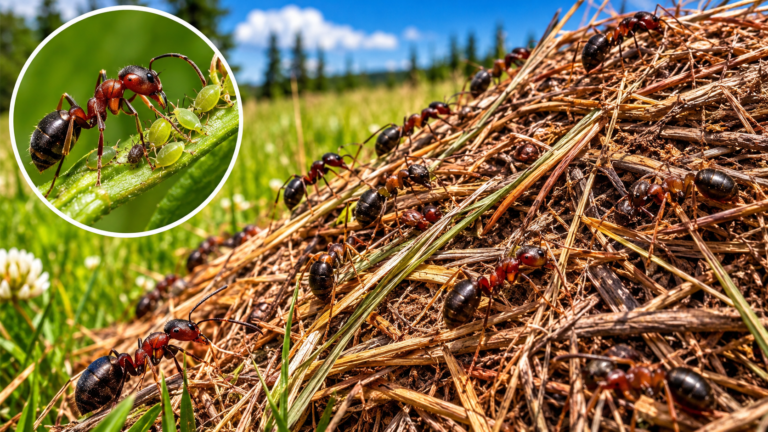
- Ants may enter while searching for food or water.
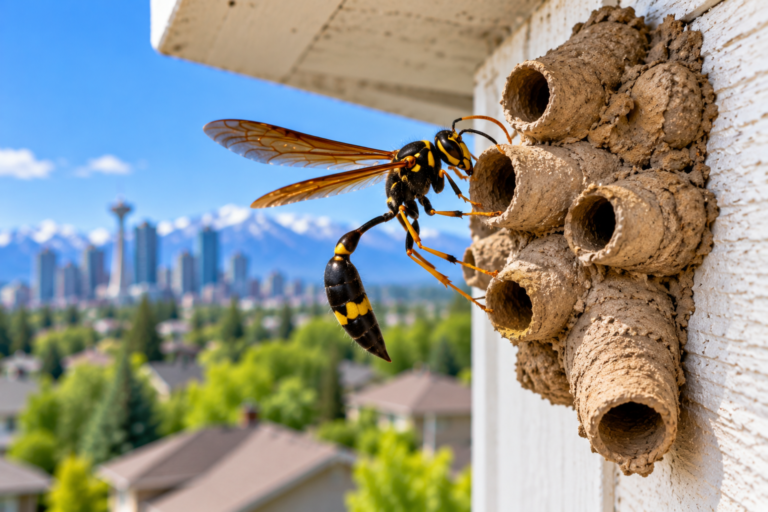
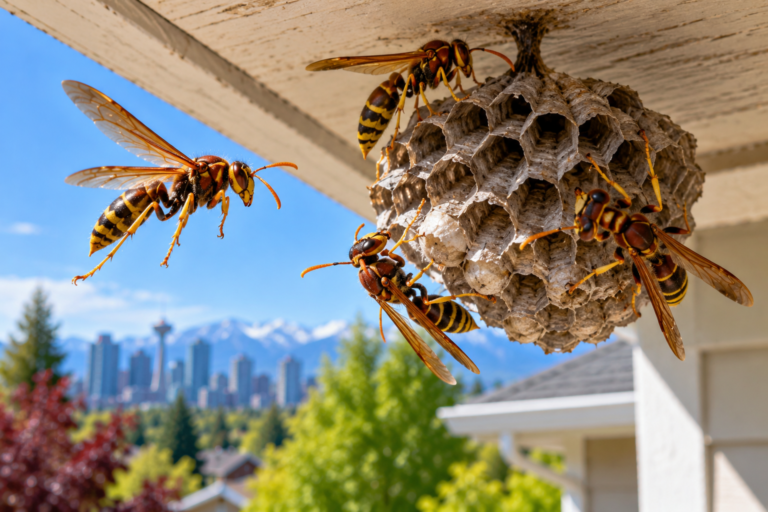
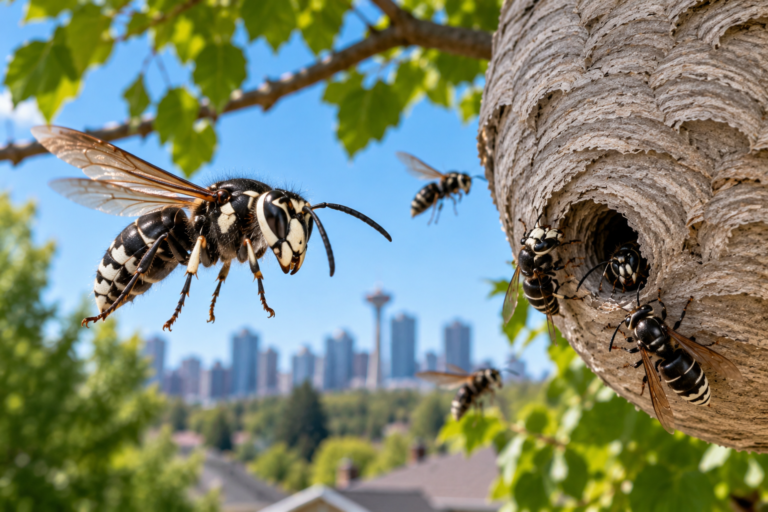
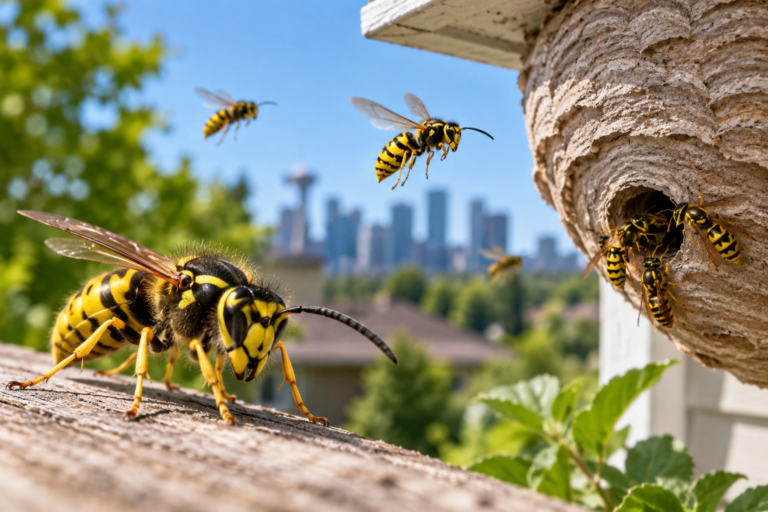
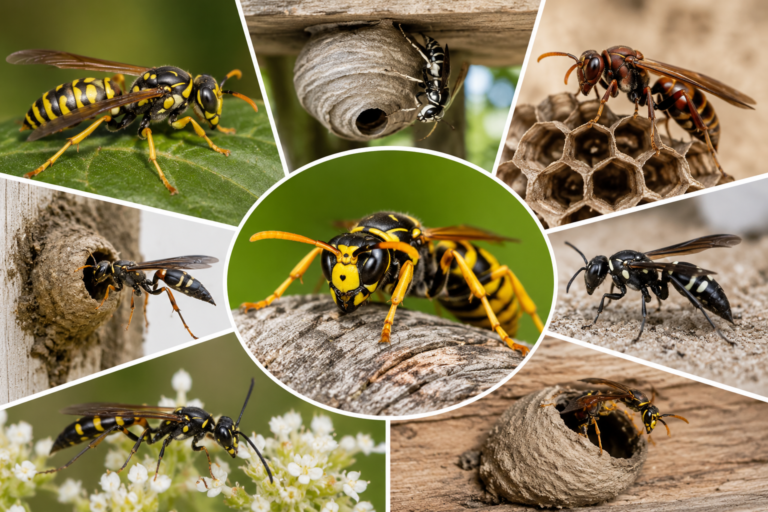
- Wasps may build nests around roofs, landscaping, exterior structures, or other protected locations.
Treating visible pests without considering these conditions can result in recurring activity.
Early inspection can help identify the problem before it becomes more widespread.
Common Commercial Pests in Calgary
The pests affecting a business depend heavily on the type of property and how it operates.
Mice and Rodents
Rodents are an important concern for Calgary businesses, particularly during colder weather.
Commercial buildings can provide warm shelter when outdoor conditions become unfavorable.
Potential entry points include:
- Door gaps
- Loading docks
- Utility penetrations
- Pipe openings
- Structural cracks
- Roof penetrations
- Damaged weather stripping
Rodents can create sanitation concerns and may damage insulation, stored materials, and electrical components.
A commercial rodent program should therefore consider both active rodent control and exclusion.
Cockroaches
Cockroaches can be particularly challenging for restaurants, hotels, apartment buildings, condominiums, and other properties where food, moisture, warmth, and shelter are available.
Common hiding locations include:
- Behind appliances
- Under equipment
- Inside cabinets
- Around plumbing
- In wall voids
- Near garbage areas
- Around food-storage areas
Cockroach management should begin with identification and inspection.
Simply treating visible cockroaches may not address activity hidden elsewhere in the building.
Related resource: Cockroach Control Calgary
Pharaoh Ants
Pharaoh ants deserve special attention in multi-unit buildings.
Their small size allows them to move through protected areas of buildings, and activity may occur in more than one unit or location.
Apartment and condominium management can therefore require coordination between:
- Property managers
- Building maintenance
- Residents
- Pest-management professionals
The goal should be to understand the distribution of activity rather than treating only the location where ants happen to be visible.
Related resource: Pharaoh Ant Control Calgary
Bed Bugs
Bed bugs can affect hotels, apartments, condominiums, rental properties, and other environments where people regularly occupy rooms or units.
They can be introduced through luggage, clothing, furniture, and other belongings.
Effective bed bug management generally requires:
- Inspection
- Identification
- Preparation
- Treatment
- Follow-up
- Communication
Property managers should also establish clear procedures for reporting suspected activity.
Flies
Flies can become a significant concern for food-service businesses.
Potential contributing conditions include:
- Food residues
- Garbage
- Organic waste
- Moisture
- Drains
- Poorly maintained waste areas
- Open doors
- Structural gaps
Effective fly management focuses on finding and correcting the source rather than simply reducing adult flies.
Wasps
Wasps can create seasonal problems around:
- Restaurant patios
- Building entrances
- Garbage areas
- Landscaping
- Loading areas
- Rooflines
- Outdoor customer areas
Businesses with high customer traffic should pay particular attention to nests near entrances and areas where employees or customers regularly spend time.
Birds and Wildlife
Commercial properties can also experience bird and wildlife issues.
Examples include:
- Pigeons
- Sparrows
- Magpies
- Squirrels
- Raccoons
- Skunks
Wildlife management often requires exclusion, habitat modification, and prevention.
For example, a bird problem around a rooftop or solar-panel system may require physical exclusion rather than simply removing birds that are already present.
Which Businesses Need Commercial Pest Control?
Virtually any commercial property can experience pest activity, but some environments have higher risk.
Restaurants
Restaurants have food, moisture, garbage, deliveries, and equipment that can provide opportunities for pests.
Common concerns include:
- Cockroaches
- Flies
- Mice
- Ants
- Wasps
A restaurant program should consider kitchens, storage, garbage areas, receiving areas, drains, and the building exterior.
Hotels
Hotels have unique pest-management requirements because guests and their belongings move through the property continuously.
Common concerns can include:
- Bed bugs
- Cockroaches
- Mice
- Flies
- Ants
Early reporting and professional inspection can help prevent isolated problems from becoming larger property-wide concerns.
Apartment and Condominium Buildings
Multi-unit properties can be particularly challenging because pests may move through shared building infrastructure.
Potential pathways include:
- Plumbing penetrations
- Wall voids
- Utility spaces
- Common areas
- Garbage rooms
- Mechanical rooms
A property manager may therefore need a coordinated pest-management program rather than isolated treatment of individual units.
Offices
Office buildings can experience:
- Mice
- Ants
- Cockroaches
- Flies
- Spiders
- Wasps
Kitchenettes, lunchrooms, garbage areas, storage rooms, loading areas, and building entrances should all be considered during inspections.
Warehouses and Industrial Buildings
Warehouses have large footprints and multiple potential entry points.
Special attention may be required around:
- Loading docks
- Overhead doors
- Storage areas
- Pallets
- Shipments
- Utility penetrations
- Roof areas
Rodent monitoring and exclusion can be particularly important.
What Is Integrated Pest Management?
One of the most important things to look for when choosing a commercial pest-control provider is an Integrated Pest Management (IPM) approach.
IPM considers the biology and behavior of the pest along with the environmental conditions supporting it.
A typical IPM strategy may include:
Inspection
Determine what pest is present and where activity is occurring.
Identification
Correctly identify the species because different pests require different management strategies.
Monitoring
Use appropriate monitoring methods to determine whether activity is present and whether it is changing.
Prevention
Identify conditions that can be corrected to reduce pest pressure.
Exclusion
Where appropriate, close gaps and other potential entry points.
Sanitation
Reduce access to food, water, waste, and other resources.
Targeted Treatment
Use appropriate pest-management measures when treatment is necessary.
Follow-Up
Review the results and determine whether additional action is required.
What Should You Look for When Choosing a Commercial Exterminator?
Don’t choose a commercial pest-control provider based only on price.
Here are some important questions to ask.
1. Is the company properly licensed?
Ask whether the company and its applicators meet applicable Alberta requirements.
2. Does the company have commercial experience?
Commercial properties can have different challenges from residential homes.
Ask whether the company has experience with your particular type of facility.
3. Does the company understand IPM?
A good provider should be able to explain how inspection, monitoring, prevention, exclusion, and treatment work together.
4. Are service reports provided?
Documentation can help property managers and business owners track:
- Pest activity
- Areas inspected
- Treatments performed
- Recommendations
- Follow-up requirements
5. What happens if pests return?
Understand the company’s follow-up policy before signing an agreement.
6. Is emergency service available?
Some businesses cannot wait until the next scheduled visit when pest activity becomes visible.
Ask about response procedures.
7. Can the program be customized?
A restaurant, warehouse, hotel, office, and apartment building should not necessarily receive the same service plan.
Commercial Pest Control Contracts: What Should You Compare?
When comparing proposals, don’t compare the monthly price alone.
Look at the entire service package.
Compare:
- Initial inspection
- Service frequency
- Interior inspections
- Exterior inspections
- Monitoring devices
- Follow-up visits
- Emergency response
- Documentation
- Pest coverage
- Exclusion recommendations
- Communication
- Contract terms
- Cancellation requirements
A lower monthly price may not represent a better value if important services are excluded.
Preventive Pest Control vs. Reactive Pest Control
Reactive Pest Control
Reactive service begins after a pest problem is discovered.
For example:
A restaurant finds cockroaches and calls for treatment.
This can be appropriate when an unexpected problem occurs.
Preventive Pest Management
Preventive service focuses on identifying and addressing risks before they become major problems.
It may include:
- Regular inspections
- Monitoring
- Seasonal assessments
- Exclusion recommendations
- Sanitation recommendations
- Early treatment
For higher-risk commercial properties, preventive management can help reduce unexpected pest problems.
How Much Does Commercial Pest Control Cost in Calgary?
There isn’t one standard price for commercial pest control.
Cost can vary depending on:
- Building size
- Type of business
- Pest species
- Infestation level
- Number of units
- Number of buildings
- Service frequency
- Monitoring requirements
- Interior access
- Exterior conditions
- Follow-up requirements
For that reason, a professional inspection and site-specific proposal are usually more useful than relying on a generic online price.
When comparing quotes, ask exactly what the price includes.
Questions to Ask Before Hiring a Commercial Pest Control Company
Before signing an agreement, ask:
- What pests are included?
- How often will inspections occur?
- What areas are covered?
- Is interior service included?
- Is exterior service included?
- Are monitoring devices included?
- What happens if activity is discovered between visits?
- Are follow-up visits included?
- Will I receive a service report?
- Are exclusion recommendations included?
- Are emergency visits available?
- What preparation is required?
- How long is the agreement?
- What are the cancellation terms?
- Does the company have experience with properties like mine?
Why Local Calgary Experience Matters
A commercial pest-management plan should take local conditions into account.
Calgary businesses experience seasonal changes in pest activity.
Spring
Ants and other insects become more active as temperatures rise.
Summer
Wasps, flies, ants, spiders, and other insects can become more noticeable.
Fall
Rodents may begin looking for warmer, protected locations.
Winter
Heated commercial buildings can continue to provide suitable conditions for indoor pests even when outdoor temperatures are very cold.
Understanding these seasonal patterns can help businesses prepare rather than simply react.
What a Good Commercial Pest Management Visit Should Look Like
A professional visit should involve more than simply arriving and applying a treatment.
Depending on the service, a technician may:
- Review previous pest activity.
- Inspect relevant areas.
- Look for evidence of pest activity.
- Identify potential entry points.
- Check for food, water, and harborage conditions.
- Inspect monitoring devices where applicable.
- Perform appropriate treatment.
- Document findings.
- Provide recommendations.
- Identify any required follow-up.
This process creates a more complete picture of what is happening at the property.
Why Documentation Matters
Documentation can be especially useful for commercial properties.
A service report can provide a record of:
- Inspection dates
- Areas inspected
- Pest activity
- Treatments
- Monitoring results
- Recommendations
- Follow-up requirements
For property managers, this information can also help identify recurring problems and maintenance issues.
Pest Pro Exterminator Commercial Pest Management
Pest Pro Exterminator provides commercial pest-management services for Calgary businesses and multi-unit properties.
Services can be tailored for:
- Restaurants
- Hotels
- Apartment buildings
- Condominiums
- Offices
- Retail businesses
- Warehouses
- Industrial properties
- Property management companies
- Other commercial facilities
Our approach focuses on inspection, identification, monitoring, Integrated Pest Management, targeted treatment, prevention, and follow-up.
With 18+ years of pest-management industry experience, Pest Pro Exterminator brings practical field experience to commercial and multi-unit pest-management challenges.
Commercial Pest Problems We Help Manage
Depending on the property, services may include:
- Cockroach control
- Pharaoh ant control
- Mouse and rodent control
- Bed bug management
- Fly control
- Wasp control
- Ant control
- Bird and wildlife management
- Preventive pest-management programs
Need Commercial Pest Control in Calgary?
If your business is experiencing pest activity, or you want to establish a preventive pest-management program, a professional inspection can help determine what is happening and what steps should be taken.
Pest Pro Exterminator serves Calgary and surrounding communities with residential, commercial, and multi-unit pest-management services.
Learn more about Commercial Pest Control Calgary →
Frequently Asked Questions
What is the best commercial pest control company in Calgary?
The best provider depends on your property’s needs. Look for a properly qualified company with commercial experience, appropriate licensing, insurance, good communication, documented service, and an approach that includes prevention and monitoring.
How often should a commercial property receive pest control?
There is no universal schedule. Frequency depends on the type of property, pest risk, pest history, building conditions, and the type of program required.
Do restaurants need regular pest control?
Restaurants can benefit from regular pest inspections because food, moisture, garbage, deliveries, and frequent door activity can create opportunities for pest activity.
What is the most important part of commercial pest control?
There isn’t one single component. Effective pest management can involve inspection, identification, monitoring, prevention, exclusion, sanitation, treatment, and follow-up.
Is monthly commercial pest control necessary?
Not every business requires monthly service. Higher-risk properties may benefit from more frequent monitoring, while lower-risk properties may require a different schedule.
How much does commercial pest control cost in Calgary?
Pricing varies according to the property, pest, infestation level, service frequency, monitoring requirements, and scope of work. A site-specific assessment is generally more useful than a generic price.
Can commercial pest control be scheduled outside business hours?
Scheduling depends on the property and the treatment required. Many commercial services can be coordinated around business operations when appropriate.
Does Pest Pro Exterminator provide commercial pest control in Calgary?
Yes. Pest Pro Exterminator provides commercial and multi-unit pest-management services in Calgary and surrounding communities.
Final Thoughts
Choosing commercial pest control should be about more than finding the lowest price.
A strong pest-management program should help a business understand why pests are present, where they are entering, what conditions are supporting them, and what can be done to prevent recurring activity.
For many commercial properties, the most effective approach combines inspection, monitoring, prevention, exclusion, targeted treatment, and follow-up.
Whether you operate a restaurant, hotel, office, warehouse, retail business, apartment building, or condominium, the right pest-management strategy should be designed around your property and its specific risks.