Why Are Wasps Coming In and Out From Your Front Step or Deck? Calgary Wasp Nest Guide
Table of Contents
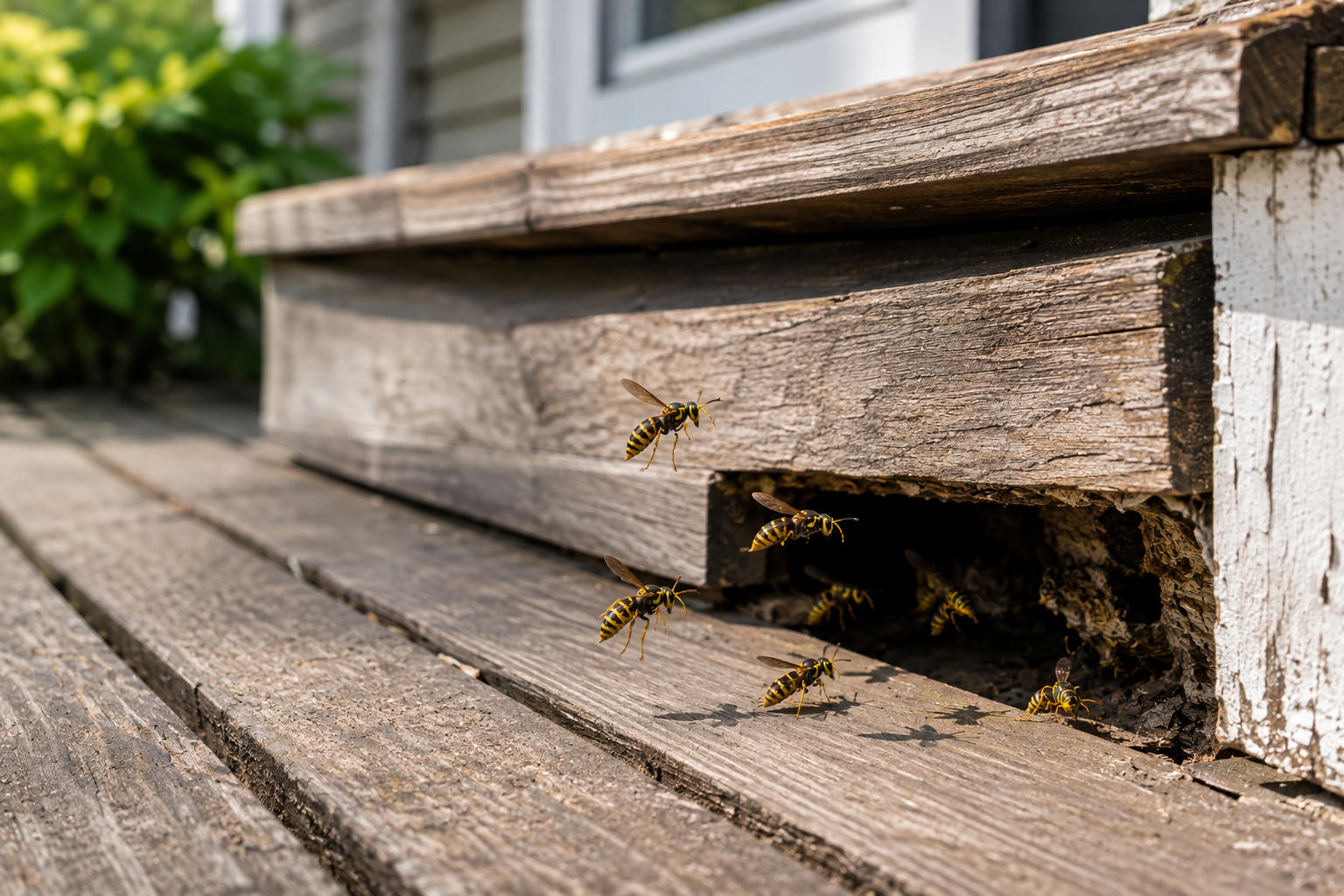
If you notice wasps repeatedly flying in and out from a crack, gap, hole, or opening around your front step or deck, there is a good chance a wasp nest is nearby or inside a concealed structural space. What may look like a few random wasps could actually indicate an established nest underneath the deck, inside a stair cavity, behind siding, beneath a porch, or within another protected area.
For Calgary homeowners, wasp activity around decks and front steps can become particularly noticeable during the warmer months. Understanding where wasps are entering and leaving can help you determine whether professional wasp control is needed.
Why Are Wasps Coming and Going From the Same Spot?
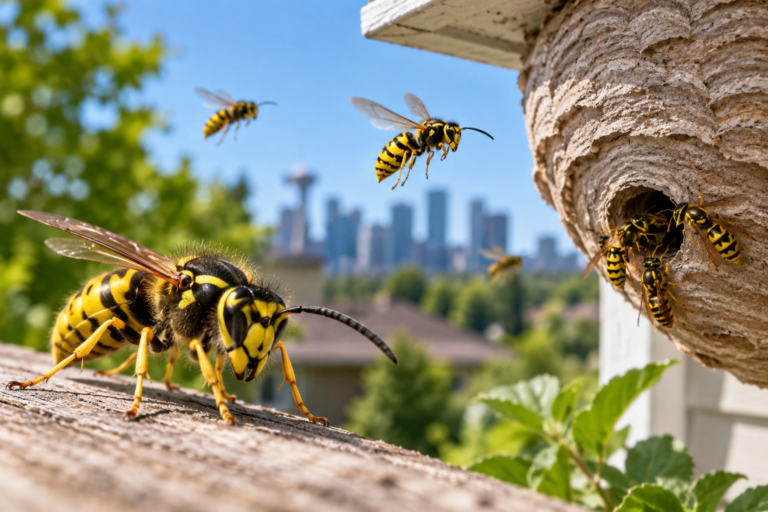
Wasps generally don’t repeatedly use the same entrance by accident. If you see wasps flying into a particular opening and returning to it throughout the day, they may be using that location as an access point to a nest.
Potential nesting locations include:
- Under front steps
- Inside hollow deck structures
- Beneath wooden decking
- Behind fascia boards
- Under porch flooring
- Inside wall cavities
- Behind siding
- Around gaps in foundations
- Inside landscaping structures
- Under railings or staircases
- Around utility penetrations
The visible opening may not be the actual location of the nest. Wasps can enter through a small gap and travel into a larger concealed cavity.
Why Do Wasps Build Nests Under Decks and Steps?
Decks, porches and steps can provide several characteristics that make them attractive nesting locations.
These structures can provide:
Shelter: Protection from weather and disturbance.
Dark spaces: Many wasps prefer protected cavities.
Small entry points: Gaps and cracks can provide convenient access.
Protection from predators: Structural cavities can provide a relatively protected nesting environment.
Nearby food sources: Gardens, flowering plants, garbage, insects and outdoor food can provide resources.
How Can You Tell If There Is a Wasp Nest Under Your Deck?
Repeated wasp traffic is one of the strongest warning signs.
Look for:
Constant Wasp Activity
If wasps repeatedly enter and exit the same opening, monitor the location from a safe distance.
Multiple Wasps Using One Opening
One or two wasps may occasionally investigate an area. A steady stream of wasps using the same entrance is more suggestive of an established nesting location.
Increased Activity During Warm Weather
Wasp activity generally increases as temperatures rise and colonies become more active.
Buzzing From a Cavity
In some situations, you may hear buzzing from inside a wall, deck or other enclosed space.
Visible Nest Material
Depending on the species and location, portions of a nest may sometimes be visible from the outside.
However, many nests remain completely hidden.
Don’t Seal the Opening Immediately
One common mistake homeowners make is seeing wasps entering a hole and immediately filling it with caulking, foam or another material.
Don’t seal an active entrance before determining what is inside.
If wasps are using the opening to access an active nest, blocking the entrance may not solve the problem and could cause the insects to search for another route.
They may potentially emerge through another opening, including into areas closer to the house.
The safer approach is to have the situation assessed before permanently sealing the access point.
Wasps Under a Front Step Can Be Difficult to Treat
Front steps can contain concealed cavities that are difficult to inspect.
For example, wasps may be nesting:
- Between step components
- Under the landing
- Inside hollow framing
- Behind trim
- Beneath concrete or wooden structures
- Inside adjacent wall spaces
Simply spraying the wasps flying around the entrance may not address the source.
The objective of professional wasp control is to identify the nesting location and determine an appropriate treatment strategy.
What If Wasps Are Coming Out of My Deck?
A deck can provide numerous concealed nesting areas.
Pay particular attention to:
- Gaps between boards
- Hollow framing
- Stair cavities
- Areas beneath the deck
- Deck-to-house connections
- Railings
- Fascia
- Skirting
- Areas around posts
If you see wasps consistently entering one location, avoid disturbing the area and observe from a safe distance.
A professional pest-control technician can assess the activity and determine whether a nest is likely present.
Are Wasps Dangerous Around a Front Entrance?
A wasp nest near a front entrance or deck can become a nuisance and a safety concern because people may unknowingly approach or disturb the nesting area.
This can be particularly problematic when:
- Children regularly use the area
- Pets are present
- The entrance is heavily used
- The deck is used for outdoor activities
- The nest is close to stairs or walkways
- Someone in the household has a known severe allergy to stings
If the nest is close to a frequently used entrance, professional assessment is recommended.
Why You Shouldn’t Disturb an Active Wasp Nest
Trying to investigate, poke, spray or dismantle a suspected nest can disturb the colony.
Wasps can become defensive when their nesting area is threatened.
Instead of attempting to open the deck, remove boards or reach into a cavity, keep people and pets away from the area and arrange for an appropriate inspection.
Professional Wasp Control in Calgary
At Pest Pro Exterminator, we provide professional pest-management services for wasp activity around homes and other properties in Calgary and surrounding communities.
Our inspection focuses on determining:
- Where wasps are entering and exiting
- Whether an active nest is likely present
- Where the nest may be located
- Whether the nest is concealed inside a structure
- Whether additional openings or activity areas exist
- What treatment approach is appropriate
Once the pest situation has been assessed, we can recommend the appropriate next steps.
What Happens After Wasp Control?
After an active nest has been successfully managed, the property should be evaluated for possible entry points.
Depending on the structure, prevention may include:
- Sealing appropriate gaps
- Repairing damaged wood
- Improving screens or barriers
- Addressing structural openings
- Removing conditions that may encourage future nesting
Exclusion should generally be considered after active pest activity has been addressed.
How to Prevent Wasps Around Your Deck and Front Steps
You can reduce potential nesting opportunities by maintaining the structure.
Inspect Wooden Structures
Look for cracks, damaged boards and openings.
Repair Structural Gaps
Appropriately seal openings once you’re confident there is no active nest inside.
Keep Garbage Covered
Food waste can attract wasps and other insects.
Clean Outdoor Food Areas
Remove spilled drinks, food scraps and other attractants.
Inspect Under Decks
Check for unusual insect activity while avoiding direct contact with suspected nests.
Maintain Landscaping
Keep vegetation reasonably maintained around entrances and decks.
Frequently Asked Questions
Why are wasps going into a hole under my deck?
They may be using the opening to access a concealed nest within or underneath the deck. Repeated entry and exit from the same location is a reason to have the area inspected.
Why are wasps coming out from underneath my front steps?
Wasps may be nesting in a cavity beneath or within the steps. The actual nest may not be visible from outside.
Should I block the hole where wasps are entering?
Avoid immediately sealing an opening that appears to be actively used by wasps. The nest should be assessed first.
Can wasps nest inside a deck?
Yes. Deck framing, cavities, gaps and areas beneath decking can provide protected nesting locations.
Can wasps get into my house from a deck nest?
Depending on the structure, insects may potentially access nearby wall or structural cavities through openings. If activity is close to the house, professional assessment can help determine the situation.
How do I know if I have a wasp nest?
Repeated wasp activity from the same location, multiple insects entering and exiting one opening, buzzing from a cavity and visible nest material can all be signs of a nest.
Should I spray wasps coming out of a hole?
Avoid disturbing an active nest. A professional should assess the location and determine an appropriate treatment approach.
Seeing Wasps Going In and Out of Your Deck or Front Steps?
Don’t ignore repeated wasp activity. If wasps are consistently entering and exiting the same crack, hole or cavity around your front steps, porch or deck, there may be a concealed nest nearby.
Pest Pro Exterminator provides professional wasp control in Calgary and surrounding communities.
If you are seeing repeated activity, a professional inspection can help identify the source and determine the appropriate next step.