What Should a Property Manager Do When Bed Bugs Persist Despite Having a Contracted Pest Control Company?
Table of Contents
When a property manager has a contracted pest control company but bed bug activity continues with little or no improvement, the situation should not simply be allowed to continue from one treatment to the next. Persistent bed bugs can indicate that the current treatment strategy needs to be reassessed, that reinfestation is occurring from another unit, that preparation requirements are not being followed, or that additional inspection and control measures are necessary.
Health Canada notes that bed bugs are difficult to eliminate and that effective control generally requires a combination of professional treatment, physical control methods and preventative measures.
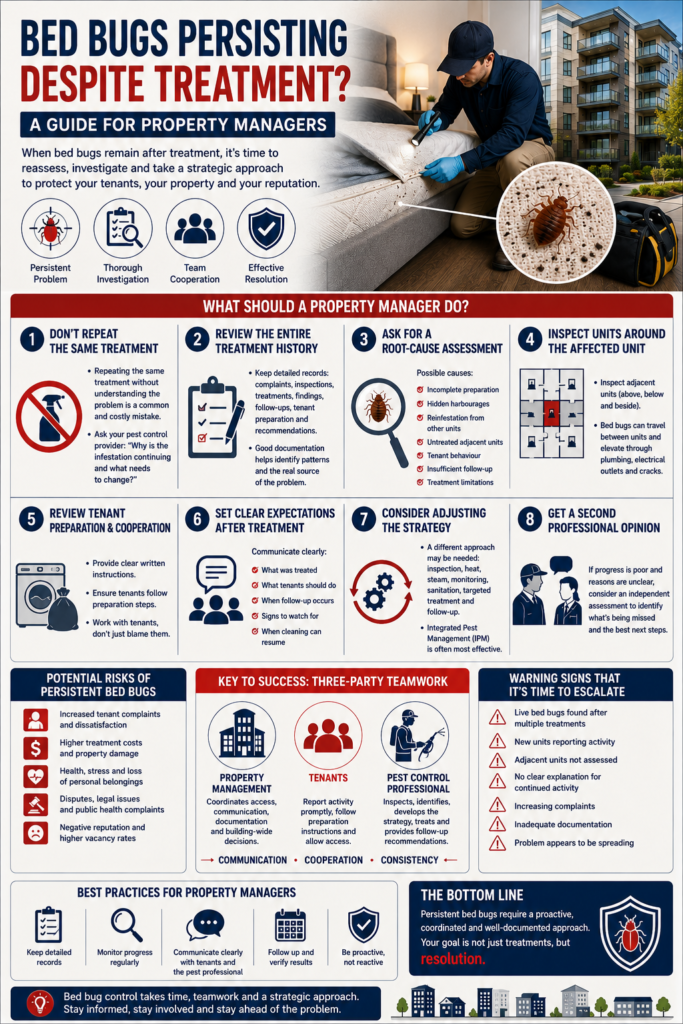
1. Do Not Assume That Another Identical Treatment Will Solve the Problem
One of the biggest mistakes in a persistent infestation is repeatedly performing essentially the same treatment without determining why the infestation continues.
If tenants continue reporting live bed bugs after multiple treatments, management should ask the pest control provider for a documented assessment of the situation.
The important question is not simply:
“When is the next treatment?”
It should be:
“Why is the infestation continuing, and what needs to change?”
A professional reassessment should consider the level and location of activity, treatment history, tenant preparation, surrounding units and potential routes of spread.
2. Review the Entire Treatment History
Property management should maintain a complete record of the infestation.
This can include:
- Date of the first complaint
- Unit number
- Inspection findings
- Treatment dates
- Treatment methods
- Follow-up inspections
- Preparation instructions provided to tenants
- Whether tenants completed the required preparation
- Evidence found during follow-up
- Adjacent units inspected
- Recommendations made by the pest control company
- Any missed appointments or access problems
Health Canada emphasizes the importance of communication, cooperation, treatment planning and record keeping when landlords and building managers work with pest control professionals.
Good documentation helps management determine whether the problem is actually persistent or whether new activity is being introduced or reintroduced.
3. Ask the Pest Control Company for a Root-Cause Assessment
A contracted pest control company should be able to explain what it believes is preventing successful control.
Possible factors can include:
Incomplete preparation: Clutter, inaccessible furniture and belongings can make inspection and treatment more difficult.
Hidden harbourages: Bed bugs can hide in cracks, furniture, bed frames, baseboards and other concealed locations.
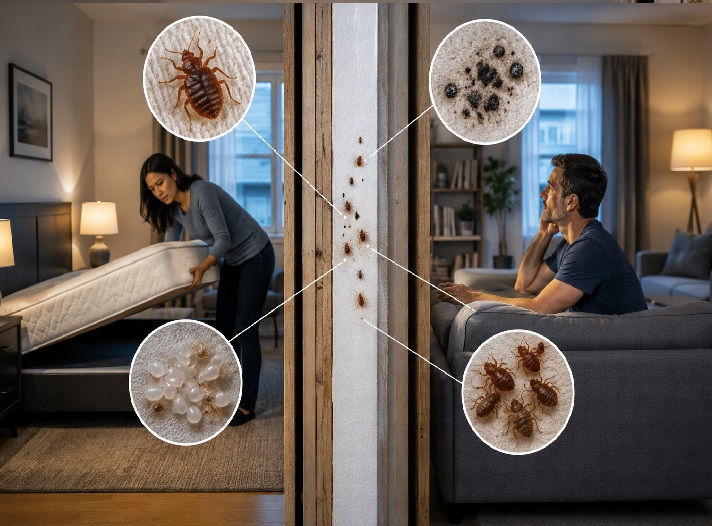
Reinfestation: Bed bugs can move between units, particularly in multi-family buildings.
Untreated adjacent units: Treating one apartment while activity remains in nearby units can allow the problem to continue.
Tenant behaviour: Moving furniture, sleeping in another room or moving belongings between rooms can complicate control.
Insufficient follow-up: Bed bug control may require repeated inspection and treatment rather than a single visit.
Treatment limitations: The existing treatment strategy may need to be modified based on the infestation and the professional’s findings.
Alberta guidance notes that bed bug control can take weeks and requires continued inspection and cooperation, particularly in multi-family buildings.
4. Inspect Units Around the Affected Apartment
In a multi-dwelling building, treating only the apartment where bed bugs were reported may not identify the entire problem.
Management should discuss with the pest professional whether surrounding apartments should be inspected, particularly units adjacent to, above or below the affected suite.
An Alberta government Residential Tenancy Act handbook specifically advises landlords and building managers to notify tenants and inspect units adjacent to, above and below apartments where bed bugs have been found.
This building-wide perspective can be critical because bed bugs can move between connected units and can also be transported on furniture, clothing and personal belongings.
5. Review Tenant Preparation and Cooperation
Successful bed bug management is a partnership.
Property management should make sure tenants receive clear written preparation instructions before treatment. Those instructions should explain what needs to be done, when it needs to be completed and what happens if preparation is not completed.
Alberta Health Services recommends cleaning, vacuuming, laundering and isolating appropriate items as part of bed bug management, while Health Canada notes that preparation requirements in multi-unit buildings commonly include organizing belongings, bagging items, laundering clothing and bedding, and moving furniture as directed by the pest professional.
However, management should avoid simply blaming the tenant when treatment fails. The objective should be to identify the specific obstacle preventing control and work with the tenant and pest professional to correct it.
6. Make Sure Tenants Know What to Expect After Treatment
A common source of frustration is when tenants expect all bed bug activity to disappear immediately.
Bed bug eggs can survive treatment depending on the treatment method, and follow-up inspection or treatment may be necessary.
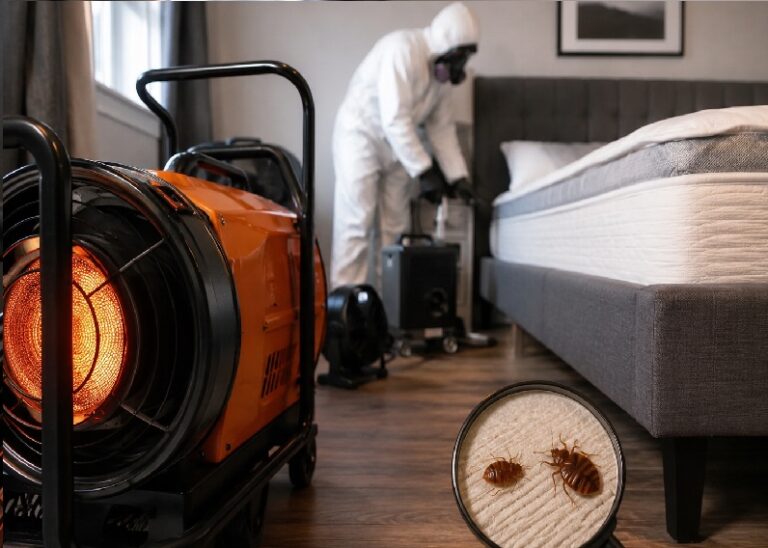
Health Canada explains that bed bug control can involve multiple approaches, including professional pesticide applications, steam, vacuuming, heat and other physical control measures.
The pest control provider should clearly communicate:
- What treatment was performed
- What tenants should do afterward
- When follow-up inspection should occur
- Whether another treatment may be required
- What signs tenants should report
- When cleaning can resume
Clear communication helps prevent confusion between tenants, management and the pest control company.
7. Consider Whether the Current Pest Control Strategy Needs to Change
If the infestation continues despite properly conducted treatments, management should ask the contracted provider whether the treatment strategy should be modified.
The answer may involve a combination of inspection, physical control, monitoring, sanitation, targeted treatment and additional follow-up rather than simply repeating the same procedure.
Health Canada describes integrated pest management as an approach that combines multiple methods to reduce pest populations and emphasizes prevention and the appropriate use of control products.
For a difficult multi-unit infestation, management should expect the pest professional to explain why the recommended strategy is appropriate rather than simply providing another appointment date.
8. Consider a Second Professional Assessment
If there has been repeated treatment with continuing live activity and no clear explanation for the lack of progress, property management may reasonably consider obtaining an independent assessment from another qualified pest management professional.
This does not necessarily mean the existing contractor has done something wrong.
A second assessment can provide another perspective on:
- Infestation severity
- Harbourage locations
- Treatment history
- Preparation issues
- Possible neighbouring-unit activity
- Building conditions
- Monitoring strategy
- Recommended next steps
The goal should be finding the cause of the persistent infestation rather than simply changing contractors.
9. Do Not Let the Contract Replace Oversight
Having a pest control contract does not mean management can stop monitoring the situation.
Health Canada specifically places responsibilities on landlords and building managers concerning pesticide use and emphasizes the importance of selecting qualified professionals, following product labels and communicating with occupants.
Management should periodically review whether the contracted program is producing measurable progress.
Useful questions include:
Are complaints decreasing?
Are live bed bugs still being found?
Are adjacent units being inspected when appropriate?
Are follow-up inspections occurring?
Are tenants receiving clear preparation instructions?
Are recommendations from the pest professional being completed?
Is the infestation actually getting smaller?
If the answer to these questions is consistently negative, the management strategy should be reassessed.
10. Understand the Potential Tenant and Property Risks
Persistent bed bugs can become more than a pest-control problem.
They can result in:
- Repeated tenant complaints
- Tenant dissatisfaction
- Increased management workload
- Repeated treatment costs
- Damage or disposal of personal belongings
- Tenant disputes
- Complaints to public health authorities
- Negative property reputation
- Increased vacancy or turnover concerns
Alberta Health Services states that tenants should report problems promptly and that landlords are responsible for keeping rental housing safe and in good repair. If reported problems are not addressed, tenants can contact Environmental Public Health for assistance.
The legal consequences of a particular situation depend on the facts, tenancy agreement and applicable Alberta law, so property managers should obtain legal advice for specific disputes.
11. Treat the Building, Not Just the Individual Suite
The biggest lesson for property managers is that bed bugs in a multi-family building should be approached as a building-management issue, not simply as an isolated apartment problem.
A successful program should consider:
Inspection → Identification → Treatment → Follow-up → Monitoring → Communication → Prevention
If activity continues, the process should be reassessed rather than automatically restarted.
12. Communication Between Three Parties Is Critical
Persistent infestations often become worse when communication breaks down.
There are three important parties:
Property Management
Coordinates access, tenant communication, scheduling, documentation and building-level decisions.
Tenant
Reports activity, follows reasonable preparation instructions and provides access for inspections and treatments.
Pest Control Professional
Inspects, identifies activity, develops the treatment strategy, performs appropriate control measures and provides follow-up recommendations.
Health Canada specifically identifies communication and cooperation between landlords, tenants and pest control applicators as key to addressing pest problems.
13. When Should Management Escalate the Situation?
Management should consider escalation when:
- Live bed bugs continue to be found after multiple treatments
- New units are reporting activity
- Adjacent units have not been assessed
- The pest control provider cannot explain the continued activity
- Treatment recommendations are repeatedly unsuccessful
- Tenant complaints are increasing
- There is inadequate documentation
- The infestation appears to be spreading
- There are concerns about pesticide application or occupant safety
Escalation does not necessarily mean terminating the current pest control contract. It means taking a closer look at the entire program and determining what needs to change.
The Bottom Line
When bed bugs remain active despite a contracted pest control company, property management should stop treating the situation as a routine service call and start treating it as a persistent building-management problem.
The solution may require a more comprehensive inspection, evaluation of neighbouring units, improved tenant preparation, better communication, additional follow-up, changes to the treatment strategy or an independent professional assessment.
Bed bugs are notoriously difficult to eliminate, and official Canadian and Alberta guidance recognizes that successful control can require multiple measures and continued cooperation.
For property managers, the objective should not simply be to demonstrate that a pest control company visited the building.
The objective should be to demonstrate that the infestation is being actively investigated, professionally managed, documented, monitored and brought toward resolution.
Frequently Asked Questions
Can a property manager be considered responsible if bed bugs continue after professional treatment?
Responsibility is fact-specific. Having a pest control contractor does not automatically eliminate or establish legal responsibility. Management should document complaints, inspections, treatments, recommendations and follow-up actions and obtain legal advice when a specific dispute arises.
Should only the affected apartment be treated?
Not necessarily. In multi-family buildings, the pest professional may recommend inspecting nearby units, including apartments adjacent to, above or below an affected unit. Alberta guidance specifically recommends this approach.
How long can bed bug control take?
It varies according to infestation size, building conditions, treatment approach and cooperation. Alberta Health Services notes that control can take weeks and requires continued inspection and cooperation.
What if the pest control company keeps treating but the problem does not improve?
Management should request a documented reassessment and explanation of why the infestation continues. If necessary, obtain an independent professional assessment rather than automatically repeating the same treatment.
Can tenants be responsible for bed bug infestations?
The circumstances matter. A tenant’s actions may contribute to an infestation or interfere with treatment, but management should investigate and document the situation rather than automatically assigning blame.
Should management keep records of every treatment?
Yes. Detailed records can help management understand treatment history, identify recurring patterns and demonstrate what actions were taken.
What is the most important step when treatment is not working?
Determine why it is not working. Repeating treatments without identifying the cause of continued activity can waste time and money while allowing the infestation to persist.