Top 10 Pest Problems in Calgary Commercial Properties: The Complete 2026 Guide for Business Owners
Table of Contents
Introduction
Owning or managing a commercial property in Calgary comes with many responsibilities, but one challenge that is often overlooked until it becomes a serious issue is commercial pest control management. Whether you operate a restaurant, office building, retail store, warehouse, hotel, healthcare facility, apartment complex, or industrial property, pests can quickly become more than just a nuisance. A single rodent sighting or cockroach discovered by a customer can damage your business reputation, disrupt operations, trigger health inspections, contaminate inventory, and lead to costly repairs. In today’s competitive business environment, proactive commercial pest control management is no longer optional—it is an essential part of protecting your investment.
Calgary’s unique climate creates year-round opportunities for different pest species to invade commercial properties. Long winters drive rodents indoors in search of warmth and food, while warmer months bring increased activity from insects such as wasps, ants, flies, and cockroaches. Modern commercial buildings also provide ideal environments for pests through hidden wall voids, suspended ceilings, utility penetrations, mechanical rooms, loading docks, storage areas, and food preparation spaces. Even businesses with excellent sanitation practices can experience infestations because pests often enter through deliveries, neighboring businesses, employee belongings, or small structural openings that go unnoticed.
Understanding the most common pest problems affecting Calgary businesses allows property owners and facility managers to recognize early warning signs, reduce risks, and implement effective prevention strategies before infestations become costly emergencies.
Implementing effective commercial pest control is crucial for maintaining the integrity of your business and ensuring a safe environment for customers and employees alike.
Why Commercial Buildings Are Vulnerable to Pest Infestations
Many businesses require tailored commercial pest control strategies to combat unique challenges in their specific sectors.
Understanding the importance of commercial pest control can help mitigate risks associated with pest infestations that could impact your business operations.
Unlike residential homes, commercial buildings typically operate for extended hours, receive constant deliveries, generate significant waste, and accommodate high volumes of employees, tenants, or customers. These conditions naturally create opportunities for pests to find food, water, shelter, and breeding sites. Large structures also contain numerous concealed spaces that are difficult to inspect regularly, allowing infestations to grow unnoticed.
Restaurants generate food waste that attracts cockroaches, rodents, and flies. Warehouses provide quiet storage areas where mice can nest undisturbed. Office buildings offer warm mechanical rooms and ceiling voids that shelter rodents during Calgary’s harsh winters. Apartment buildings and hotels experience constant movement of people and belongings, increasing the risk of bed bugs, cockroaches, and pharaoh ants spreading from one unit to another. Retail businesses may unknowingly receive stored product pests inside packaged goods, while healthcare facilities require specialized pest management programs to maintain strict sanitation standards.
Ultimately, addressing commercial pest control needs is vital for safeguarding your business and preserving customer trust.
Because every commercial property presents different risks, successful pest management begins with understanding which pests are most likely to affect your industry.
1. Mice: Calgary’s Most Common Commercial Pest
House mice remain the number one pest affecting commercial properties throughout Calgary. Their small size allows them to squeeze through openings as narrow as six millimetres, making it remarkably easy to enter buildings through gaps around utility lines, loading docks, damaged weather stripping, roof penetrations, and foundation cracks. Once inside, mice reproduce rapidly and establish nests inside wall cavities, storage rooms, suspended ceilings, and mechanical spaces.
One mouse may not seem like a significant problem, but a breeding pair can produce dozens of offspring within a single year under ideal conditions. Mice continuously gnaw on wood, drywall, insulation, plastic, and electrical wiring to keep their teeth from overgrowing. This behavior creates fire hazards, structural damage, and expensive repairs while contaminating surfaces with droppings and urine.
Regular assessments and professional commercial pest control services can significantly reduce the likelihood of infestations.
Utilizing integrated commercial pest control solutions can enhance overall effectiveness and customer satisfaction.
Incorporating commercial pest control best practices into daily operations is essential for long-term success.
Business owners often first notice scratching sounds inside walls, small black droppings near equipment, grease marks along baseboards, chewed packaging, or unusual odors. Unfortunately, by the time these signs become obvious, the infestation has often expanded well beyond the original nesting area.
2. Cockroaches: A Serious Health and Reputation Risk
Few pests create as much concern among customers as cockroaches. Seeing even one cockroach inside a restaurant, hotel, apartment building, office kitchen, or healthcare facility often indicates a much larger hidden population. German cockroaches, the species most commonly encountered indoors in Calgary, reproduce extremely quickly, allowing infestations to spread throughout entire buildings if left untreated.
Investing in commercial pest control measures not only protects your property but also ensures compliance with health regulations.
For businesses in Calgary, a proactive approach to commercial pest control is key to maintaining a solid reputation.
Cockroaches thrive wherever food residue, moisture, and warmth are consistently available. Commercial kitchens, staff lunchrooms, boiler rooms, janitorial closets, utility chases, and shared plumbing systems provide ideal environments for these resilient insects. Because they primarily hide during daylight hours, daytime sightings usually indicate overcrowding or a significant infestation.
Effective commercial pest control strategies can prevent disruptions and maintain operational efficiency.
Beyond their unpleasant appearance, cockroaches contaminate food preparation surfaces, spread bacteria, trigger allergies and asthma, and can negatively affect customer confidence. Professional Integrated Pest Management programs using targeted baits, monitoring devices, exclusion techniques, and sanitation improvements are typically the most effective approach for eliminating commercial cockroach infestations.
3. Pharaoh Ants: One of Calgary’s Most Challenging Structural Pests
Pharaoh ants present a unique challenge in multi-unit commercial properties because improper treatment often makes infestations worse. Unlike many other ant species, spraying visible workers with insecticides causes colonies to split into multiple smaller colonies through a process called budding. Instead of eliminating the infestation, this unintentionally spreads it throughout the building.
These tiny yellow ants commonly invade hospitals, office towers, apartment buildings, seniors’ residences, healthcare facilities, and commercial kitchens. They frequently nest inside wall voids, electrical outlets, insulation, and plumbing systems where they remain hidden from view.
Successful pharaoh ant management requires professional baiting strategies specifically designed to eliminate the entire colony, including queens, rather than simply killing visible workers.
4. Bed Bugs: No Longer Limited to Hotels
Although bed bugs are traditionally associated with hotels, they are increasingly found in office buildings, apartment complexes, healthcare facilities, shelters, employee lounges, and commercial buildings where people spend extended periods of time. These insects hitchhike on clothing, backpacks, furniture, luggage, and deliveries, allowing them to spread easily between locations.
Unlike rodents or cockroaches, bed bugs are not attracted to food waste. Instead, they seek human hosts for blood meals while hiding during the day inside furniture, wall voids, electrical outlets, upholstered seating, and baseboards.
Early detection is essential because bed bugs multiply quickly and become increasingly difficult to eliminate once established.
5. Flies: A Major Sanitation Concern
Fly infestations are among the most common reasons businesses receive customer complaints. House flies, fruit flies, drain flies, and blow flies are capable of contaminating food, spreading bacteria, and creating unsanitary conditions that may attract regulatory attention.
Restaurants, grocery stores, food manufacturing facilities, bakeries, cafeterias, bars, and commercial kitchens are especially vulnerable because moisture, food waste, drains, and organic debris provide ideal breeding conditions.
While many businesses focus on treating adult flies, effective commercial fly control also targets breeding sources through sanitation improvements, drain maintenance, waste management, exclusion techniques, and monitoring devices.
6. Wasps: Seasonal Safety Hazards
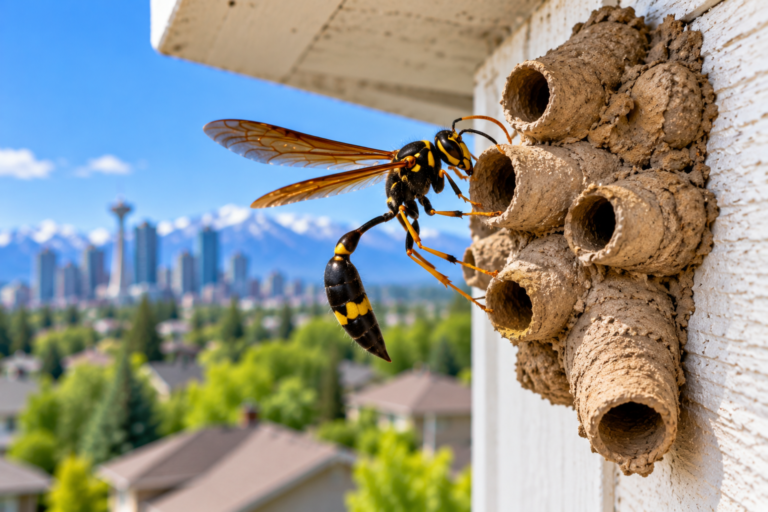
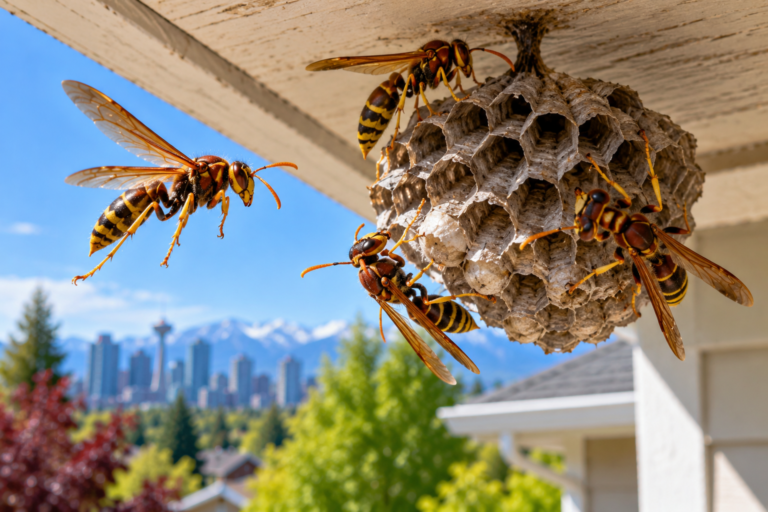
Every spring, queen wasps emerge from overwintering sites and begin constructing new nests around commercial buildings. Roof overhangs, soffits, loading docks, outdoor patios, signage, HVAC equipment, and wall voids frequently become nesting sites.
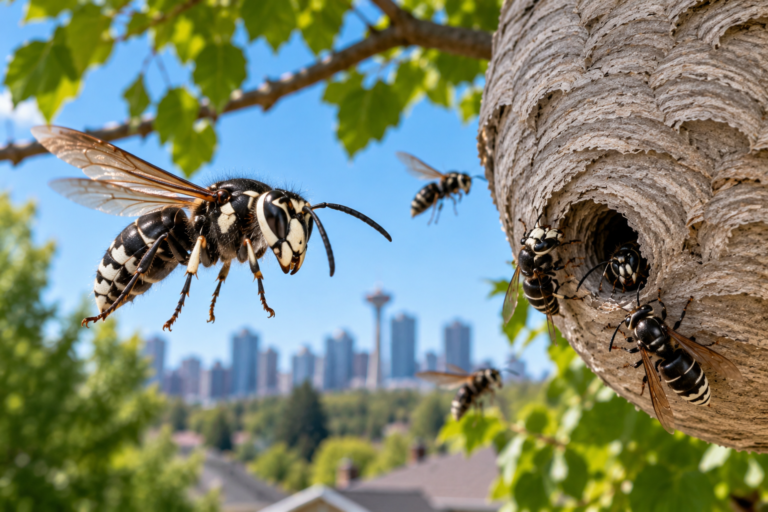
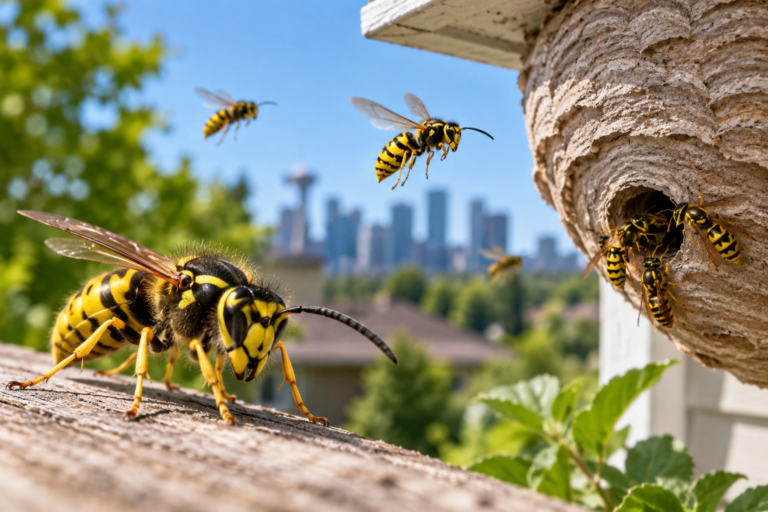
As colonies grow throughout the summer, aggressive worker wasps increase the likelihood of employee or customer stings. For businesses with outdoor seating areas, daycare facilities, schools, warehouses, or busy entrances, unmanaged wasp nests represent a significant liability.
Professional removal is recommended because disturbing large nests without proper equipment may provoke defensive swarming behavior.
7. Spiders: Indicators of Other Pest Activity
While most spiders found in Calgary are harmless, heavy spider activity often indicates a larger insect population inside or around the building. Spiders establish webs where flying insects are abundant, making them valuable indicators during commercial inspections.
Storage areas, mechanical rooms, loading docks, warehouses, basements, stairwells, and exterior lighting are common locations where spiders accumulate.
Reducing spider populations usually involves addressing the insects they feed upon while improving sanitation and sealing structural entry points.
8. Birds: More Than Just a Nuisance
Pigeons and sparrows frequently roost on commercial buildings throughout Calgary, especially around rooftops, loading docks, signage, solar panels, and HVAC equipment. Bird droppings accelerate building deterioration, block drainage systems, create slip hazards, and may contribute to health concerns when allowed to accumulate.
Nesting materials also obstruct ventilation systems and attract secondary pests such as mites, fleas, and beetles.
Humane bird exclusion systems, including netting, spikes, and specialized barriers, offer long-term protection without harming wildlife.
9. Stored Product Pests
Businesses that store dry food products frequently encounter beetles, moths, and weevils capable of infesting flour, cereals, grains, spices, pet food, baking ingredients, and packaged products.
These pests often arrive inside shipments rather than entering from outdoors. Without routine inspections and inventory rotation, infestations can spread throughout warehouses, grocery stores, restaurants, and food manufacturing facilities.
Understanding the unique challenges of commercial pest control allows for better planning and execution of pest management strategies.
Integrated inventory management and monitoring programs significantly reduce stored product pest activity.
10. Carpet Beetles
Engaging with commercial pest control experts can elevate the effectiveness of your pest management efforts.
Our comprehensive commercial pest control programs are designed to address the specific needs of various businesses in Calgary.
Although less commonly discussed than rodents or cockroaches, carpet beetles regularly damage commercial properties containing natural fibers. Hotels, offices, museums, retail stores, libraries, and heritage buildings may experience infestations that destroy carpets, upholstered furniture, wool products, and stored fabrics.
Because larvae feed quietly inside hidden areas, damage often becomes extensive before businesses recognize the infestation.
Awareness of commercial pest control practices can reduce the chances of infestations and preserve your business’s reputation.
Routine inspections help identify carpet beetles before costly replacement of furnishings becomes necessary.
Effective commercial pest control methods are crucial for ensuring a safe environment for both employees and customers.
Why Year-Round Commercial Pest Management Matters
Many business owners mistakenly assume pest control is only necessary after seeing visible pests. In reality, by the time rodents, cockroaches, or ants become noticeable during normal business hours, infestations are often well established. Preventive pest management emphasizes early detection through scheduled inspections, monitoring devices, sanitation recommendations, exclusion work, documentation, and targeted treatments designed to stop problems before they disrupt operations.
A comprehensive Integrated Pest Management (IPM) program not only reduces pesticide use but also improves long-term pest prevention by identifying the underlying conditions that allow infestations to develop. Regular inspections help detect structural deficiencies, moisture issues, food sources, and entry points before they become expensive liabilities.
Utilizing thorough commercial pest control measures fosters a culture of safety and cleanliness within your business.
Every business should prioritize commercial pest control to maintain operational efficiency and customer satisfaction.
Understanding local pest trends and commercial pest control requirements can enhance your business’s readiness against infestations.
Investing in commercial pest control not only safeguards your business but also enhances customer trust and satisfaction.
Proactive commercial pest control measures can prevent potential crises that could disrupt business operations.
All commercial pest control services should align with industry standards and regulations to ensure safety and effectiveness.
Choosing a reputable commercial pest control provider is essential for the long-term success of your pest management strategy.
Effective commercial pest control integrates a variety of methods to ensure comprehensive protection against infestations.
Investing time and resources in commercial pest control will yield long-term benefits for your business.
Protect Your Calgary Business with Professional Commercial Pest Control
Every commercial property has unique pest pressures depending on its industry, building design, occupancy, and surrounding environment. Restaurants require different solutions than warehouses, healthcare facilities, office towers, or apartment buildings. Partnering with an experienced commercial pest management provider ensures your facility receives customized recommendations based on your specific risks rather than generic treatments.
At Pest Pro Exterminator, we provide comprehensive commercial pest management programs throughout Calgary for restaurants, offices, warehouses, hotels, retail businesses, apartment buildings, industrial facilities, healthcare properties, and property management companies. Our approach combines detailed inspections, monitoring, exclusion, targeted treatments, and ongoing prevention to help businesses maintain safe, clean, and pest-free environments throughout every season.
Frequently Asked Questions (FAQ) about Commercial Pest Control
What is the most common pest found in Calgary commercial buildings?
Mice are the most common commercial pest in Calgary due to the city’s long winters, which drive rodents indoors to seek warmth, food, and shelter.
Why are cockroaches considered a serious commercial pest?
Cockroaches contaminate food, spread bacteria, trigger allergies, reproduce rapidly, and can severely damage a business’s reputation if customers or employees see them.
How often should commercial properties receive pest inspections?
Most businesses should schedule monthly inspections, while restaurants, food facilities, hotels, healthcare buildings, and apartment complexes often benefit from more frequent service depending on their level of risk.
What industries are most vulnerable to pest infestations?
Restaurants, warehouses, grocery stores, hotels, office buildings, apartment complexes, healthcare facilities, schools, retail stores, and manufacturing facilities commonly require ongoing commercial pest management.
Can one mouse indicate a larger infestation?
Yes. Mice reproduce quickly, and seeing one mouse inside a commercial building often suggests additional rodents are hiding within walls, ceilings, storage areas, or mechanical rooms.
Are pharaoh ants difficult to eliminate?
Yes. Pharaoh ants require specialized baiting programs because improper spraying can cause colonies to split and spread throughout the building.
What is Integrated Pest Management (IPM)?
Integrated Pest Management is a long-term strategy that combines inspection, monitoring, sanitation, exclusion, habitat modification, and targeted treatments to prevent infestations while minimizing unnecessary pesticide use.
Why should businesses invest in preventive commercial pest control?
Preventive pest management helps protect customer confidence, employee safety, inventory, equipment, and regulatory compliance while reducing the likelihood of costly emergency infestations and business interruptions.