Wood Cockroach Biology: Life Cycle, Habitat and Where Wood Cockroaches Are Found in Alberta
Table of Contents
What Is a Wood Cockroach?
Wood cockroach is a common name used for several species in the genus Parcoblatta. These cockroaches are primarily outdoor, woodland insects, rather than the indoor-infesting species typically associated with kitchens, apartments, and commercial food facilities. The genus Parcoblatta contains multiple North American species.
Wood cockroaches are important decomposers in natural environments because they feed on decaying organic material such as leaves and rotting wood.
Are Wood Cockroaches Found in Alberta?
Wood cockroaches need to be discussed carefully in an Alberta context because not every Parcoblatta species occurs in Alberta. For example, Canadian species information lists Uhler’s wood cockroach (Parcoblatta uhleriana) as absent from Alberta.
The broader term “wood cockroach” can refer to different species with different geographic ranges. Therefore, a cockroach found outdoors or around firewood in Alberta should be properly identified before being classified as a particular Parcoblatta species.
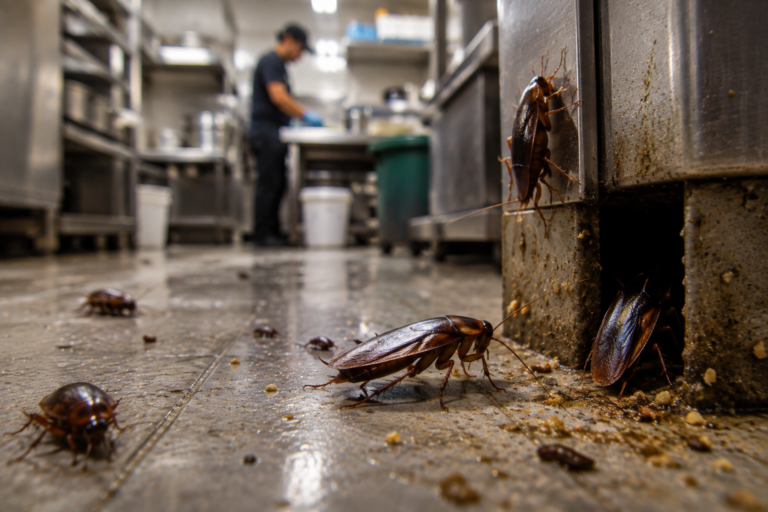
This is especially important for pest professionals because a wood cockroach entering a building behaves very differently from a German, American, or Oriental cockroach.
Related Guide: Learn more about [Cockroaches in Calgary: Identification, Biology, Prevention & Control].
Where Do Wood Cockroaches Live?
Wood cockroaches are primarily associated with wooded and outdoor environments.
Typical habitats include:
- Forests and woodland areas
- Fallen leaves
- Decaying logs
- Tree stumps
- Loose bark
- Firewood piles
- Wood debris
- Leaf litter
- Crevices around trees
- Buildings located near wooded areas
Some species may occasionally enter structures, particularly when buildings are close to suitable outdoor habitat.
Wood Cockroaches and Firewood
Firewood is an important consideration when identifying wood cockroaches around homes.
Wood cockroaches can shelter in or around wood and may accidentally be transported indoors with firewood or lumber. Once inside a heated building, however, they generally do not behave like the major indoor cockroach pests and normally do not establish the same type of indoor population.
This is one reason why finding a single cockroach near a firewood pile or recently brought-in wood does not necessarily indicate an indoor infestation.
What Does a Wood Cockroach Look Like?
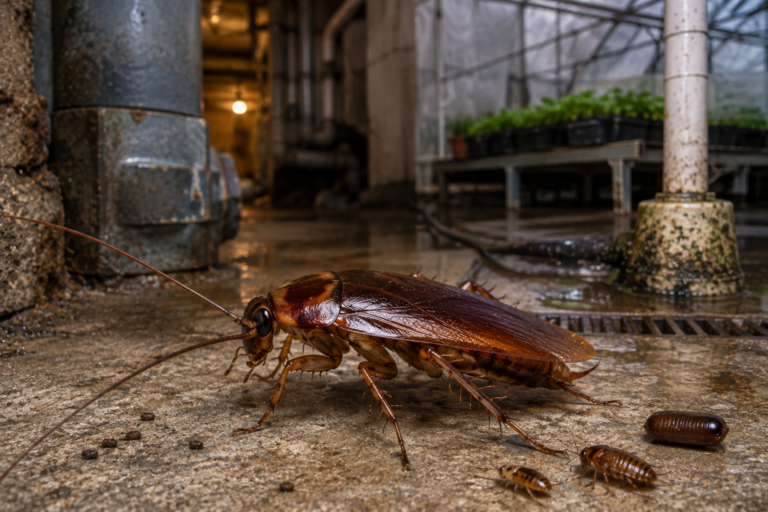
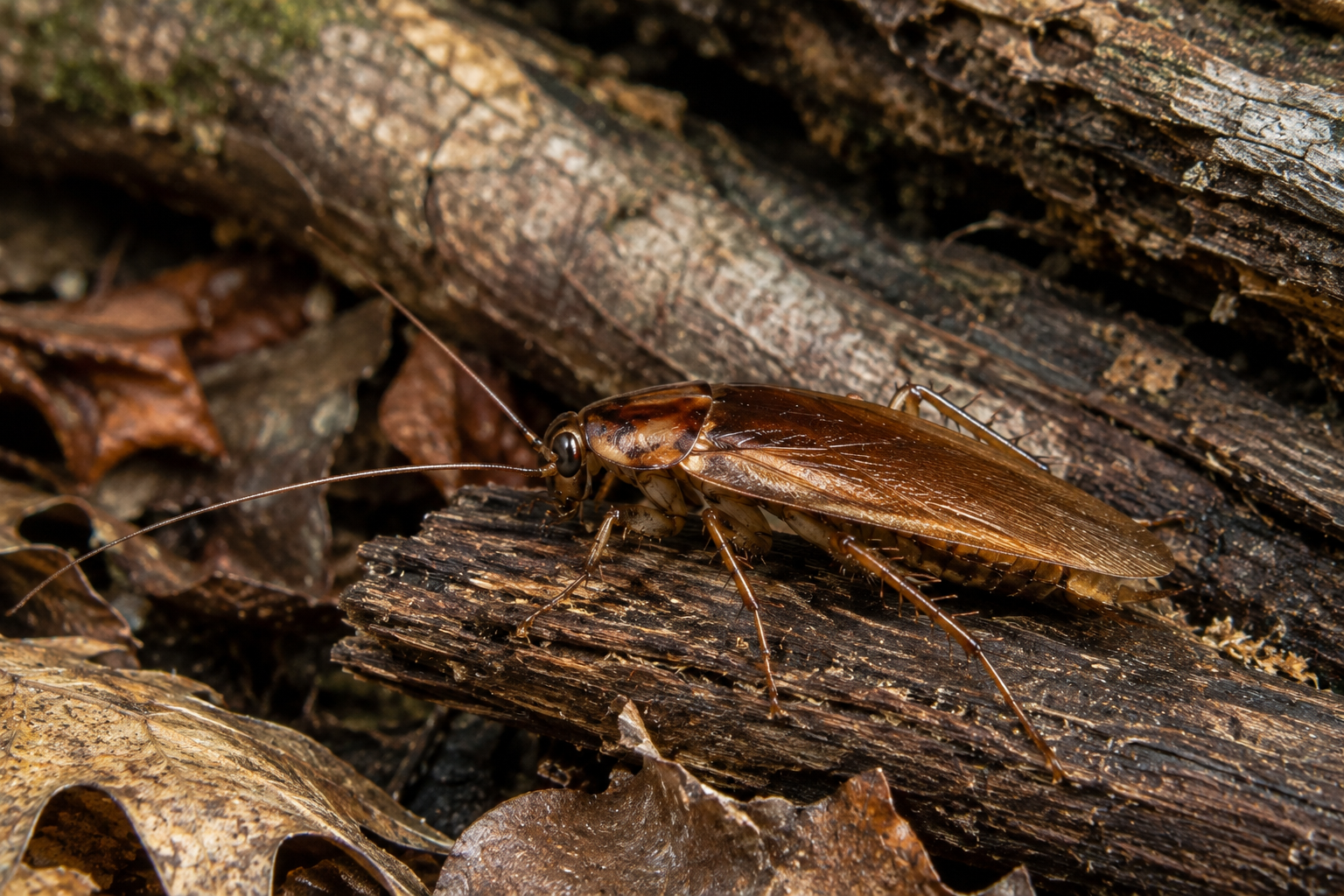
Wood cockroaches vary somewhat by species, but they are generally brown to yellowish-brown and relatively slender.
The Pennsylvania wood cockroach (Parcoblatta pennsylvanica), for example, is generally yellowish-brown to brown, with males having fully developed wings. Wood cockroaches can range roughly from 12 to 30 mm depending on species and sex.
Because their appearance can overlap with other cockroach species, professional identification may be necessary when an unusual cockroach is discovered.
Male and Female Wood Cockroaches
One of the interesting characteristics of wood cockroaches is the difference between males and females.
In several Parcoblatta species, males have well-developed wings and are capable of flying, while females have shorter wings or wing pads and are much less capable of flight.
Male wood cockroaches may also be attracted to outdoor lights, which can bring them close to buildings during the warmer months.
Wood Cockroach Biology
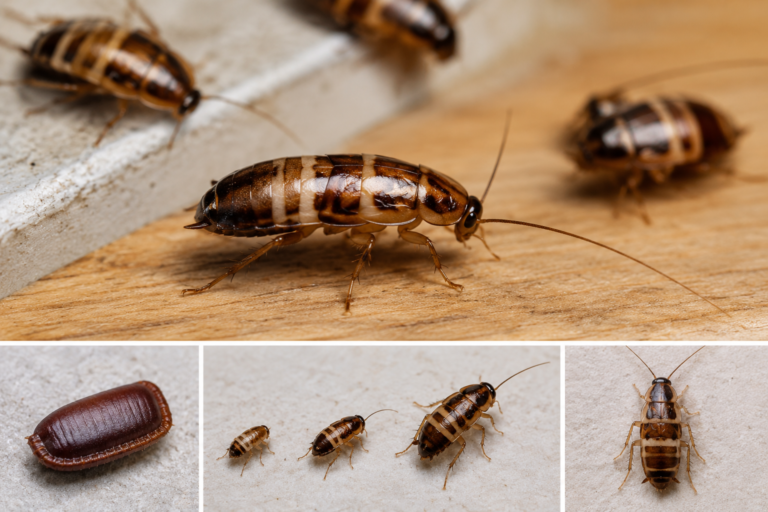
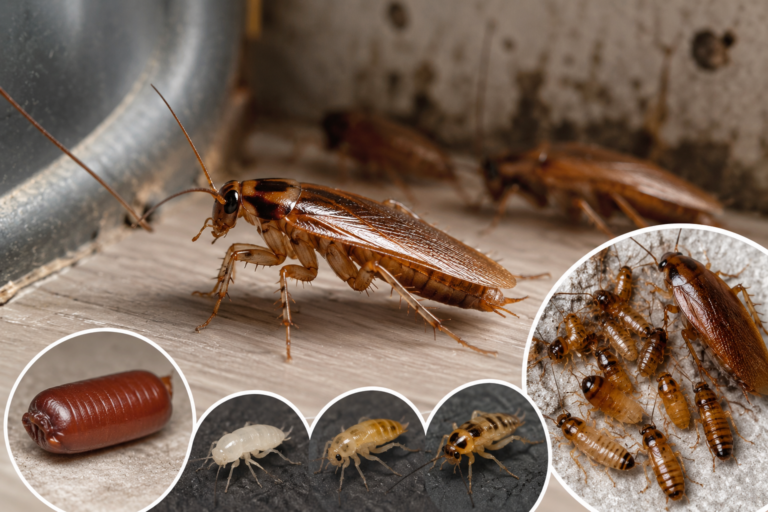
Wood cockroaches undergo incomplete metamorphosis.
Their life cycle consists of:
Egg → Nymph → Adult
There is no pupal stage. Instead, nymphs gradually develop into adults through a series of molts.
The life cycle is closely tied to seasonal conditions. Depending on species and environmental conditions, development can take approximately one year and sometimes longer.
Wood Cockroach Egg Cases
Female wood cockroaches produce protective egg cases called oothecae.
The egg cases are typically deposited in protected outdoor locations, such as beneath bark or in other sheltered areas associated with wood and vegetation.
For Pennsylvania wood cockroaches, historical Canadian agricultural literature describes egg cases beneath tree bark and notes that nymphs overwinter before developing into adults the following season.
Wood Cockroach Nymphs
Wood cockroach nymphs are smaller versions of the developing insect and lack the fully developed wings seen in adult males.
Young nymphs spend much of their development in outdoor harbourage such as leaf litter, decaying wood, bark, and other protected areas.
Some species overwinter as partially developed nymphs, allowing them to survive the colder part of the year before continuing development when conditions improve.
What Do Wood Cockroaches Eat?
Wood cockroaches primarily feed on decaying organic material.
Their food can include:
- Decaying leaves
- Rotting wood
- Organic debris
- Other decomposing plant material
- Occasionally other available organic matter
This feeding behavior makes wood cockroaches part of the natural decomposition process in woodland ecosystems.
Do Wood Cockroaches Infest Homes?
Generally, wood cockroaches do not establish the same type of indoor infestation as German cockroaches.
They are primarily outdoor insects and may enter buildings accidentally. Once inside, the dry and heated conditions of a typical home may be unsuitable for maintaining a long-term population.
This distinction is important because finding one wood cockroach indoors does not automatically mean that the building has a breeding infestation.
Why Do Wood Cockroaches Enter Buildings?
Wood cockroaches may enter structures accidentally or while searching for shelter.
Possible situations include:
- Homes located near wooded areas
- Cockroaches transported with firewood
- Entry through doors and windows
- Attraction to outdoor lighting
- Movement from vegetation or wood piles near buildings
Male wood cockroaches can be attracted to lights, making outdoor lighting an important factor when they are observed around a property.
Wood Cockroaches and Alberta Homes
For Alberta homeowners, an occasional cockroach found around firewood, outdoor storage, vegetation, or a wooded property should not automatically be assumed to be a German or American cockroach.
Species identification is important.
A wood-associated cockroach may simply be an outdoor species that accidentally entered the building rather than a species that is attempting to establish an indoor colony.
Wood Cockroaches Around Firewood Piles
Firewood piles can provide shelter for many insects, including wood-associated cockroaches.
When firewood is moved indoors, insects hiding underneath bark, inside cracks, or between pieces of wood may emerge.
This is one reason wood-associated insects can occasionally appear inside cabins, garages, sheds, and homes after firewood is brought indoors.
Wood Cockroaches and Light
Light attraction is another interesting part of wood cockroach biology.
Male wood cockroaches can be attracted to lights, particularly during the active season. They may therefore be observed around exterior lights, windows, doors, rain gutters, or other illuminated portions of buildings.
This behavior can sometimes make a property appear to have a larger cockroach problem than actually exists.
Wood Cockroach vs. American Cockroach
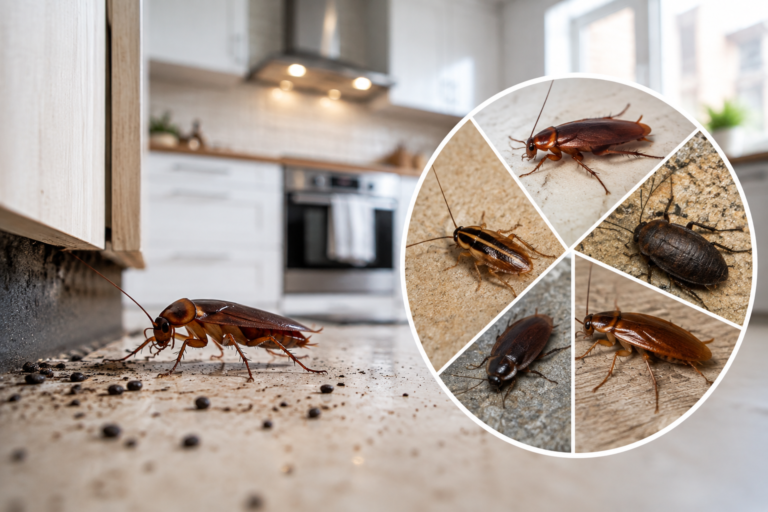
Wood cockroaches can sometimes be confused with American cockroaches because both may be brown and relatively large.
However, there are important biological differences.
Wood cockroaches:
- Primarily outdoor insects
- Associated with forests, wood, leaves, and decaying organic matter
- May accidentally enter buildings
- Generally do not establish typical indoor infestations
- Males of several species can fly
American cockroaches:
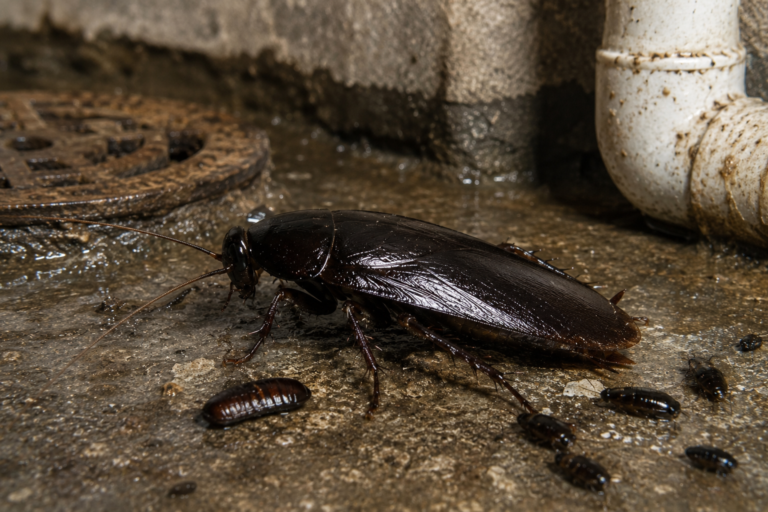
- Strongly associated with warm, humid environments
- Can establish populations in suitable buildings
- Commonly associated with mechanical areas, drains, sewers, and other warm environments
Correct identification helps determine whether a cockroach is an outdoor visitor or a building-associated pest.
Wood Cockroach vs. German Cockroach
German cockroaches are one of the most important indoor cockroach pests in Alberta, with Alberta Health identifying them as the most common cockroach type in the province.
German cockroaches typically live and reproduce inside warm buildings, particularly where food, moisture, and shelter are available.
Wood cockroaches have a fundamentally different lifestyle. They are primarily outdoor insects associated with woodland habitat and decaying organic material.
Do Wood Cockroaches Carry Diseases?
Wood cockroaches are not generally considered the same type of indoor sanitation pest as German cockroaches.
Because they primarily live outdoors and generally do not establish indoor populations, their pest significance is usually much lower. However, any cockroach found inside a food-handling environment should be properly identified and evaluated.
Why Wood Cockroach Biology Matters for Pest Control
Understanding wood cockroach biology helps prevent misidentification and unnecessary treatment.
If a wood cockroach enters a building from an outdoor habitat, the appropriate approach may involve identifying the source, reducing outdoor harbourage near the structure, addressing entry points, and managing conditions that attract the insects.
This is very different from managing an established German cockroach infestation inside a kitchen or commercial food facility.
Final Thoughts
Wood cockroaches are fascinating outdoor cockroaches that are closely connected to forests, decaying wood, leaf litter, bark, and other natural habitats.
Unlike German, Oriental, and American cockroaches, wood cockroaches generally do not depend on buildings for their survival. They may occasionally enter homes, garages, cabins, and other structures, particularly when they are near suitable outdoor habitat or when insects are accidentally transported indoors with firewood.
For Alberta property owners, proper identification is especially important because the term “wood cockroach” covers multiple Parcoblatta species and not every species occurs throughout Alberta.
A cockroach found near firewood, trees, leaf litter, or other outdoor organic material may be an outdoor wood-associated species rather than an indoor infestation species. Understanding its biology can help determine whether the insect is simply an occasional visitor or evidence of a pest population that requires professional attentio
Frequently Asked Questions About Wood Cockroaches
Are wood cockroaches found in Alberta?
Wood cockroaches are associated with outdoor woodland habitats, but the term wood cockroach refers to several species, and their geographic ranges differ. Not every Parcoblatta species occurs in Alberta, so proper identification is important.
What does a wood cockroach look like?
Wood cockroaches are generally brown to yellowish-brown and relatively slender. Appearance varies between species and between males and females.
Where do wood cockroaches live?
Wood cockroaches primarily live outdoors in environments such as:
- Forests and wooded areas
- Leaf litter
- Decaying logs
- Tree stumps
- Loose bark
- Firewood piles
- Wood debris
- Vegetation
Can wood cockroaches enter houses?
Yes. Wood cockroaches can occasionally enter homes, cabins, garages, sheds, and other structures, particularly when the building is close to wooded habitat.
Do wood cockroaches infest homes?
Generally, wood cockroaches do not establish the typical indoor infestations associated with German cockroaches. They are primarily outdoor insects and may enter buildings accidentally.
Can wood cockroaches come inside with firewood?
Yes. Cockroaches and other insects can shelter in or around firewood. When firewood is brought indoors, insects hidden underneath bark or within protected spaces can emerge.
Why are wood cockroaches attracted to houses?
Wood cockroaches may be attracted to structures because of outdoor lighting, shelter, nearby vegetation, wood piles, or accidental entry through doors and windows.
Can wood cockroaches fly?
In several wood cockroach species, adult males have fully developed wings and can fly, while females have shorter wings and are much less capable of flight.
Why do wood cockroaches gather around outdoor lights?
Adult males of several Parcoblatta species can be attracted to light. This means they may sometimes be noticed around exterior lights, windows, doors, and other illuminated areas of buildings.
What do wood cockroaches eat?
Wood cockroaches primarily feed on decaying organic material, including decomposing leaves, rotting wood, and other plant material.
Are wood cockroaches beneficial to the environment?
Yes. Wood cockroaches contribute to the natural decomposition process by feeding on decaying organic material and helping return nutrients to the ecosystem.
What is the life cycle of a wood cockroach?
Wood cockroaches undergo incomplete metamorphosis:
Egg → Nymph → Adult
There is no pupal stage. Nymphs gradually develop into adults through a series of molts.
Where do wood cockroaches lay their eggs?
Female wood cockroaches produce protective egg cases called oothecae. Depending on the species, egg cases may be placed in protected outdoor locations associated with bark, wood, leaf litter, and other natural harbourage.
Can wood cockroaches survive Alberta winters?
Outdoor survival depends on the species and the specific conditions of the habitat. Protected areas such as leaf litter, bark, fallen wood, and sheltered woodland environments can provide greater protection from winter conditions than exposed locations.
Are wood cockroaches the same as American cockroaches?
No. They are different types of cockroaches with different lifestyles.
Wood cockroaches are primarily outdoor insects associated with woodland habitats.
American cockroaches are strongly associated with warm, humid environments such as mechanical rooms, drains, sewers, and other heated structures.
Are wood cockroaches the same as German cockroaches?
No. German cockroaches are an important indoor pest species and are the most common cockroach type identified by Alberta Health. Wood cockroaches are primarily outdoor insects and generally do not establish the same type of indoor infestation.
Should I be concerned if I find one wood cockroach inside?
Not necessarily. A single wood cockroach may simply be an accidental outdoor visitor, particularly if the property is near trees, woodland, vegetation, or firewood.
Repeated sightings should be investigated to determine the species and identify how the insects are entering the structure.
How can I reduce wood cockroaches around my home?
Helpful measures include keeping firewood away from the building, reducing excessive vegetation and organic debris near the foundation, sealing gaps around doors and windows, using exterior lighting thoughtfully, and keeping outdoor areas relatively clean and dry.
When should I contact a pest professional?
Consider a professional inspection if you are finding multiple cockroaches, repeated sightings, nymphs, or cockroaches in several areas of the building. Proper identification is especially important because an outdoor wood cockroach requires a different management approach from an established indoor cockroach infestation.
If you are dealing with recurring Wood cockroach activity, learn more about professional Cockroach Control Calgary from Pest Pro Exterminator.