Ants Around Your Yard: Causes, Prevention & Professional Ant Control in Calgary
Table of Contents
Why Are There Ants Around Your Yard?
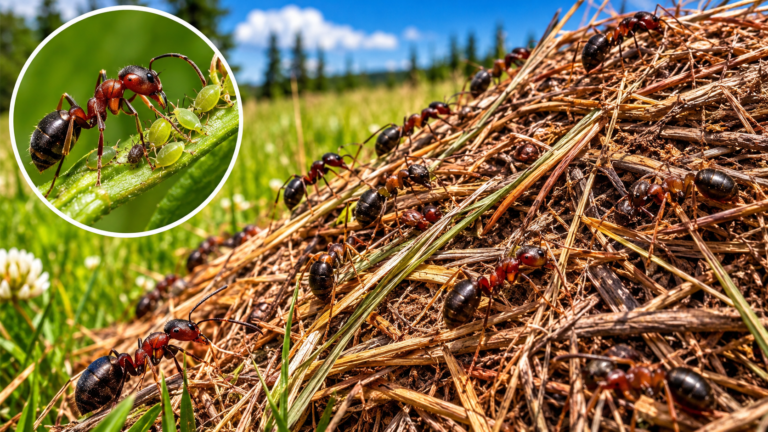
Ants are one of the most common insects found in residential yards throughout Calgary and Alberta. While seeing a few ants outdoors is perfectly normal, large numbers of ants may indicate established colonies beneath the soil, under rocks, along sidewalks, or near your home’s foundation. Ants play an important role in the environment by aerating the soil, breaking down organic matter, and feeding on other insects. However, when their populations grow too large or they begin moving closer to your home, they can become a nuisance and increase the risk of an indoor infestation.
What Attracts Ants to Your Yard?
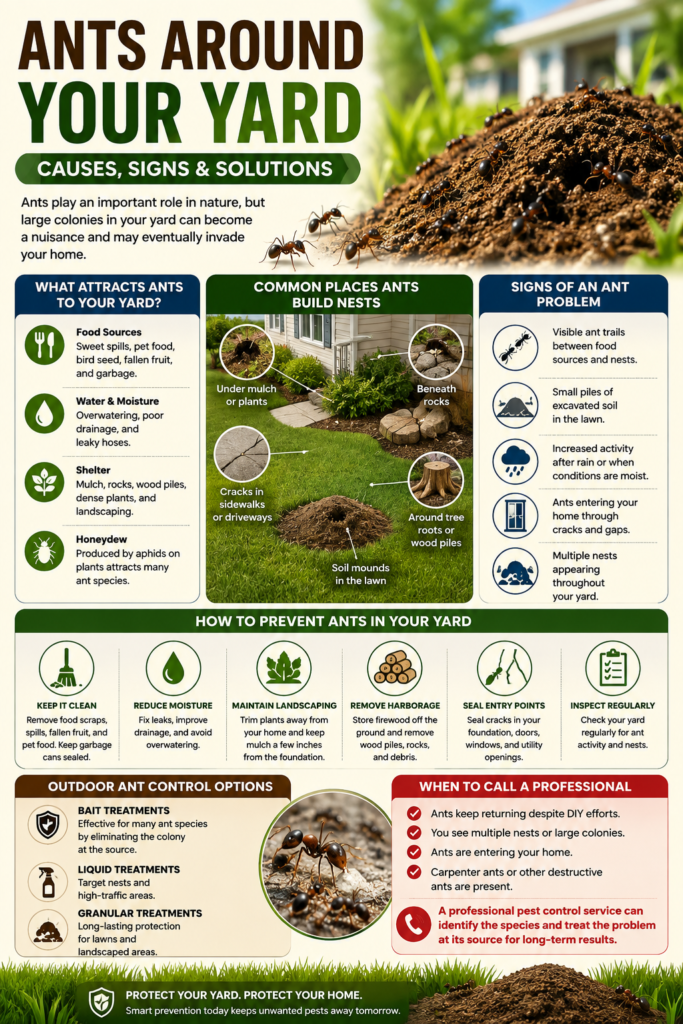
Ants are constantly searching for food, water, and suitable nesting locations. Sweet spills from outdoor gatherings, pet food left outside, overflowing garbage bins, fallen fruit, bird seed, and even honeydew produced by aphids can attract foraging ants. Moist areas created by overwatering, leaking hoses, or poor drainage also provide ideal conditions for many ant species. Landscaping materials such as mulch, wood piles, decorative stones, and dense vegetation offer excellent shelter where colonies can thrive undisturbed.
Common Places Ants Build Their Nests
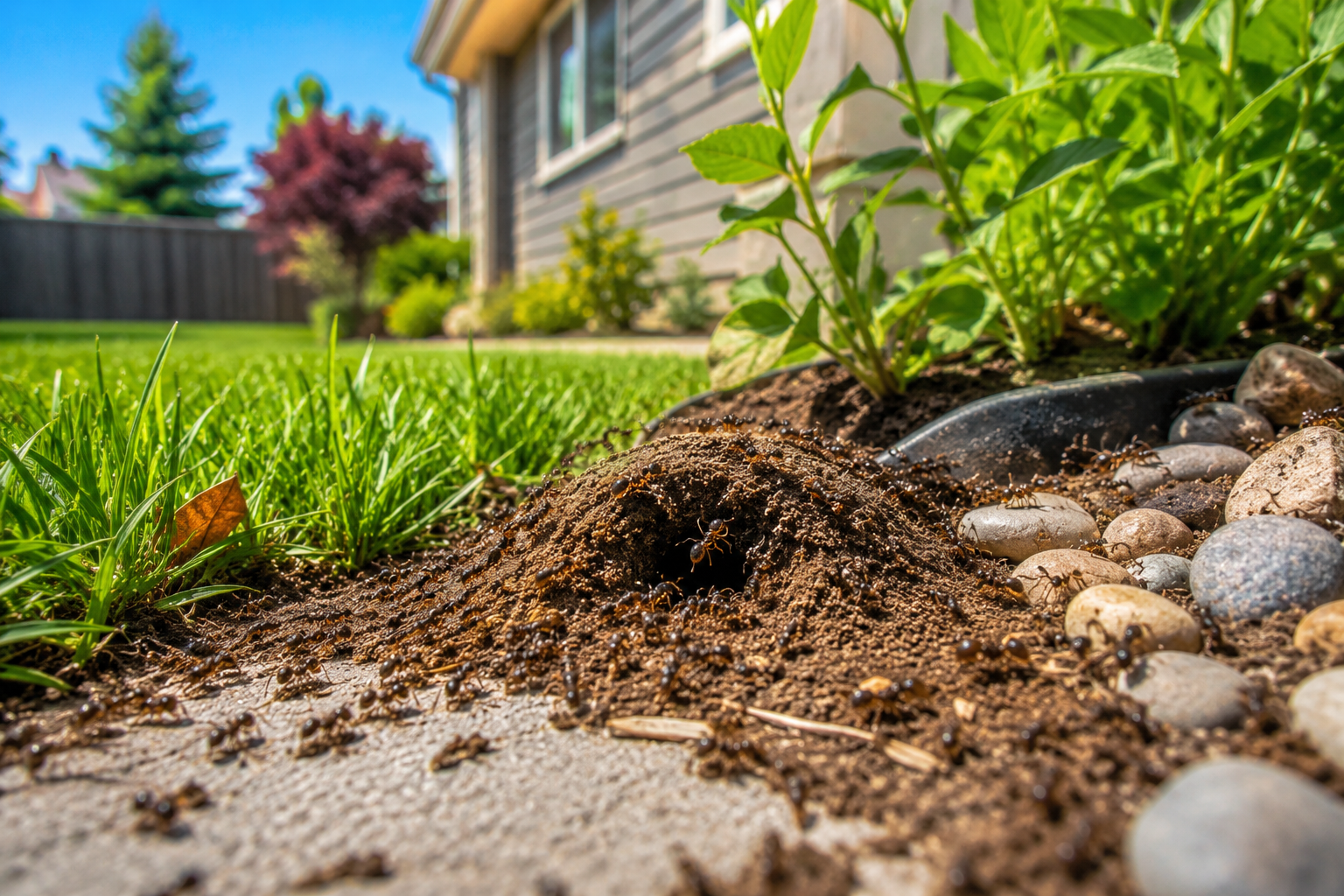
Many ant species prefer to build their nests in sunny, well-drained areas. You may notice small soil mounds in your lawn, nests beneath patio stones, cracks in driveways, under landscape timbers, or around tree roots. Some species, such as carpenter ants, may nest in damp or decaying wood found in fences, stumps, decks, or firewood piles. These nesting sites allow colonies to expand while remaining protected from predators and changing weather conditions.
Signs of an Ant Problem in Your Yard
A few ants wandering through your lawn are not usually a concern, but continuous trails of ants traveling between nests and food sources may indicate a growing colony. Small piles of excavated soil, increased ant activity after rainfall, and multiple nests appearing throughout the yard are signs that the population is becoming established. If ants are regularly seen climbing your home’s foundation, entering through cracks, or gathering around doors and windows, they may eventually invade the interior of your home.
How to Reduce Ant Activity Outdoors
Keeping your yard clean and dry is one of the most effective ways to discourage ants. Remove food sources promptly, store garbage in sealed containers, trim vegetation away from your home’s foundation, eliminate standing water, and reduce excessive moisture around flower beds. Regular lawn maintenance and sealing cracks in sidewalks and foundations can also help limit nesting opportunities. For larger infestations involving multiple colonies or persistent ant activity, professional pest management can identify the species involved and provide targeted treatments that reduce the colony at its source while minimizing the impact on beneficial insects.
When to Call a Professional
If ants continue returning despite sanitation efforts, or if they begin entering your home, professional inspection is recommended. Different ant species require different treatment methods, and correctly identifying the species is essential for long-term control. A licensed pest management professional can locate hidden nests, assess the extent of the infestation, and implement a customized treatment plan to help protect both your yard and your home from recurring ant problems.
Frequently Asked Questions (FAQ) About Ants Around the Yard
1. Why are there so many ants in my yard?
Ants are attracted to yards that provide food, moisture, and safe nesting areas. Overwatered lawns, fallen fruit, pet food, mulch, and aphids on plants can all encourage ant colonies to establish themselves.
2. Are ants in the yard harmful?
Most outdoor ants are harmless and beneficial because they help aerate the soil and feed on other insects. However, large colonies can become a nuisance and may eventually move indoors in search of food and water.
3. Can ants in my yard get inside my house?
Yes. Ants often enter homes through small cracks in foundations, gaps around doors and windows, utility openings, and damaged weather stripping, especially when outdoor food sources become scarce.
4. What types of ants are commonly found in Calgary yards?
Common species include pavement ants, carpenter ants, thatching ants, and field ants. Each species has different nesting habits and may require different treatment methods.
5. What attracts ants to my lawn?
Ants are attracted by sweet foods, greasy food scraps, pet food, bird seed, aphids that produce honeydew, standing water, and sheltered nesting sites such as mulch, rocks, and wood piles.
6. Should I remove ant hills from my yard?
Small ant hills can often be left alone if they are not causing problems. However, multiple ant hills or large colonies near your home should be inspected and treated to prevent the infestation from spreading.
7. Can ants damage my lawn?
Most ants do not damage healthy lawns directly. However, large colonies can create unsightly soil mounds, interfere with grass growth, and encourage aphids that may harm plants.
8. How can I prevent ants from nesting around my home?
Keep your yard clean, remove food sources, fix drainage issues, trim vegetation away from the house, store firewood off the ground, and seal cracks around your home’s foundation to reduce nesting opportunities.
9. Are DIY ant treatments effective?
DIY treatments may reduce visible ant activity temporarily but often fail to eliminate the entire colony, especially if the queen survives. Persistent infestations usually require professional treatment for long-term control.
10. When should I call a professional pest control company?
Contact a pest control professional if you notice multiple ant colonies, ants repeatedly entering your home, carpenter ants nesting in wood, or if DIY treatments have not resolved the problem. Professional identification and targeted treatment provide the most effective long-term solution.
11. Do ants become more active during the summer?
Yes. Ants are most active during the warmer months when they are foraging for food, expanding their colonies, and raising new generations of workers.
12. Can Pest Pro Exterminator treat outdoor ant infestations in Calgary?
Yes. Pest Pro Exterminator provides professional ant inspections and customized treatment programs for residential and commercial properties throughout Calgary and surrounding communities. Our treatments target the source of the infestation to provide effective, long-lasting ant control.