The Biology of Odorous House Ants: Identification, Life Cycle, Habitat and Behavior
Table of Contents
What Are Odorous House Ants?
The odorous house ant (Tapinoma sessile) is a small ant species found throughout much of North America, including areas of Alberta. It gets its unusual name from the distinctive odor produced when the ants are crushed or disturbed. The smell is often described as similar to rotten coconut or a strong, unpleasant odor.
Odorous house ants are highly adaptable ants that can live in a wide variety of outdoor environments. They may also enter homes and commercial buildings while searching for food, water, and suitable nesting conditions. In Alberta, they are most commonly associated with outdoor habitats but may become a nuisance around buildings during favorable conditions.
Odorous House Ant Identification
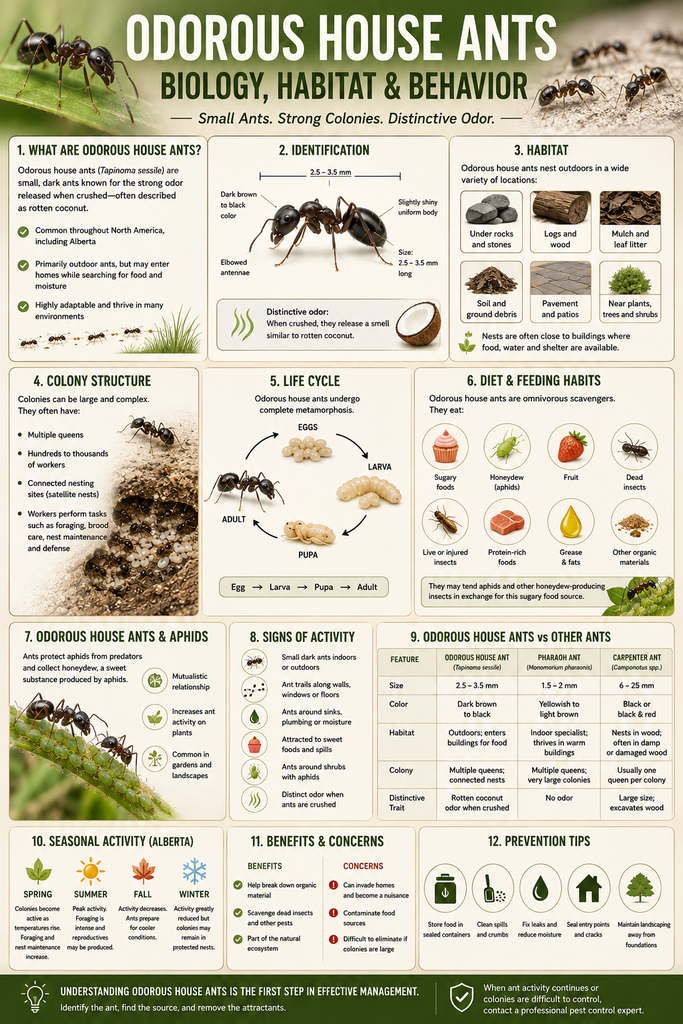
Odorous house ants are relatively small, with workers generally measuring approximately 2.5 to 3.5 mm long. Their coloration is usually dark brown to black, although some individuals may appear lighter depending on lighting and colony variation.
They have a relatively uniform body shape and can be confused with other small dark ants. Because several ant species can look similar, professional identification may be necessary when determining exactly which species is present.
One of their most recognizable characteristics is their odor. When crushed, an odorous house ant can release a distinctive smell that helps separate it from some other small ant species.
Why Are They Called Odorous House Ants?
The common name comes from the odor released when the ant’s body is crushed. The smell is commonly described as resembling rotten coconut.
This odor is associated with chemical compounds produced by the ants and is not simply the result of what they have eaten. However, odor should only be considered one identification characteristic rather than the sole method of identifying the species.
Odorous House Ant Habitat
Odorous house ants are highly adaptable and can establish nests in many different locations. Outdoors, they may be found beneath:
- Rocks and stones
- Logs and pieces of wood
- Mulch
- Leaf litter
- Landscaping materials
- Pavement and patios
- Tree bases
- Ground debris
- Moist soil
They may also establish nests close to buildings, particularly where food, moisture, and shelter are readily available.
Can Odorous House Ants Enter Homes?
Yes. Odorous house ants can enter buildings while searching for food and moisture. Workers may travel along foundations, walls, floors, windows, plumbing areas, and other structural pathways.
They are particularly attracted to sweet foods and sugary liquids. A small food spill, uncovered food container, pet food, or other accessible food source can provide an attractive foraging opportunity.
Finding a few ants indoors does not automatically mean the colony is nesting inside the structure. In many cases, workers are simply entering from an outdoor nest.
Odorous House Ant Colony Structure
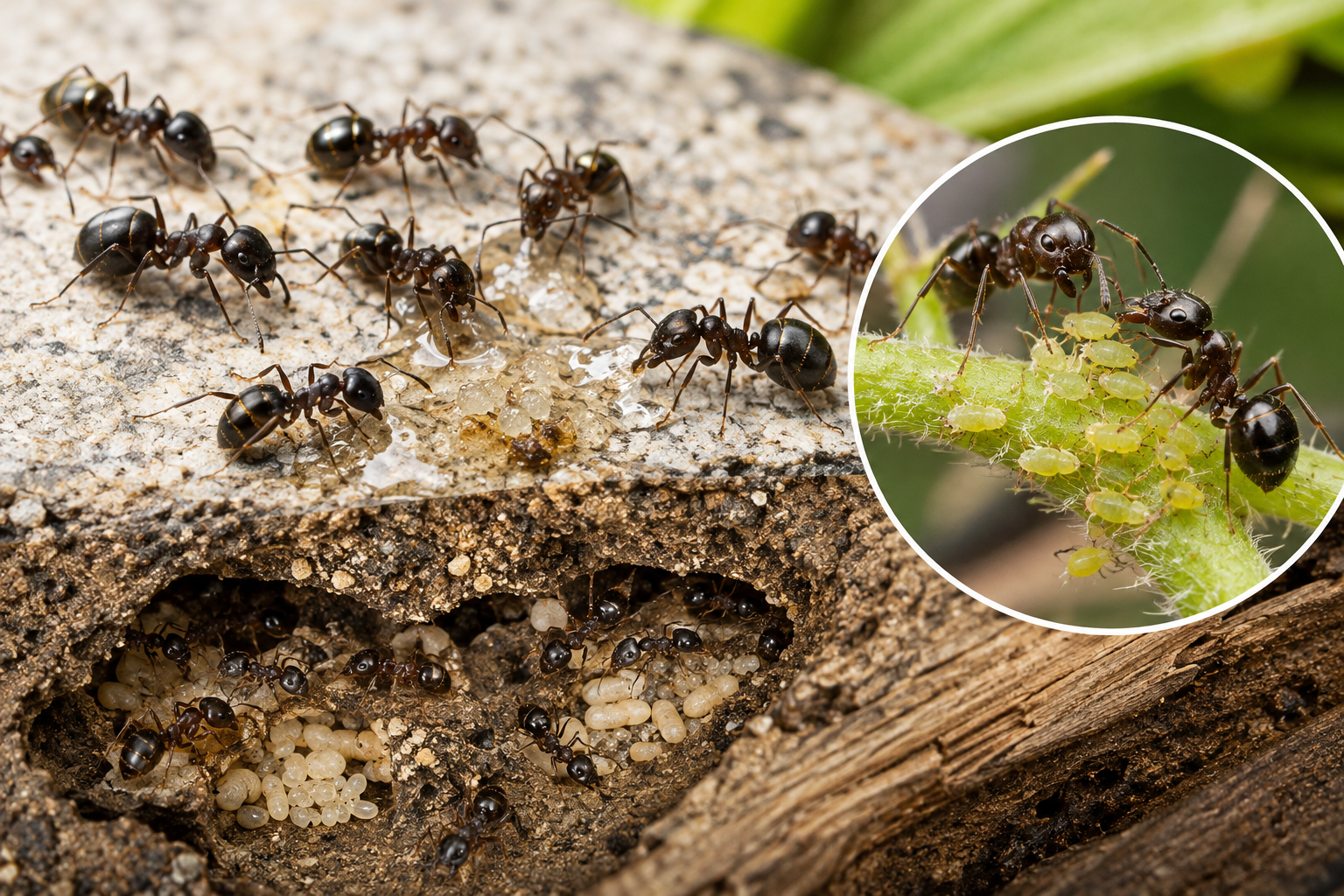
One of the most interesting biological characteristics of odorous house ants is their ability to form colonies containing multiple queens and numerous workers.
They can also establish interconnected nesting sites, allowing colonies to occupy several nearby locations. This flexible colony structure can make them highly successful in environments where food and shelter are available.
Workers cooperate to forage for food, care for developing brood, maintain nesting areas, and defend the colony.
Odorous House Ant Reproduction
Odorous house ants produce reproductive ants, including winged males and females. During favorable periods, reproductive individuals can leave established colonies to mate and establish new colonies.
However, colony expansion can also occur through the establishment of additional connected nesting sites. This allows odorous house ants to spread locally without relying entirely on long-distance dispersal.
Odorous House Ant Life Cycle
Like other ants, odorous house ants undergo complete metamorphosis. Their development includes four primary stages:
Egg → Larva → Pupa → Adult
The queen produces eggs, which hatch into larvae. Worker ants feed and care for the developing larvae. The larvae eventually pupate before emerging as adults.
Adult workers then perform different tasks depending on the colony’s needs, including food collection, nest maintenance, brood care, and defense.
What Do Odorous House Ants Eat?
Odorous house ants are omnivorous scavengers with a flexible diet. They can feed on:
- Sugary foods
- Honeydew from aphids
- Fruit
- Dead insects
- Live or injured insects
- Protein-rich food
- Grease and fats
- Other organic materials
Their broad diet helps them survive in both natural environments and areas influenced by human activity.
Odorous House Ants and Aphids
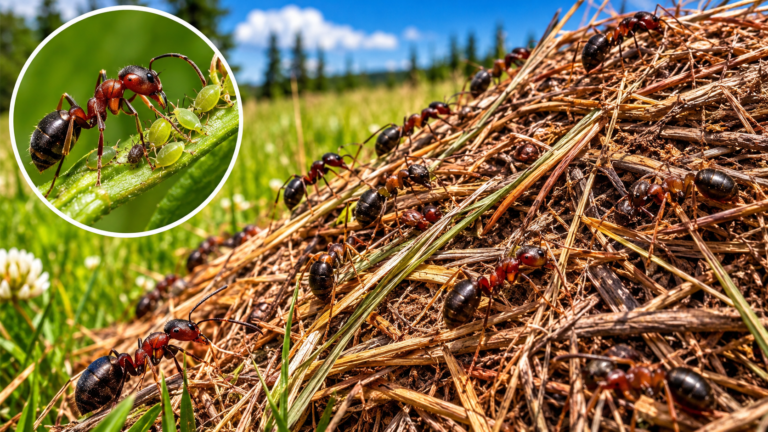
Odorous house ants can develop relationships with aphids and other honeydew-producing insects. Aphids feed on plant sap and produce honeydew, a sugary substance that ants can collect as a food source.
Ants may protect aphids from predators in exchange for access to this carbohydrate-rich food. This relationship can increase ant activity around plants where aphid populations are present.
For homeowners, large numbers of ants around shrubs, trees, or garden plants may therefore be associated with an available honeydew source.
Odorous House Ants in Alberta
In Alberta, odorous house ants are primarily associated with outdoor environments, particularly areas where soil, vegetation, moisture, and shelter are available.
They may be encountered around homes, gardens, landscaping, patios, foundations, and other developed areas. During suitable weather, workers may enter buildings while searching for food or water.
Unlike Pharaoh ants, which are highly adapted to warm indoor environments, odorous house ants are generally more closely associated with outdoor nesting and seasonal activity.
Odorous House Ants vs. Pharaoh Ants
Odorous house ants and Pharaoh ants can sometimes be confused because both are small ants that may be found indoors.
However, their biology is different. Odorous house ants are generally dark brown to black and around 2.5–3.5 mm long, while Pharaoh ants are much smaller and are typically yellowish to light brown.
Pharaoh ants are particularly well adapted to living inside heated buildings and can maintain indoor colonies throughout the year. Odorous house ants are more commonly associated with outdoor nesting and may enter structures while foraging.
Correct identification is important because the biology and nesting behavior of these ants are different.
Are Odorous House Ants Dangerous?
Odorous house ants are generally considered a nuisance pest rather than a dangerous ant. They do not have the same structural association as carpenter ants, which can excavate galleries in wood.
However, large numbers of odorous house ants can become frustrating when they repeatedly enter kitchens, bathrooms, food-storage areas, or other parts of a building.
As with many ants, preventing access to food, water, and nesting areas can help reduce their activity.
Signs of an Odorous House Ant Infestation
Common signs may include:
- Small dark ants travelling along walls or floors
- Ant trails near windows or doors
- Ant activity around sinks or plumbing
- Ants attracted to sugary foods
- Repeated ant activity around foundations
- Ants around shrubs or plants with aphids
- Large numbers of ants appearing during warm weather
- A distinctive odor when ants are crushed
Following an ant trail can sometimes help determine whether the ants are coming from an outdoor nesting location.
Frequently Asked Questions About Odorous House Ants
What is an odorous house ant?
An odorous house ant is a small ant species scientifically known as Tapinoma sessile. It is widely distributed across North America and can sometimes enter homes and commercial buildings while searching for food and moisture.
Why do odorous house ants smell?
When crushed or disturbed, odorous house ants can release a distinctive odor often described as similar to rotten coconut. This characteristic gives the species its common name.
What do odorous house ants look like?
They are small ants, generally around 2.5–3.5 mm long, with a dark brown to black appearance. Their small size means they can sometimes be mistaken for other ant species.
Are odorous house ants common in Alberta?
They can be found in Alberta, particularly in suitable outdoor environments around soil, vegetation, landscaping, foundations, and other protected areas.
Do odorous house ants live inside houses?
They can enter houses while searching for food and moisture. However, finding workers indoors does not necessarily mean the colony is permanently established inside the building.
What attracts odorous house ants into a home?
Common attractants include sugary foods, food crumbs, spills, pet food, moisture, and accessible water sources.
Do odorous house ants damage wood?
Odorous house ants are not considered wood-destroying ants like carpenter ants. They generally do not excavate structural wood to create extensive nesting galleries.
Do odorous house ants bite?
They can defend themselves when disturbed, but they are generally considered a nuisance ant rather than a medically significant biting or stinging pest.
Do odorous house ants have multiple queens?
Yes. Colonies can contain multiple queens, which contributes to their ability to establish extensive or interconnected nesting populations.
What is the life cycle of an odorous house ant?
Odorous house ants undergo complete metamorphosis: egg, larva, pupa, and adult.
What do odorous house ants eat?
They are opportunistic feeders and can consume sugary foods, honeydew, insects, fats, proteins, fruit, and other organic materials.
Are odorous house ants attracted to aphids?
Yes. They can collect honeydew produced by aphids and may protect aphids from predators in exchange for access to this sugary food source.
How are odorous house ants different from carpenter ants?
Carpenter ants are much larger and are associated with nesting in wood, particularly damp or damaged wood. Odorous house ants are much smaller and generally nest in soil, leaf litter, under objects, and other protected locations.
How are odorous house ants different from Pharaoh ants?
Odorous house ants are typically dark brown to black and approximately 2.5–3.5 mm long. Pharaoh ants are much smaller, usually yellowish to light brown, and are particularly adapted to warm indoor environments.
Conclusion
Odorous house ants are small but highly adaptable insects with fascinating colony biology. Their ability to establish colonies with multiple queens, exploit many different food sources, interact with aphids, and use a wide variety of nesting locations allows them to thrive in many environments.
In Alberta, understanding the difference between odorous house ants and other common ants—such as carpenter ants, pavement ants, field ants, and Pharaoh ants—is important for accurate identification and appropriate pest management. If small dark ants repeatedly appear inside a home or business, identifying the species and determining where the ants are coming from is an important first step toward addressing the problem.