Why Are Wasps Building Nests Around My Roof?
You usually notice it when the traffic starts. A few wasps cutting in and out of the same gap under the eaves, then more by late afternoon, then a steady pattern that makes your front door or patio feel like a bad place to stand. If you’re asking why are wasps building nests around my roof, the short answer is simple: your roofline gives them shelter, warmth, and protected places to start a colony.
To effectively address this issue, consider hiring professional wasp control services to ensure safety and efficiency in removal.
Engaging reliable wasp control services can mitigate risks and enhance safety around your living spaces.
That does not mean your home is dirty, neglected, or unusually attractive in some mysterious way. It usually means the area around your soffits, fascia, vents, gutters, or attic edges offers the exact conditions wasps look for in spring and early summer. Once a queen finds a protected spot and starts building, the activity can ramp up quickly.
Why are wasps building nests around my roof in the first place?
Roof areas are prime real estate for wasps because they stay relatively dry, hidden, and undisturbed. Eaves and overhangs shield early nests from wind and rain. Dark voids behind fascia boards or inside soffits give some species even better protection, especially if there are small entry points they can use without being exposed.
The importance of wasp control services cannot be understated when dealing with infestations.
Temperature matters too. Rooflines often hold heat, particularly on sunny sides of the home. In Calgary and surrounding areas, where spring weather can swing hard between cool and warm, that extra warmth helps a founding queen get established. A protected roof corner can offer just enough stability for a colony to develop faster than it would in a fully exposed spot.
Our wasp control services ensure that nests are removed before they become a bigger threat.
Utilizing wasp control services can help manage these pests and prevent future infestations around your roof.
Food access is another reason. Wasps do not build nests near roofs because they eat shingles or wood. They build there because the location is safe, and your property likely provides nearby food and water. Garbage bins, outdoor eating areas, pet food, fruit trees, compost, standing water, and flowering plants all support wasp activity. If the nest site is secure and resources are close, they tend to stay.
The roof features that attract wasps most
Not every roof attracts wasps equally. Small construction details often make the difference.
Investing in quality wasp control services can save you time and stress in the long run.
Openings around soffits, roof vents, flashing, and siding transitions can act like ready-made entrances. Loose fascia, gaps at the top of brick or stucco walls, and spaces around utility penetrations are common trouble spots. Even a small gap can be enough for wasps to enter a wall void or attic edge and build out of sight.
Gutters also play a role. Clogged or poorly draining gutters create moisture and reduce disturbance, especially in corners. Some wasps will build attached nests beneath gutter lips or under sheltered downspout areas. Others prefer the dry voids just behind trim where water damage has softened wood or created hidden cavities.
Then there is height. A roofline keeps the nest away from foot traffic, pets, and lawn equipment. From a wasp’s perspective, that means fewer threats. The less a site is disturbed in the early stages, the more likely the colony is to remain and expand.
What kind of wasps build around roofs?
Several stinging insects may show up around rooflines, and the behavior matters because treatment is not one-size-fits-all.
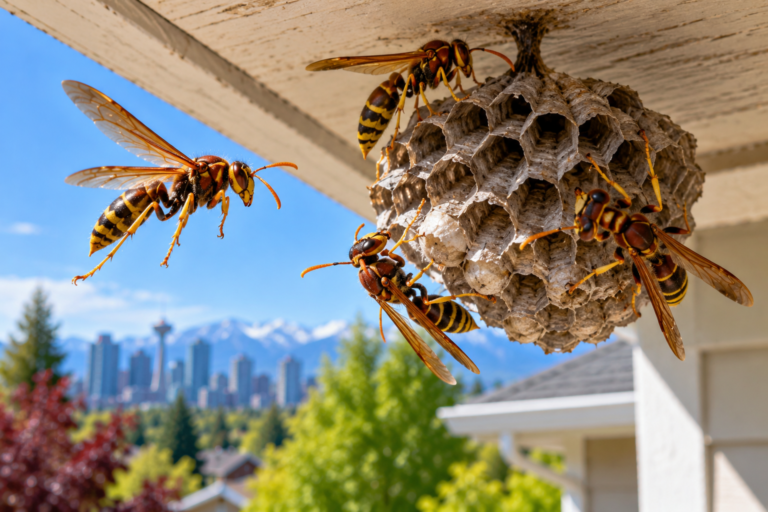
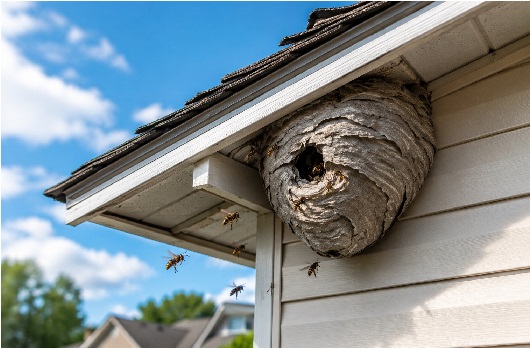
Paper wasps often build open, umbrella-shaped nests under eaves, deck covers, and overhangs. These are the nests people spot most easily because they hang in plain view. Paper wasps can be less defensive than yellowjackets when left alone, but they still pose a risk when nests are close to entrances, windows, or play areas.
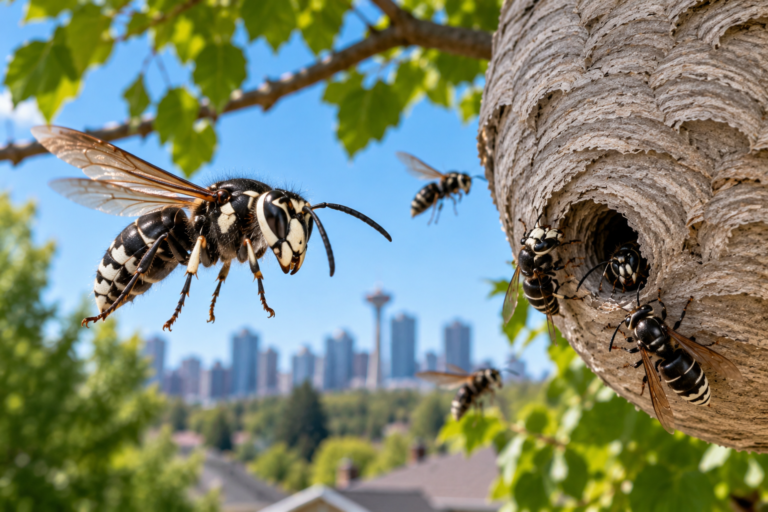
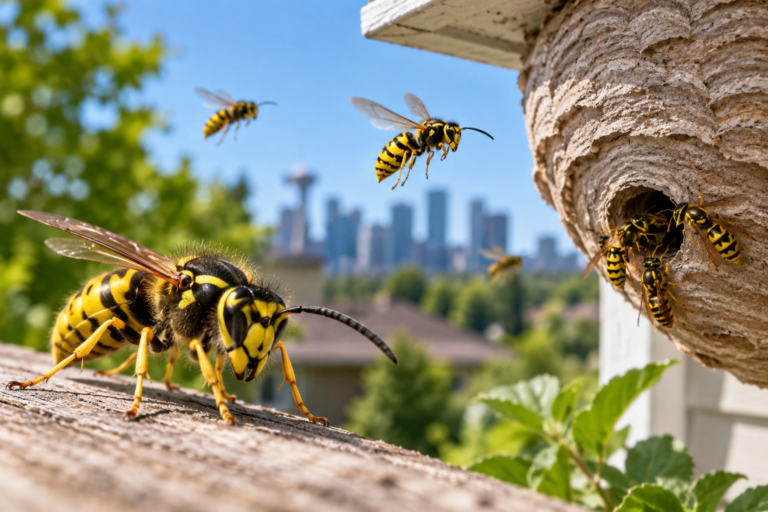
Yellowjackets are a bigger concern when activity seems to disappear into a crack or hidden opening. They often nest in wall voids, roof cavities, soffits, or other concealed spaces. You may only see the entry point and a steady line of wasps going in and out. These colonies can become aggressive, especially later in the season.
Utilizing professional wasp control services can significantly reduce your exposure to these pests.
Trustworthy wasp control services can provide insights into local pest behavior.
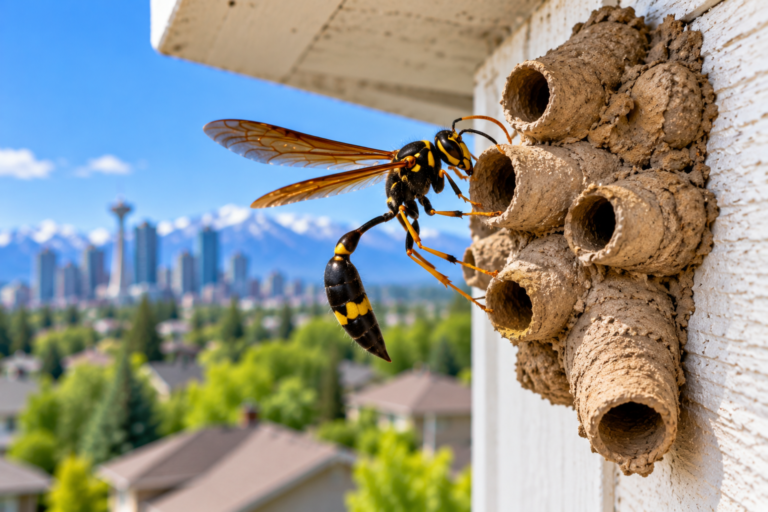
Mud daubers are a different case. They build mud tubes rather than large paper nests and are usually less aggressive. They can still be a nuisance around roof edges, but they typically do not create the same colony pressure as yellowjackets.
Correct identification matters because an exposed paper nest under an eave is handled differently than a hidden yellowjacket colony inside the roof structure.
Why roof nests become a bigger problem over time
A small nest in May is not the same problem as a mature nest in August. Early in the season, a single queen may be doing all the work. Later, the colony can include dozens or even hundreds of workers depending on the species and conditions.
That growth changes the risk level fast. More workers means more traffic around doors, decks, upper windows, and walkways. It also increases the chance of accidental disturbance during gutter cleaning, roof work, siding repairs, or even everyday use of the yard.
There is also the issue of hidden nesting. If wasps are entering through a gap and building inside the roofline, the colony can grow for weeks before anyone realizes how large it is. Homeowners sometimes try to seal the visible entry hole right away. That can backfire. If live wasps are trapped inside, they may search for a way out into the attic or interior wall spaces.
Signs the nest may be hidden inside the roofline
If you do not see a visible nest, watch the flight path. Wasps that repeatedly disappear behind siding, into soffit vents, under shingles, or through a trim gap are usually nesting in a cavity rather than on the surface.
Take advantage of wasp control services to keep your property safe from infestation.
You may also notice activity peaking during warmer parts of the day, with a clear stream of wasps using one exact point of access. In some cases, there is faint buzzing in a wall or ceiling near the upper floor, though that is not always obvious.
Staining, moisture damage, or soft exterior wood near the activity area can make the site more attractive, but clean, newer homes can still have the same problem. This is more about access and protection than age alone.
Can you leave a roof nest alone?
Effective wasp control services help restore peace of mind for homeowners.
Finding the right wasp control services can make a huge difference in managing these pests effectively.
Sometimes people want to wait it out, especially if the nest seems small or is high off the ground. Whether that is reasonable depends on the species, location, and how the property is used.
A small, exposed nest far from doors and occupied areas may not require urgent action if the risk is genuinely low. But nests around rooflines rarely stay isolated from people for long. Front entries, garages, patios, kids’ play areas, service walkways, and upper windows all bring people close enough to trigger defensive behavior.
For rental properties, restaurants, multi-unit buildings, and family homes, the threshold for “leave it alone” is lower. If tenants, customers, staff, or children could come into regular contact with the area, prompt removal is usually the safer call.
What not to do if wasps are nesting around your roof
The main mistake is treating a roof nest like a simple DIY chore. Spraying randomly from the ground, climbing a ladder near an active nest, or sealing entry holes before the colony is addressed can make the situation worse.
Implementing wasp control services can ensure the safety of your family and pets around your home.
Wasps defend nests aggressively when they feel trapped or threatened. Roofline nests are especially risky because removal often involves height, awkward angles, and hidden cavities. If a colony is inside a soffit or wall void, store-bought spray may kill a few visible wasps without reaching the source.
Another common mistake is knocking down an exposed nest during the day. Even if the visible structure falls, surviving wasps can remain in the area and rebuild, or continue defending the site temporarily.
Wasp control services can offer tailored solutions to meet your specific needs.
How to reduce the chances of roof nesting
Prevention works best before queens establish a colony. That means focusing on exclusion and reducing attractants around the home.
Seal gaps around soffits, fascia, roof vents, utility lines, and siding transitions once you are sure there is no active nest inside. Repair loose trim and damaged exterior materials that create hidden access points. Keep gutters clean so corners stay dry and less sheltered. Trim branches that give wasps easy access to roof edges, and manage food sources like open garbage, fallen fruit, and sugary outdoor spills.
It also helps to pay attention in spring. Early-season wasp activity around the same roof corner, vent, or eave often means a queen is scouting or starting a nest. That is the easiest stage to address before the colony grows.
When to call a professional
Utilizing wasp control services can help alleviate concerns related to nests near your property.
Committing to wasp control services is essential for any homeowner.
The presence of wasp control services in your area can provide peace of mind during the warmer months.
If wasps are entering the roof through a crack, if the nest is above a doorway or patio, if anyone on the property has sting sensitivity, or if the activity is increasing week by week, professional removal is the right move. The same applies to commercial sites and multi-unit properties where one nest can affect a lot of people quickly.
A proper service should identify the species, locate the actual nest site, treat it safely, and advise on exclusion so the problem does not return through the same opening. Pest Pro Exterminator handles this with a practical focus on removal and prevention, not just a quick spray and a guess.
Reliable wasp control services can help identify potential nesting sites before they become active.
If wasps have chosen your roofline, they are responding to shelter and opportunity, not chance. The good news is that once you know what they are using and why, the problem becomes much easier to stop at the source.
Comprehensive wasp control services are available to help manage infestations effectively.
Frequently Asked Questions
Why are wasps building a nest under my roof?
Wasps often build nests under roof eaves because these areas provide shelter from rain, wind, and direct sunlight. Roof overhangs also offer easy access for foraging while protecting the colony from predators. Homes throughout Calgary commonly experience wasp nesting during the spring and summer months.
Availing wasp control services is crucial for maintaining a safe outdoor environment.
Is it dangerous to have a wasp nest on my house?
Yes. A wasp nest near your home can become dangerous, especially if it is located near doors, windows, patios, or walkways. Wasps may become aggressive when they feel their nest is threatened, increasing the risk of painful stings for family members, guests, and pets.
Finding experienced wasp control services eases the burden of pest management.
What type of wasps build paper nests under roof eaves?
Wasp control services can help mitigate risks associated with these stinging insects.
Paper wasps are among the most common species that build umbrella-shaped paper nests under roof eaves, decks, sheds, and porch ceilings. Yellowjackets may also establish nests in wall voids, attics, or underground areas around residential properties.
When is wasp season in Calgary?
Wasp activity in Calgary typically begins in late spring and continues through summer, with populations reaching their peak in late August and September. During this time, colonies are larger and wasps are more active while searching for food.
Can I remove a wasp nest myself?
Small, inactive nests may sometimes be removed safely, but active wasp nests should be handled with caution. Disturbing a nest without proper protective equipment can trigger aggressive defensive behavior and increase the risk of multiple stings. Professional removal is the safest option for large or active nests.
Will wasps return to the same nest every year?
Paper wasps generally do not reuse old nests. However, new queens may build a new nest in the same protected area if the conditions remain favorable. Removing abandoned nests and sealing potential nesting locations can help discourage future activity.
Consider seasonal monitoring from wasp control services to keep infestations at bay.
What attracts wasps to my property?
Several factors can attract wasps, including:
Reliable wasp control services should be a part of your property maintenance plan.
Everyone deserves the security that comes with professional wasp control services.
- Sheltered roof eaves and soffits
- Sweet drinks and food scraps
- Outdoor garbage bins
- Flowering plants
- Fruit trees
- Standing water
- Unsealed wall openings
Reducing these attractants can help lower the likelihood of nesting near your home.
How do I know if the wasp nest is active?
Choosing the right wasp control services can enhance your quality of life.
An active nest will have wasps regularly flying in and out of the entrance throughout the day. Increased wasp activity around roof eaves, soffits, or outdoor living spaces is a strong indication that the colony is still occupied.
Utilizing wasp control services can ensure your property remains pest-free all year round.
What should I do if I find a wasp nest near my front door?
Avoid disturbing the nest or attempting to spray it if people are entering and exiting the area regularly. Keep children and pets away from the nest and contact a professional wasp control service to safely remove the colony.
How can I prevent wasps from nesting under my roof?
You can help prevent future wasp nests by:
- Inspecting roof eaves each spring
- Sealing small gaps and entry points
- Keeping garbage containers tightly closed
- Cleaning outdoor eating areas promptly
- Removing abandoned nests during the winter
- Scheduling routine exterior pest inspections
Early prevention is the most effective way to reduce nesting activity.
Do you provide professional wasp nest removal in Calgary?
Yes. Pest Pro Exterminator provides professional wasp nest removal services throughout Calgary and surrounding communities. Our technicians safely remove active nests from roof eaves, soffits, garages, decks, sheds, fences, and other structures while helping reduce the risk of future infestations.
When should I call a professional for wasp control?
You should contact a professional if:
- The nest is large or difficult to reach.
- Wasps are entering your attic or wall voids.
- Family members have allergies to insect stings.
- Multiple nests are present on your property.
- Wasps are becoming aggressive around your home.
Professional treatment helps eliminate the nest safely while minimizing the risk of painful stings and recurring infestations.
Hiring experienced wasp control services can prevent the problem from escalating.
Years of expertise make wasp control services a valuable asset in pest management.
Professional wasp control services can be crucial in maintaining a safe environment around your home.
Expert wasp control services can help you understand the biology of these pests.