The Biology of Yellowjackets: Life Cycle, Colony Structure, Diet and Nesting Habits
Table of Contents
Yellowjackets are social wasps belonging primarily to the genus Vespula. They are among the most recognizable wasps found in Alberta, with their characteristic yellow-and-black markings, relatively smooth bodies, and organized colony structure. Several species occur in the province, including the common yellowjacket, Vespula vulgaris. University of Alberta museum records document V. vulgaris throughout Alberta, including Edmonton, Red Deer, Nordegg and Wabamun.
Yellowjacket Identification and Body Structure
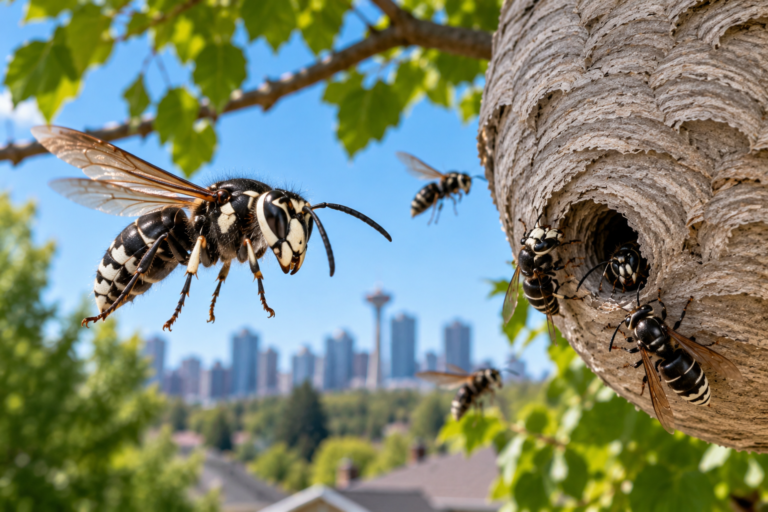
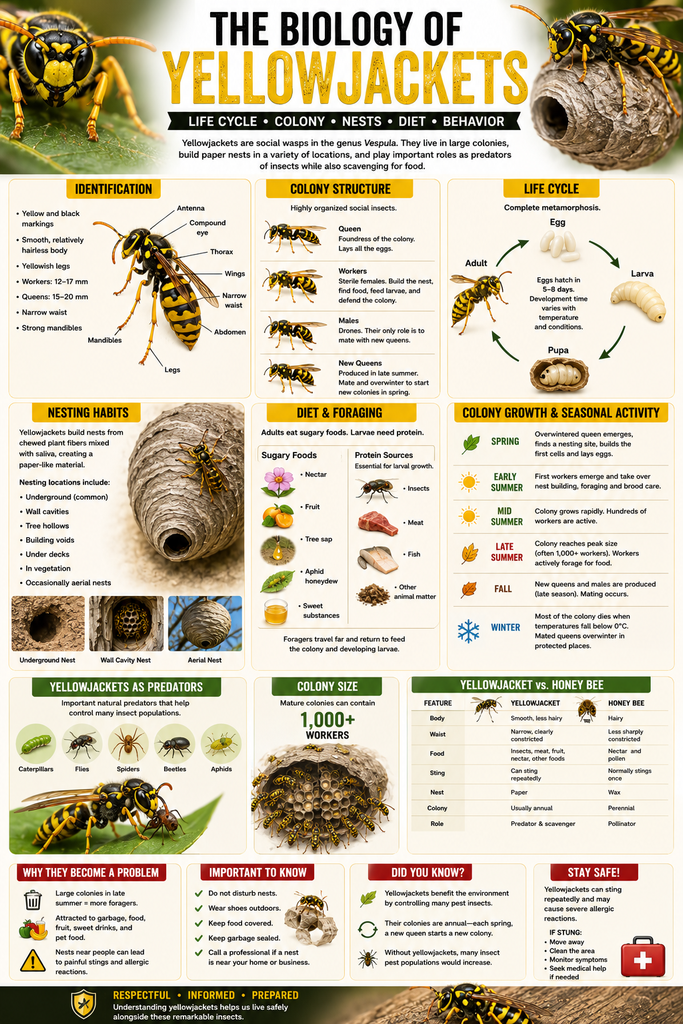
Yellowjackets are medium-sized wasps with yellow and black patterns, relatively hairless bodies and yellowish legs. Workers of Vespula vulgaris are approximately 12–17 mm long, while queens are larger, around 15–20 mm. Their body consists of the head, thorax and abdomen, with a narrow waist connecting the thorax and abdomen.
Unlike honey bees, yellowjackets have smooth bodies and can sting repeatedly. Their strong mandibles are also important because workers use them to capture and process insect prey and other protein sources.
Yellowjacket Colony Biology
Yellowjackets are eusocial insects, meaning their colonies contain reproductive individuals and workers that cooperate in raising offspring.
A typical colony includes:
- Queen – establishes the colony and lays eggs
- Workers – sterile females responsible for foraging, nest construction, brood care and defense
- Males – reproductive individuals
- New queens – produced later in the season to establish future colonies
A mature colony can contain more than 1,000 workers, depending on the species and environmental conditions.
Yellowjacket Life Cycle
Yellowjackets undergo complete metamorphosis:
Egg → Larva → Pupa → Adult
In Alberta, an overwintered queen typically begins searching for a suitable nesting location in spring. The queen constructs the first cells and lays eggs individually. According to the University of Alberta, larvae hatch approximately 5–8 days after the eggs are laid. The queen initially cares for the developing larvae until the first workers emerge.
Once the first generation of workers becomes established, they take over most colony duties. The queen can then concentrate primarily on reproduction.
Yellowjacket Nesting Habits
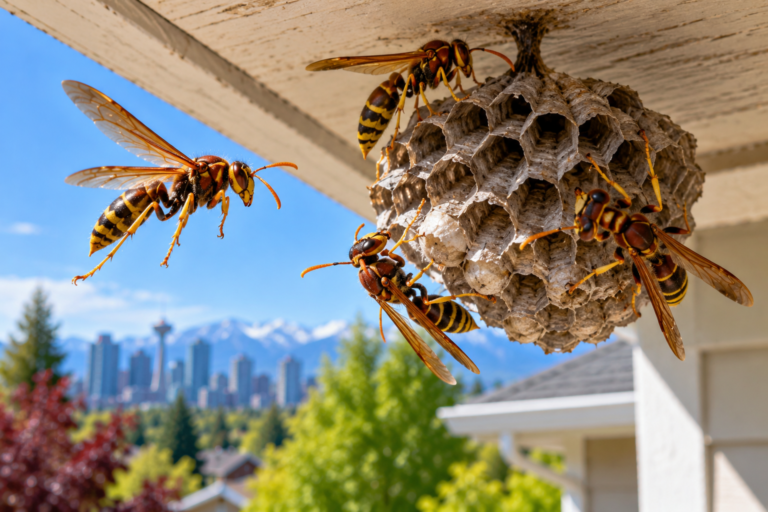
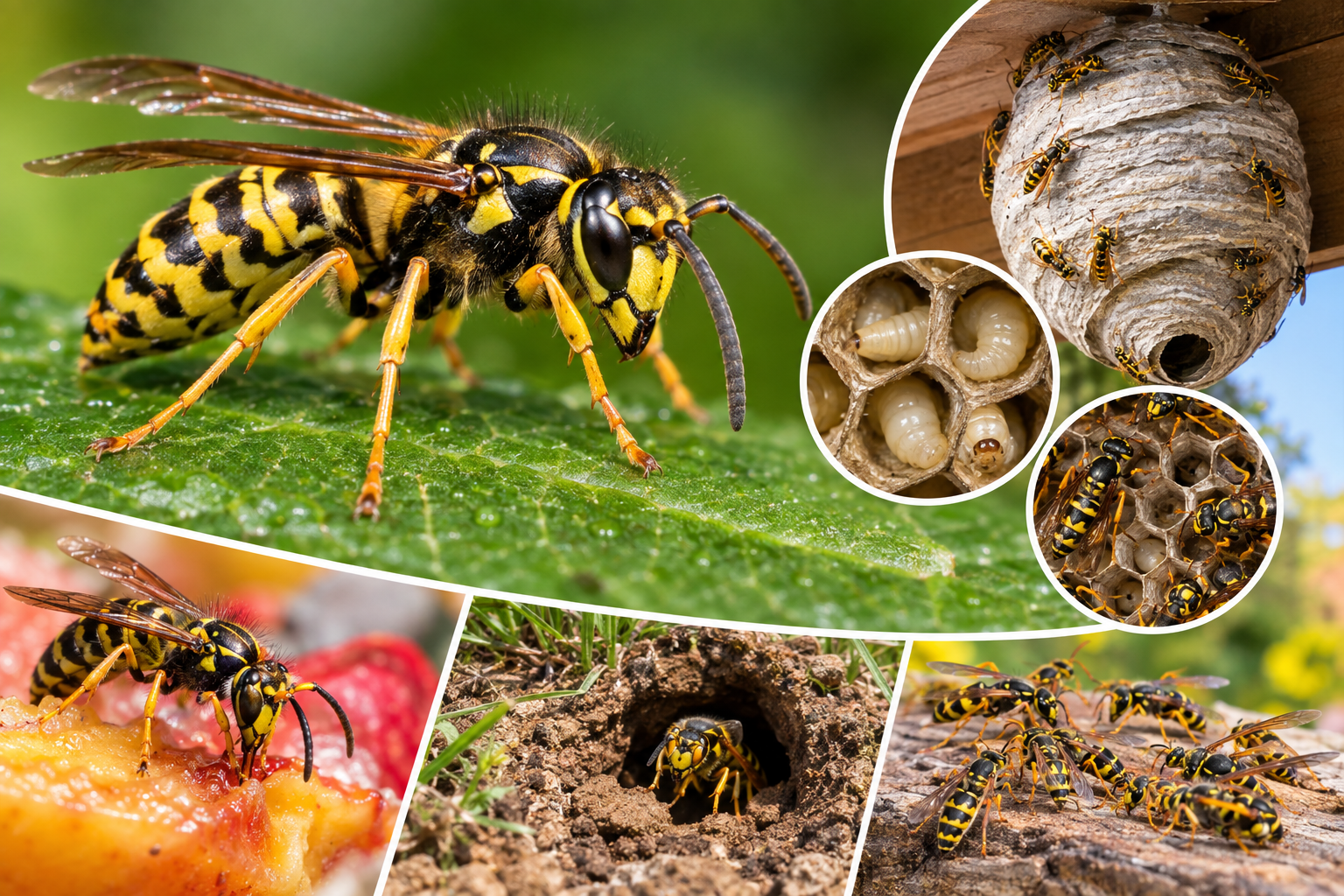
Yellowjackets can construct paper nests both underground and above ground, depending on the species and available habitat.
Potential nesting locations include:
- Soil
- Tree hollows
- Wall cavities
- Building voids
- Protected outdoor spaces
- Vegetation
- Occasionally aerial locations
The University of Alberta documents Vespula vulgaris nesting underground, in tree hollows and wall cavities, with some nests occurring above ground.
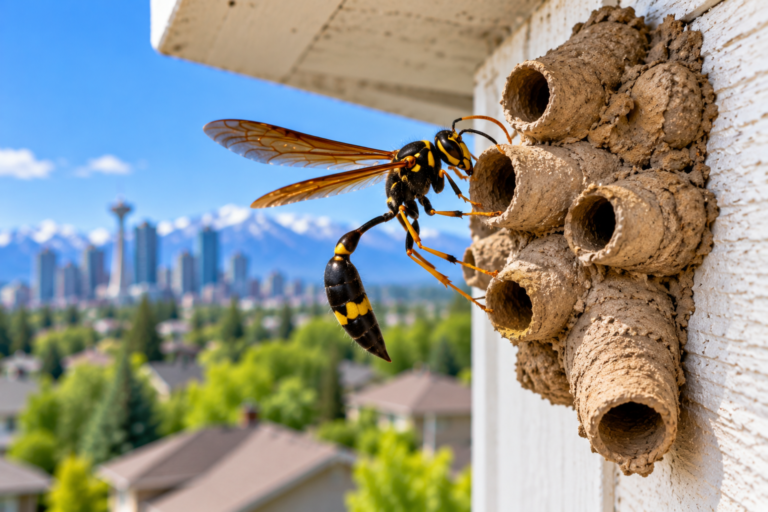
Yellowjackets construct their nests from chewed plant fibres mixed with saliva, creating a paper-like material that forms the nest structure and brood cells.
What Do Yellowjackets Eat?
Yellowjackets have a diverse diet that changes depending on the needs of the colony.
Adult yellowjackets commonly consume sugary substances, including:
- Flower nectar
- Fruit juice
- Tree sap
- Aphid honeydew
- Other sweet food sources
They also hunt and scavenge for protein, including insects, meat and fish, which workers bring back to the nest to feed developing larvae. Alberta’s beekeeper information specifically identifies insects, meat and fish as protein sources collected by yellowjackets.
This explains why yellowjackets can suddenly become abundant around garbage containers, fallen fruit, outdoor meals and other food sources in late summer.
Yellowjackets as Predators
Although yellowjackets are often viewed only as nuisance insects, they are important predators.
They can capture a variety of insects and other arthropods, including:
- Caterpillars
- Flies
- Spiders
- Crickets
- Beetles
- Aphids and other soft-bodied insects
Workers process prey and bring it back to the nest for the developing larvae.
This predatory behaviour means yellowjackets can contribute to natural insect population control.
Why Yellowjackets Become More Noticeable in Late Summer
One of the most important features of yellowjacket biology is their seasonal population growth.
During spring, a colony may consist of only a queen and developing brood. As workers emerge, the colony gradually expands.
By late summer, the colony can contain a large number of workers. Alberta’s beekeeper handbook identifies late summer as the period when yellowjacket populations reach their peak.
At the same time, natural food availability can change. Yellowjackets may increasingly visit:
- Garbage
- Fruit
- Outdoor food
- Sweet beverages
- Compost
- Pet food
- Food-processing areas
This combination of a large colony and increased foraging around human food is why yellowjackets can seem especially abundant toward the end of summer.
Yellowjacket Reproduction
Later in the season, the colony begins producing new queens and males rather than focusing exclusively on worker production.
The University of Alberta reports that new queens and males are produced in late September for Vespula vulgaris.
After mating, the new queens become the reproductive generation capable of surviving through winter and establishing colonies the following spring.
What Happens to Yellowjackets in Winter?
Most yellowjacket colonies are annual colonies.
As temperatures decline in autumn, colony activity decreases. Eventually, the workers and original queen die.
The newly produced, mated queens are different. They seek protected locations where they can survive the winter.
Alberta’s beekeeper handbook reports that the colony dies when temperatures fall below approximately 0°C, while several mated daughter queens seek refuge in crevices and emerge the following spring.
This means that the large yellowjacket nest seen during summer generally does not simply continue as the same colony the following year.
Yellowjackets and Their Defensive Behaviour
Yellowjackets are capable of defending their nest aggressively when they perceive a threat.
Workers may respond when a person or animal approaches or disturbs the nest. Unlike honey bees, yellowjackets can sting repeatedly.
For this reason, an active nest located near a doorway, walkway, playground, patio or other high-traffic area deserves particular caution.
Yellowjackets vs. Bees
Yellowjackets are sometimes mistaken for honey bees because of their yellow-and-black coloration, but they have several obvious differences.
| Feature | Yellowjackets | Honey Bees |
|---|---|---|
| Body | Relatively smooth | Hairier |
| Waist | Narrow | Less sharply constricted |
| Food | Insects, meat, fruit, nectar and other foods | Nectar and pollen |
| Colony | Social | Social |
| Sting | Can sting repeatedly | Worker normally leaves stinger behind |
| Nest | Paper | Wax |
| Winter colony | Usually dies except overwintering queens | Colony survives winter |
Yellowjackets in Alberta
Yellowjackets are well established in Alberta and can be encountered in urban areas, gardens, orchards, grasslands, forests and around buildings. University of Alberta records list Vespula vulgaris habitats ranging from prairies and grasslands to forests, gardens, orchards and urban areas.
Their ability to use both natural and human-created habitats makes them a familiar summer insect throughout the province.
Frequently Asked Questions About Yellowjackets
What are yellowjackets?
Yellowjackets are social wasps belonging primarily to the genus Vespula. They are recognized by their yellow-and-black markings and organized colony structure.
Are yellowjackets wasps?
Yes. Yellowjackets are a type of social wasp.
What do yellowjackets eat?
Adults consume sugary foods such as nectar, fruit juice and tree sap, while workers collect insects, meat and other protein sources for developing larvae.
Do yellowjackets eat other insects?
Yes. Yellowjackets are active predators and can capture flies, caterpillars, spiders, beetles and other insects.
Why are yellowjackets attracted to garbage?
Garbage can contain sugary and protein-rich food residues. During late summer, large colonies are actively searching for food, making garbage and food waste particularly attractive.
Where do yellowjackets build nests?
Depending on the species, nests may be underground, inside wall cavities, in tree hollows or in other protected locations. Some species can also construct aerial nests.
How big can a yellowjacket colony become?
A mature colony can contain more than 1,000 workers, although colony size varies by species and environmental conditions.
When are yellowjackets most active in Alberta?
Yellowjacket activity generally becomes especially noticeable in late summer, when colonies reach peak population size.
Do yellowjackets survive Alberta winters?
Most workers and the original queen die as temperatures fall. Newly mated queens can survive winter in protected locations and establish new colonies the following spring.
Do yellowjackets reuse the same nest every year?
Most yellowjacket colonies are annual, so the original colony generally does not survive through winter. A new queen establishes a new colony the following spring.
How long does a yellowjacket take to develop?
The species Vespula vulgaris has eggs that hatch in roughly 5–8 days, followed by larval and pupal development before adult emergence. Development varies with temperature and conditions.
Why are yellowjackets more aggressive in late summer?
Late summer combines a large worker population with increased competition for food. Workers may therefore be encountered more frequently around human food, garbage and other attractive food sources.
Are yellowjackets beneficial?
Yes. Although they can become nuisance pests, yellowjackets are predators of many insects and therefore contribute to natural insect population control.
Are yellowjackets dangerous?
Yellowjackets can sting repeatedly and can be a serious concern for people who experience severe allergic reactions. Avoid disturbing active nests and seek emergency medical attention for signs of a severe allergic reaction.
Conclusion
The biology of yellowjackets explains why these wasps become such a noticeable pest in Alberta toward the end of summer. Their colonies begin with a single overwintered queen, grow through successive generations of workers, and eventually produce new queens and males before the colony declines in autumn.
Their ability to predate insects, scavenge protein and exploit sugary foods makes them highly adaptable. Understanding their life cycle, nesting behaviour, diet and seasonal activity can help homeowners and businesses recognize why yellowjackets are appearing and distinguish them from bees and other wasps.