Why Wildlife Exclusion Is Necessary for Skunks
Table of Contents
- 1. Skunks Are Wildlife, Not Pests You Can Trap Away
- 2. How to Keep Skunks Away from Your House
- 3. Spotting a Skunk Den Under House Structures
- 4. Why Wildlife Exclusion Is Necessary Before Winter
- 5. Building a Skunk Exclusion Barrier That Lasts
- 6. The Step-by-Step Wildlife Exclusion Process
- 7. When to Call a Wildlife Professional
- Frequently Asked Questions
Last Updated: October 17, 2026
1. Skunks Are Wildlife, Not Pests You Can Trap Away
Skunks are wildlife, and wildlife exclusion is the practice of sealing a building so animals cannot get in, rather than removing them after they do. This guide from Pest Pro Exterminator explains why exclusion is the only lasting fix for skunks. Trapping removes one animal. It does not remove the den, the scent, or the reason skunks chose your yard in the first place.
That distinction matters more than most homeowners realize. A skunk relocated from your property leaves behind a shelter that another skunk will find. Nature fills empty space fast.
Skunks are also protected wildlife in most parts of the country. You cannot simply trap and relocate one without checking the rules first. Provincial wildlife authorities set the terms, and breaking them carries real penalties. The provincial wildlife regulations on nuisance wildlife explain what homeowners may and may not do.
So the practical answer is simple: keep them out, don’t chase them out.
- Trapping removes one animal, not the problem
- Relocation is often restricted or outright illegal
- Empty dens get reoccupied, usually within weeks
- Exclusion stops the cycle permanently
Never seal a den opening between spring and late summer. You can trap a mother skunk away from kits that are still inside, and they will die in the wall or under the deck. The smell is unforgettable and the cleanup is expensive.
2. How to Keep Skunks Away from Your House
Keeping skunks away from your house comes down to removing food, water, and shelter. Skunks are opportunists. Take away the three things they need and they move on to a neighbour’s yard.
Start with food. Skunks dig for grubs and insects in lawns, and they raid garbage and pet food left outdoors. Secure bins with locking lids. Feed pets indoors and bring bowls in at night. If grubs are tearing up your lawn, treat the lawn, because a grub-heavy yard is a skunk magnet.
Next, remove shelter. Skunks love gaps under decks, sheds, and porches. Close them off.
- Lock garbage bins and store them off the ground
- Bring pet food inside before dark
- Treat grubs to cut off the food source
- Clear brush piles and stacked lumber
- Seal gaps under decks, sheds, and steps
Bright lights and noise can help short-term, but skunks get used to both. Habitat modification beats deterrents every time.
3. Spotting a Skunk Den Under House Structures
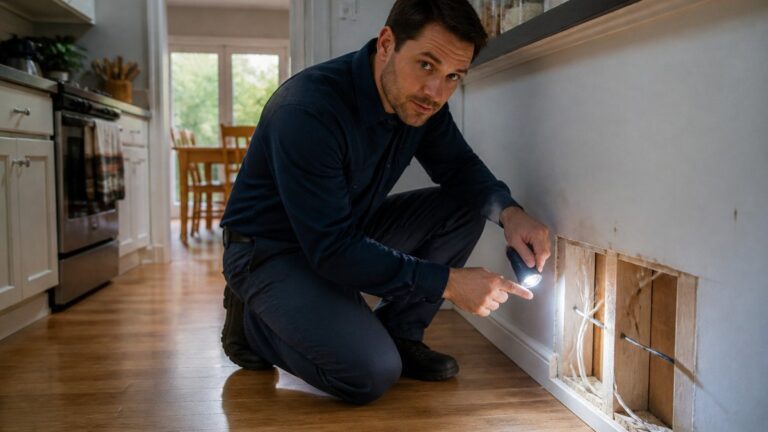
A skunk den under a house is usually found in the same places: beneath decks, sheds, porches, crawl spaces, and window wells. Skunks want a dark, dry, protected space near a food source. Your foundation offers exactly that.
Look for a few telling signs:
- A shallow, cone-shaped hole about the size of a dinner plate
- Freshly dug soil piled near a foundation gap
- A strong, musky smell that lingers near one spot
- Tracks with five toes and visible claws
- Small, excavated patches in the lawn nearby
A common mistake is mistaking a skunk burrow for a rabbit hole. Skunk holes are wider and often show claw marks from digging.
Check these spots during a walkaround:
- Gaps under deck stairs and railings
- Openings beneath sheds and garden structures
- Cracks in the foundation and along the sill plate
- Window wells with loose covers
- Crawl space vents with damaged screens
- Spaces under front steps and porches
If you find a den, don’t block it yet. Confirm whether it’s active first.
4. Why Wildlife Exclusion Is Necessary Before Winter
Wildlife exclusion is necessary before winter because cold weather pushes animals toward warm shelter, and your home is the warmest shelter around. As temperatures drop, skunks, mice, and other nuisance wildlife look for a place to den. Once they settle in, they stay.
Fall is the deadline, not the start date. Seal your home before the first hard frost, while the ground is still workable and animals are still moving.
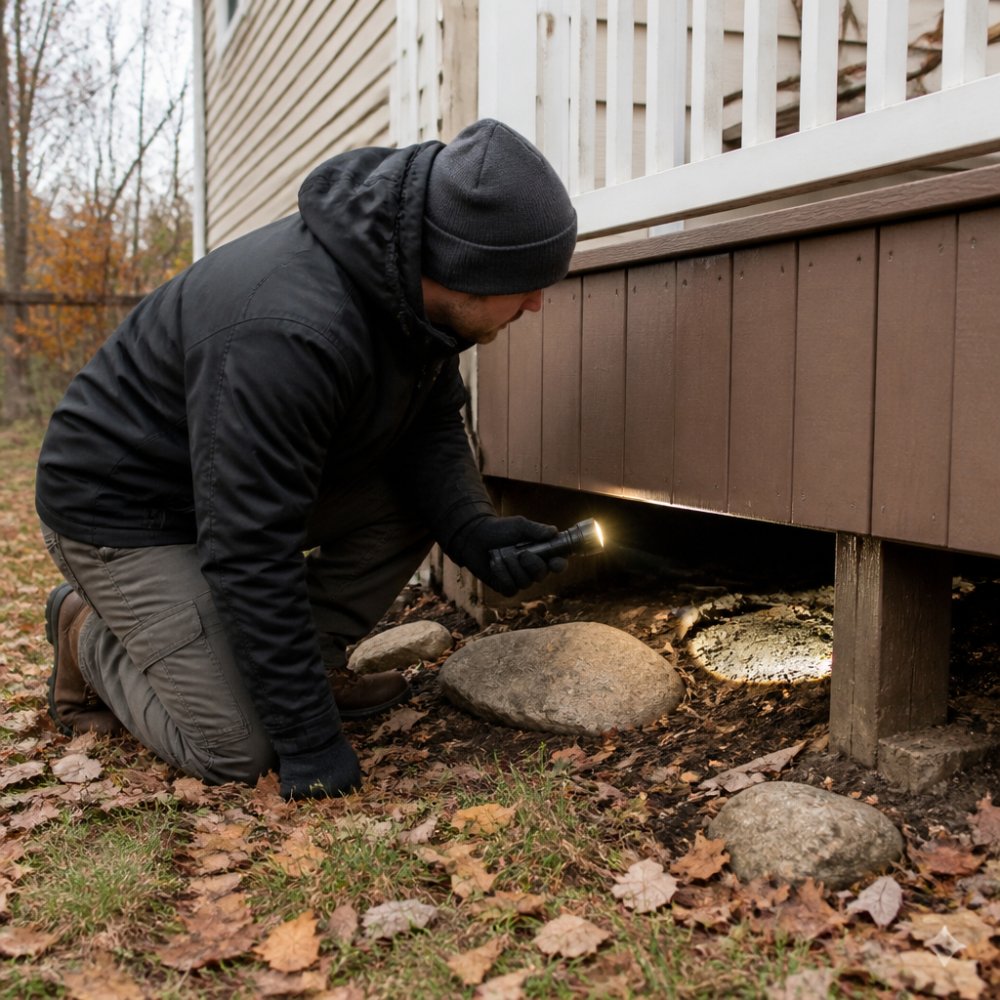
Securing these vulnerable gaps is a fundamental step in keeping wildlife away from your property, much like the proactive measures required for managing persistent scavengers around your outdoor waste containers.
Winter denning also makes the problem harder to fix. Once snow falls, you can’t dig a buried barrier or inspect a foundation properly. And a skunk under the deck in January is an expensive problem to solve. Exclusion done in fall prevents all of it.
Get A Free Pest Control Quote Today →
The seasonal wildlife guidance from wildlife agencies backs this up: animals actively seek winter shelter in autumn, so early sealing is the most effective window.
5. Building a Skunk Exclusion Barrier That Lasts
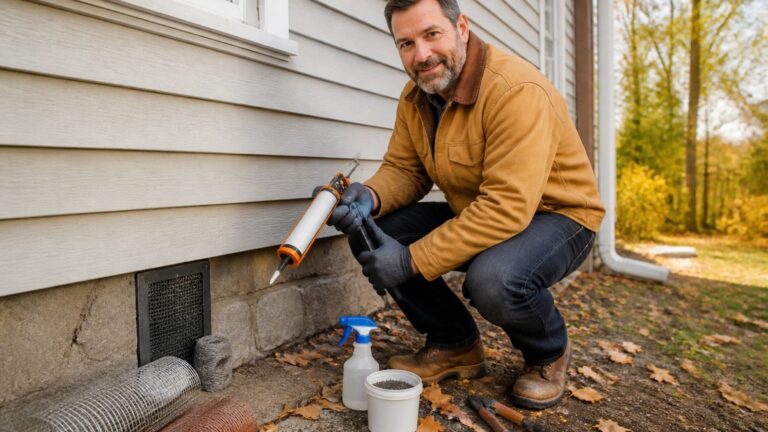
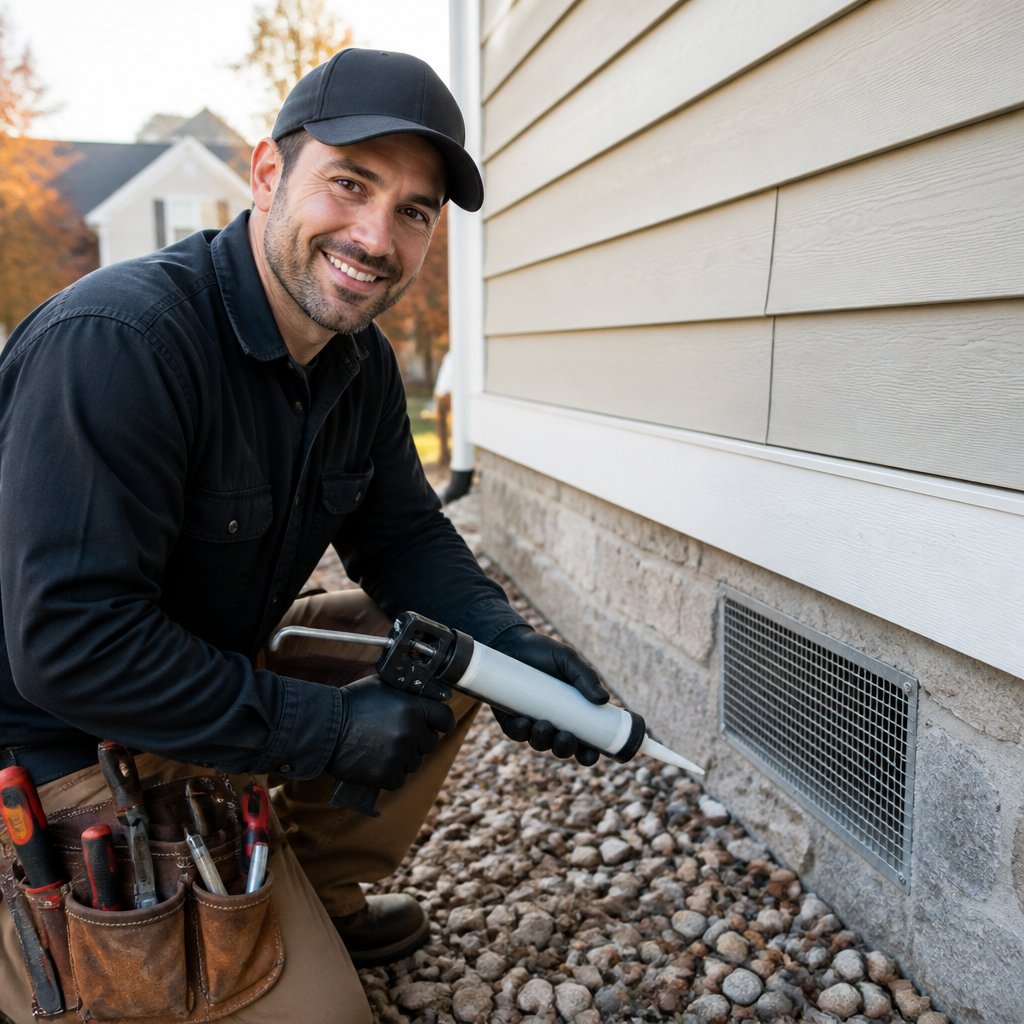
A skunk exclusion barrier that lasts combines a buried wire mesh skirt with sealed gaps and a one-way exit. The buried portion is the part most DIY attempts skip, and it’s the part that matters.
Here’s how a proper barrier goes together:
- Trench along the structure. Dig a shallow trench along the foundation or deck edge.
- Bury wire mesh. Use heavy galvanized mesh, bent outward at the bottom into an L-shape. Bury the outward leg underground.
- Attach to the structure. Fasten the mesh firmly to the deck frame or foundation so it can’t be pushed aside.
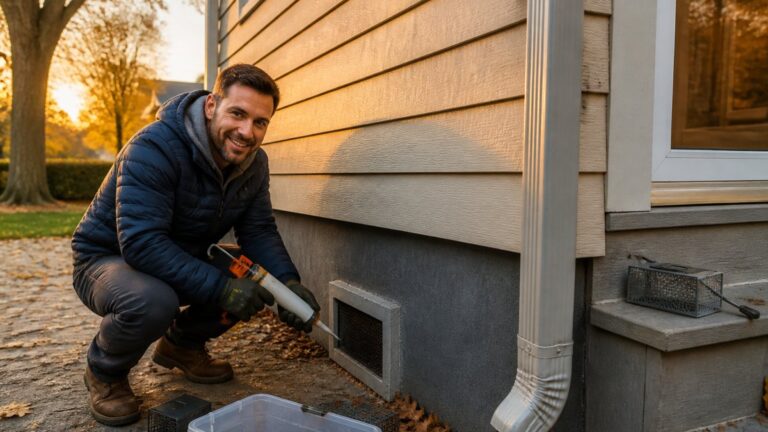
- Seal all gaps. Close every opening with mesh or hardware cloth, especially at corners.
- Install a one-way door. If a den is active, fit a one-way exit so animals can leave but not return.
The buried L-shape stops skunks from digging underneath. Skunks are strong diggers, but they won’t dig through buried mesh.
Bend the buried mesh outward, not straight down. A skunk digging at the base hits the horizontal leg and gives up. A vertical-only barrier gets tunneled under in a single night.
6. The Step-by-Step Wildlife Exclusion Process
The wildlife exclusion process follows a clear sequence: inspect, confirm activity, install a one-way exit, seal, verify, and monitor. Skip a step and the whole job fails.
| Step | Action | Timing |
|---|---|---|
| 1 | Full property inspection | 1-2 hours |
| 2 | Confirm the den is active | Same day |
| 3 | Fit a one-way exit door | Day 1 |
| 4 | Seal all secondary openings | Day 1-2 |
| 5 | Verify the animal has left | 3-7 days |
| 6 | Remove the exit and seal it | After verification |
| 7 | Monitor and re-check | Seasonal |
Verification is the step homeowners rush. Watch the exit for several nights. Once there’s no activity, remove the door and seal the opening permanently.
Then keep watching. A recurrence check each season catches new gaps before they become new dens.
Exclusion only works when it’s done in order. Sealing before the animal leaves traps it inside, and that’s the worst outcome of all.
7. When to Call a Wildlife Professional
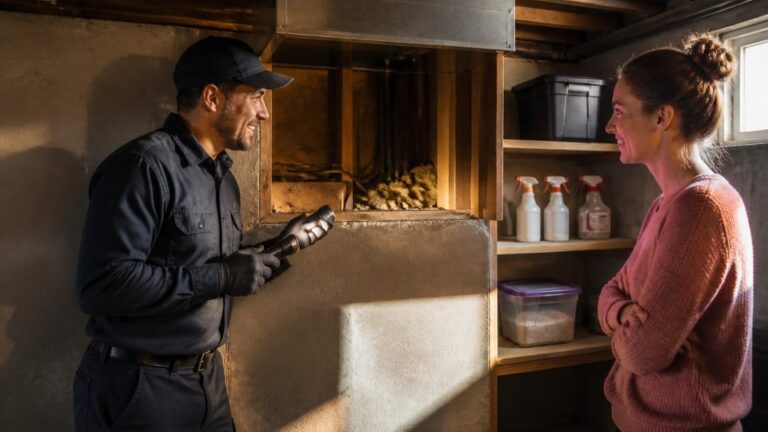
Call a wildlife professional when a den is active, when the animal is inside a wall or crawl space, or when the job involves a mother with young. Those situations carry real risk, and they’re where DIY goes wrong.
Skunks carry rabies and other diseases, and a cornered skunk will spray. A professional handles the risk, follows the rules, and gets the timing right.
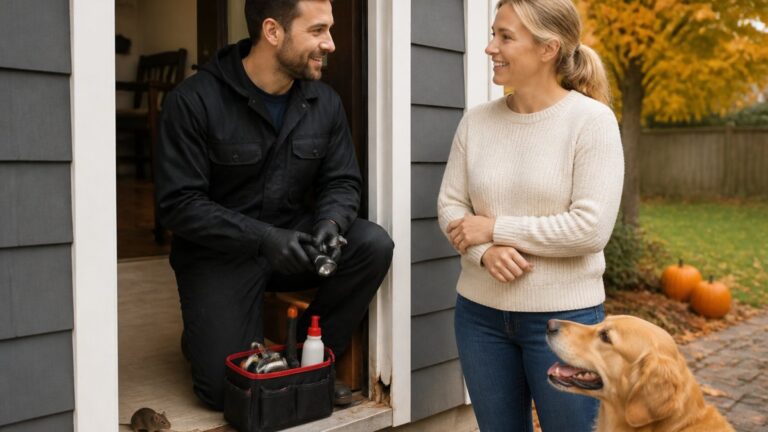
At Pest Pro Exterminator, we’ve handled wildlife exclusion across Calgary and Southern Alberta for over 18 years of combined experience. Our process covers inspection, identification, customized treatment, and ongoing prevention, with 24/7 contact when something goes wrong at an awkward hour.
- Active den with an animal present
- Kits involved, which changes the legal timing
- Den inside a wall, attic, or crawl space
- Repeat visits despite your own attempts
- Commercial or multi-unit properties
The rabies information from public health officials is worth reading before you approach any wild animal yourself.
Frequently Asked Questions
Are skunks considered wildlife?
Yes. Skunks are wild animals, not pests in the same category as mice or cockroaches. That distinction matters because it changes how you deal with them. Trapping and relocating a skunk is often restricted, and handling one carries a real rabies risk. Wildlife exclusion is the approach that works within those rules: you seal the structure so the animal cannot get in, rather than trying to remove it by force. A professional can confirm what is legal in your area and build a barrier that keeps skunks out for good.
What does a skunk den look like?
A skunk den usually shows up as a shallow excavation under a deck, porch, shed, or crawl space. Look for a bowl-shaped depression about 20 to 30 centimetres across with loose soil piled at the entrance, plus a strong musky smell and narrow trenches in the lawn where the skunk has been digging for grubs. You may also see rub marks along the foundation and droppings nearby. If you find these signs, note the location and call a wildlife exclusion professional before you try to seal anything.
Should you get rid of skunks?
Getting rid of a skunk is not the same as excluding it. Removing one animal often just opens the den for the next skunk, and relocation is tightly controlled in many provinces. The more reliable fix is to make the property unattractive and inaccessible: secure garbage and pet food, clear brush and woodpiles, and seal every gap under the foundation, deck, and porch with a buried wire mesh barrier. That approach solves the problem at the source and prevents recurrence, which is why wildlife exclusion is necessary for skunks rather than one-off removal.
When should you install skunk exclusion barriers?
The best window is late summer through early fall, before cold weather pushes skunks to seek winter shelter. By then, kits have left the den and you are less likely to seal a mother and her young inside. If a skunk is already denning under the house, do not block the entrance. A professional can install a one-way door that lets the animal leave and prevents it from returning, then seal the opening once activity stops. Timing the work around breeding season and local wildlife rules is part of the job.
Fall is closing in, and the wildlife around your home is already looking for a warm place to spend the winter. Waiting means a den under the deck, a musky crawl space, and a much bigger job. Pest Pro Exterminator offers full inspection, humane one-way exits, and durable exclusion barriers, all backed by a team that does this every season. Book a free quote or consultation with Pest Pro Exterminator and get your home sealed before the cold sets in.