What are the signs of warehouse rodent activity?
Last Updated: October 26, 2026
Quick Summary
Signs of warehouse rodent activity include fresh droppings that are dark and moist, urine stains and ammonia-like odors along travel routes, gnaw marks on packaging and cables, and greasy rub marks on walls and pallets. Fresh evidence indicates active rodents present, while old, dry droppings suggest past or resolved activity.
- Fresh droppings are dark and sticky; old ones are dry, brittle, and gray, press with a gloved stick to test freshness
- Mouse droppings are rice-grain sized with pointed ends; rat droppings are bean-sized with blunt ends
- Rub marks and grease stains along walls, door frames, and pallet edges show active rodent travel routes
- Ammonia-like odor signals accumulated urine in a nesting area and indicates rodents are almost certainly active
- Document all findings with date, zone, photo, and freshness assessment to distinguish one-off sightings from growing infestations
Table of Contents
- Understanding warehouse rodent activity and why early detection matters
- Step 1: Identify droppings, urine staining, and ammonia-like odors
- Step 2: Spot gnaw marks on packaging, pallets, and electrical cables
- Step 3: Look for grease marks, rub marks, and travel routes
- How to inspect a warehouse for rodents by zone
- Rodent entry points in warehouses and how to assess them
- Signs of mice in a warehouse versus rat evidence
- Fall and winter rodent prevention for warehouses
- Frequently Asked Questions
Understanding warehouse rodent activity and why early detection matters
Rodent infestations in warehouses are expensive and dangerous. They contaminate inventory, damage packaging, chew through electrical wiring, and create fire hazards. Early detection stops small problems from becoming catastrophic ones.
The key is knowing what to look for. Fresh evidence tells you there’s an active problem right now. Old evidence means the issue may have resolved or moved elsewhere.
This guide covers the most common signs of warehouse rodent activity, how to inspect systematically, how to tell mice from rats, and when to call a professional.
Step 1: Identify droppings, urine staining, and ammonia-like odors
Droppings are the clearest sign of rodent activity, but reading them matters more than finding them: freshness, clustering, and recurrence tell you whether you have a live infestation or stale evidence.
Reading droppings for freshness and species
Fresh droppings are dark, moist, and sticky; old ones are dry, brittle, and gray. Field test: press one with a gloved stick, if it smears, it’s recent; if it crumbles, it’s older and lower priority.
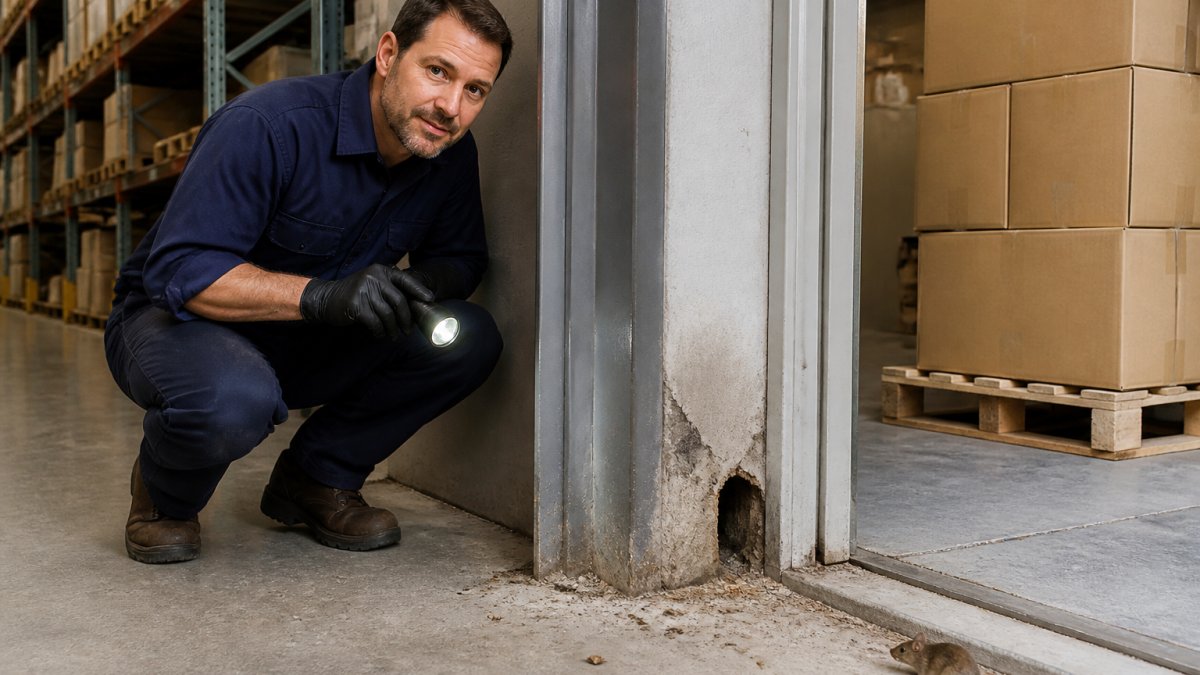
Mouse droppings are tiny, about the size of a grain of rice, pointed at both ends. Rat droppings are larger, roughly the size of a bean, and blunt-ended. Finding clusters means rodents are nesting or feeding nearby; scattered single droppings along a wall usually indicate a travel route rather than a nest.
Urine staining and odor as confirmation signals
Urine stains appear as dark spots or smears, often lining walls, pallet edges, and food storage perimeters because rodents mark travel routes. Fresh urine glows under UV light; older deposits fade. An ammonia-like odor signals accumulated urine in a nesting area, rodents are almost certainly active there.
Distinguishing fresh activity from old evidence
Most inspections go wrong here: a single old dropping in a corner is not a fresh cluster under a pallet. Prioritize by three factors:
- Appearance: moist, dark, smeared evidence is current; dry, gray, crumbled evidence is old.
- Location: evidence on active travel routes (wall edges, dock thresholds, racking uprights) matters more than evidence in dead corners.
- Recurrence: the same spot producing new evidence on a follow-up inspection is the strongest signal of an active problem.
Severity assessment and escalation thresholds
Use a simple three-tier read to decide your response:
| Finding | Likely meaning | Response |
|---|---|---|
| Isolated old droppings in one low-traffic spot | Stale evidence or a transient visitor | Clean, document, re-inspect in 7 days |
| Fresh droppings in one zone, or fresh urine staining on a route | Active rodent present | Set monitors and traps, seal nearby gaps, re-inspect in 48-72 hours |
| Fresh evidence across multiple zones, odor, or nesting material | Established infestation | Escalate to professional inspection and treatment |
Document what you find
Log every finding with date, zone, sign type, photo, and whether it looked fresh or old. This record separates a one-off sighting from a growing problem and gives you a baseline to verify control measures.
Step 2: Spot gnaw marks on packaging, pallets, and electrical cables
Rodents gnaw constantly to keep their teeth sharp. Look for chew marks on cardboard boxes, wooden pallets, and plastic containers.
Fresh gnaw marks have clean, light-colored edges; old ones are dark and splintered, a quick way to judge whether activity is recent.
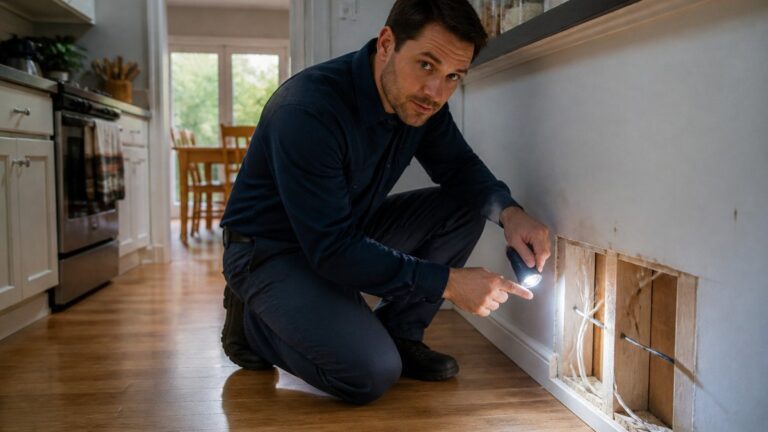
Electrical cables are especially vulnerable. Rodents chewing through wiring create serious fire risks. Inspect overhead cables, wall-mounted conduits, and equipment cords regularly.
Damaged stock adds up fast: a single rat can destroy dozens of boxes in a week, and mice contaminate far more than they eat by spreading droppings and urine across inventory.
Check packaging in all storage zones. Pay special attention to boxes stacked near walls or in dark corners where rodents feel safe.
Step 3: Look for grease marks, rub marks, and travel routes
Rodents follow the same paths repeatedly, and their fur leaves dark, greasy smudges, rub marks and grease stains, that show exactly where they travel.
Visit Pest Pro Exterminator For Pest Control Services In Calgary And Surrounding Areas →
The marks appear along walls, door frames, and pallet edges, since rodents run along edges to feel secure.
Fresh rub marks are dark and oily. Old marks fade to a dull gray. Tracking which marks are fresh helps you pinpoint active travel routes.
Rodents also leave footprints and tail marks in dust on shelves and floors, especially near food storage and nesting areas.
Following these routes helps you find entry points and nesting sites, rodents reuse the same paths night after night.
| Evidence Type | Fresh | Old | Location |
|---|---|---|---|
| Droppings | Dark, moist, sticky | Dry, brittle, gray | Near food, along walls |
| Rub marks | Dark, oily | Faded, dull gray | Wall edges, door frames |
| Gnaw marks | Light-colored edges | Dark, splintered | Packaging, cables, wood |
| Urine stains | Bright under UV light | Faint or invisible | Travel routes, nesting areas |
How to inspect a warehouse for rodents by zone
A systematic, zone-by-zone inspection catches problems early. Document findings so you can track changes over time.
Use a written checklist: date, zone, and specific evidence, with photos of droppings, gnaw marks, and rub marks. This helps professionals gauge scope and severity.
Loading bays and entry areas
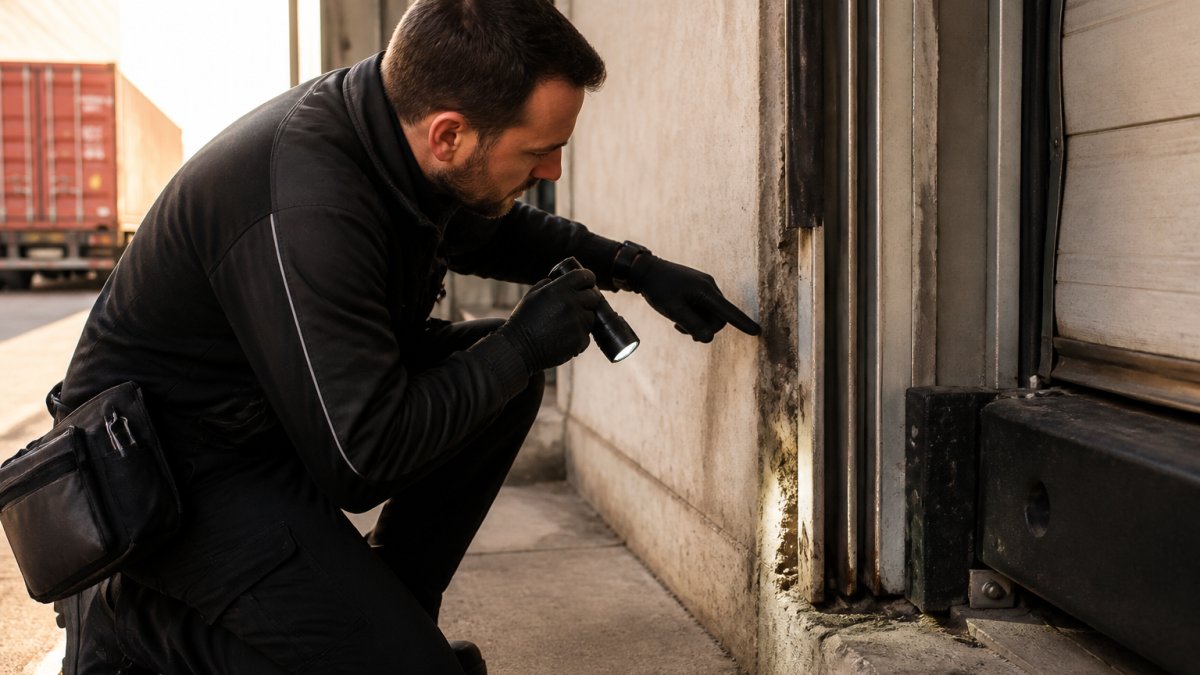
Loading bays are rodent entry points. Inspect door frames, rubber seals, and concrete floors for gaps.
Check for droppings near pallets awaiting shipment and gnaw marks or urine staining underneath, where rodents shelter while they feed.
Inspect dock seals and weatherstripping for gaps, and check corners where walls meet the floor.
Document each sign with its exact location and whether it looks fresh, to prioritize repairs and treatment.
Overhead storage and wall edges
Rodents climb, running along pipes, beams, and overhead cables. Inspect these for rub marks and droppings.
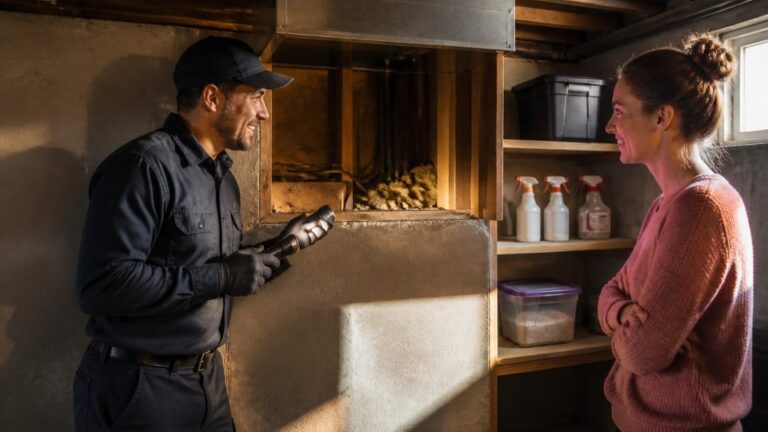
Check the tops of tall shelving, where rodents nest in undisturbed spaces, look for shredded paper, fabric, and insulation.
Wall edges where shelving meets the wall are common travel routes; look for grease and rub marks along the full wall height.
Overhead storage creates shadows and shelter where rodents feel safe, inspect regularly, especially if you see other signs in the zone.
Food storage and inventory sections
Food storage areas attract rodents. Inspect packaging carefully for gnaw marks and droppings. Check behind and underneath stacked boxes.
Look for partially eaten food, scattered crumbs, and chewed packaging, the more food available, the more rodents you’ll attract.
Inspect the perimeter of food storage zones, since rodents work inward from outside; seal gaps in walls, doors, and foundation.
Rodent entry points in warehouses and how to assess them
Finding entry points is essential for long-term control, rodents enter from outside through cracks, gaps, and holes.
Do a thorough exterior inspection: foundation holes, gaps around pipes, damaged weatherstripping. Get detailed guidance on how to identify rodent entry points and seal them effectively.
Visit Pest Pro Exterminator For Pest Control Services In Calgary And Surrounding Areas →
Inspect the roofline and soffits; rodents climb vines and branches to reach gaps around vents and roof penetrations.
Document every potential entry point. Prioritize the largest gaps and the ones closest to food storage areas. Professional pest control services can help identify entry points you might miss. Pest control guidance on rodent exclusion from Canadian occupational health agencies emphasizes sealing entry points as the first step in rodent management.
Signs of mice in a warehouse versus rat evidence
Mice and rats leave different clues. Learning to distinguish between them helps you choose the right control strategy.
Mouse evidence:
- Tiny droppings, rice-grain size
- Small gnaw holes, pencil-thin
- Light, high-pitched scratching sounds
- Smaller rub marks and footprints
Rat evidence:
- Large droppings, bean-sized
- Larger gnaw holes and chew marks
- Deep, heavy scratching or gnawing sounds
- Larger rub marks and footprints
Mice breed faster and populations explode quickly where food is available; rats are larger and leave more obvious damage.
Mice nest in small enclosed spaces like wall cavities and boxes; rats nest in larger voids and under equipment.
Fall and winter rodent prevention for warehouses
As temperatures drop, rodents may move indoors seeking warmth and food. Book commercial industrial mice control services designed specifically for warehouse environments during high-risk seasons.
The three needs: shelter, food, water
Rodents need shelter, food, and water.
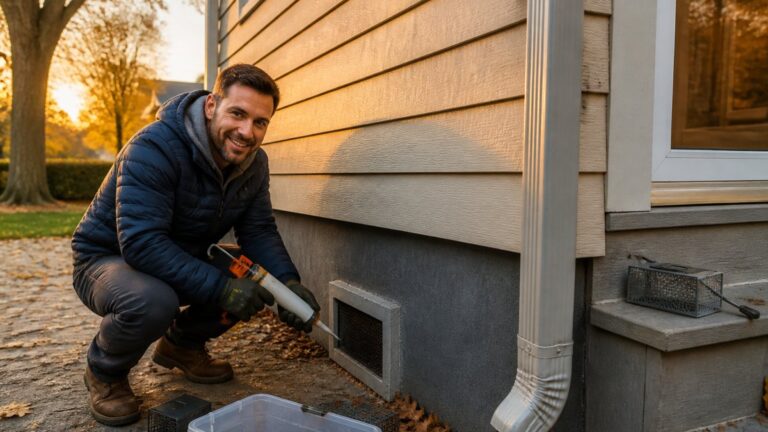
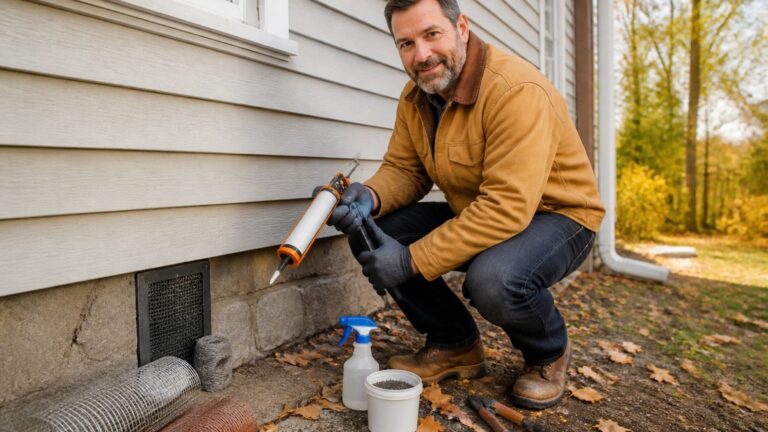
Seal entry points. Walk the perimeter and caulk gaps around pipes and cables, install door sweeps, and repair weatherstripping. Rodents enter openings far smaller than most people expect, so check dock seals, foundation cracks, and utility penetrations closely.
Remove food sources. Store food in sealed containers, clean spills immediately, and never leave open bags of grain or flour. Rodents can smell food from a distance.
Eliminate clutter. Remove cardboard boxes, old pallets, and scrap materials, clutter is nesting habitat.
Reduce moisture. Fix leaking pipes and standing water. Rodents need water daily, so removing sources makes the building less appealing.
Safe cleanup and contamination response
- Protect yourself first. Wear disposable gloves and a respirator. Never dry-sweep or vacuum droppings, dampen the area with a disinfectant before wiping (CCOHS: Hantavirus).
- Isolate affected stock. Quarantine packaging and product that shows gnaw marks, droppings, or urine staining. Do not return it to saleable inventory.
- Discard what cannot be cleaned. Porous materials, cardboard, paper, fabric, and open food, generally cannot be reliably decontaminated and should be discarded in sealed bags.
- Disinfect hard surfaces. Clean and disinfect shelving, pallets, floors, and equipment along affected routes, then re-inspect within a week to confirm the activity has stopped.
- Document disposal. Record what was discarded, where it came from, and why. This protects your inventory records and supports any insurance or food-safety review.
Monitor actively and track trends
Professional monitoring systems provide continuous protection. Learn about ongoing pest monitoring for complexes during fall preparation. Ongoing pest monitoring for warehouse facilities helps catch problems before they become infestations. Pest Pro Exterminator offers customized monitoring plans designed for warehouses during high-risk seasons.
Frequently Asked Questions
What are the most common signs of warehouse rodent activity?
Signs of warehouse rodent activity can include droppings, urine staining and ammonia-like odors, gnaw marks, grease marks, nesting materials, and scratching or scurrying noises.
How can you tell whether droppings are fresh versus old?
Droppings may vary in appearance. Their presence alone does not establish when they were left or whether rodents remain active.
What’s the difference between signs of mice in a warehouse versus rats?
Mice and rats may leave different signs, but the supplied information does not establish specific measurements or reliable distinctions based on droppings, gnaw marks, nesting materials, runways, or sounds.
Where should you look for rodent signs during a warehouse inspection?
Potential signs to note include droppings, gnaw marks, grease marks, urine staining, and nesting materials. The supplied information does not establish a specific inspection procedure or what findings indicate about activity patterns or severity.