Why Do Bars and Restaurants Get Out-of-Control Flies—Especially Around the Bar Area?
Table of Contents
Fly infestations in restaurants and bars can become surprisingly difficult to control, particularly around bar sinks, drains, beverage stations, garbage areas, and areas where spilled drinks accumulate. When fly activity becomes heavy, simply swatting visible flies or using a few traps usually does not address the underlying source. A professional pest-management program can help identify where the flies are breeding, what conditions are supporting them, and what corrective actions are needed.
Why the Bar Area Is a High-Risk Location
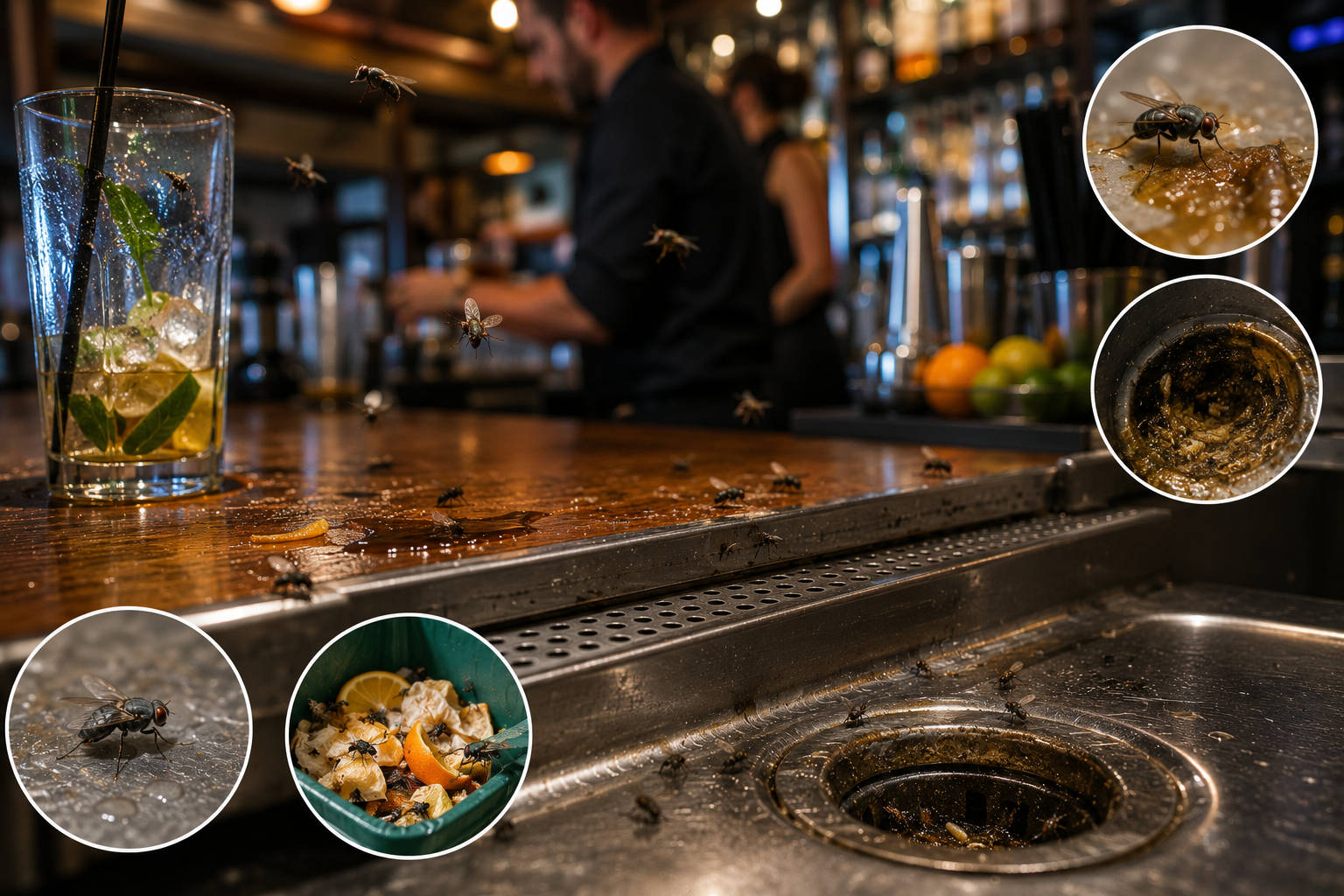
The bar can provide several things flies need at the same time: moisture, organic material, spilled beverages, food residue, garbage, and drains. Beer, wine, juice, syrups, mixers, and other sugary liquids can accumulate in areas that are difficult to see or clean thoroughly.
Even a small amount of organic material inside or around a drain can become a source of recurring fly activity. This is one reason a bar may appear clean while flies continue appearing throughout the evening.
Drains Can Become a Major Source of Fly Activity
When customers or employees notice small flies around a bar sink, floor drain, or beverage station, the visible flies may only be part of the problem.
Organic material can accumulate inside drains and other damp areas, creating conditions that support certain small flies. Simply killing the adult flies does not necessarily eliminate the source.
A professional inspection can help determine whether drains, plumbing areas, garbage zones, or other moisture-associated locations are contributing to the infestation.
Why Flies Seem Worse During Busy Hours
A busy restaurant or bar can create additional opportunities for flies. Doors may open repeatedly, beverages and food are constantly being handled, garbage is generated, and spills can occur throughout the shift.
Warm indoor conditions can also make the environment attractive to flies.
When activity increases during busy periods, management may notice flies around bartenders, food-service areas, garbage containers, or customer seating. This can become particularly noticeable to customers and can negatively affect their perception of the establishment.
Cleaning the Bar Is Important—but May Not Be Enough
Good sanitation is one of the foundations of fly management, but cleaning visible surfaces alone may not solve a persistent infestation.
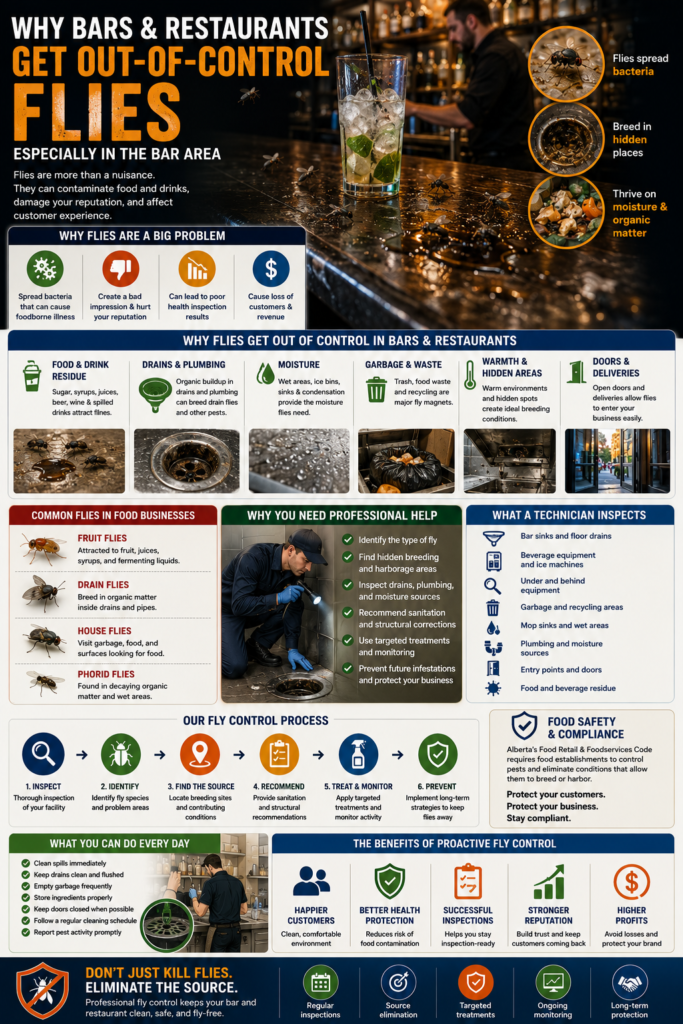
A professional technician may look at areas that are easily overlooked, such as:
- Inside and around drains
- Under bar equipment
- Beneath refrigerators
- Behind beverage equipment
- Garbage and recycling areas
- Wet floor areas
- Mop sinks
- Plumbing connections
- Hidden food and beverage residue
- Areas where cleaning equipment is stored
The objective is to identify where the fly problem is originating, rather than simply treating the flies customers can see.
Different Flies Can Require Different Strategies
Not every small fly around a bar is the same species.
Depending on the situation, a business may encounter fruit flies, drain-associated flies, house flies, or other flying insects. Correct identification matters because the source and management strategy can differ.
For example, a persistent population of small flies around a bar drain may require investigation of the drain and organic buildup rather than simply treating the adult insects flying around the room.
This is one reason professional identification is valuable when activity continues despite routine cleaning.
Why Fly Traps Alone May Not Solve the Problem
Fly-control devices can be useful monitoring and control tools, but they should not be considered a complete solution when an infestation is established.
If the breeding or harbourage source remains, new adult flies may continue to emerge.
Alberta’s Food Retail and Foodservices Code emphasizes immediate action when insects are present in food establishments, including inspection, cleaning and sanitizing contaminated surfaces, eliminating breeding or harbourage areas, and protecting the establishment from pest entry.
Why Professional Pest Control Matters
When fly activity becomes persistent or difficult to control, a professional pest-control technician can approach the problem systematically.
The technician can:
- Identify the type of fly
- Inspect potential breeding locations
- Examine drains and moisture sources
- Identify sanitation concerns
- Check garbage and waste areas
- Look for potential entry points
- Review existing monitoring devices
- Recommend corrective actions
- Implement appropriate control measures
- Monitor activity over time
For food establishments, Alberta guidance specifically states that uncontrolled pests should be addressed by a certified pest-control operator using approved chemicals and methods, while integrated pest management approaches are encouraged.
The Technician Should Look for the Source—Not Just the Flies
One of the biggest differences between professional pest management and simply killing visible insects is source investigation.
If flies are continually appearing around the bar, the technician should ask:
Where are they coming from?
Where could they be breeding?
What moisture or organic material is supporting them?
Are drains contributing to the activity?
Are garbage and recycling areas properly managed?
Are there structural openings allowing additional flies inside?
Finding the source is often much more important than treating the visible adult flies.
Management and Staff Have an Important Role
Professional pest control works best when the business and technician work together.
Staff should promptly clean beverage spills, remove food debris, maintain garbage areas, follow cleaning procedures, and report unusual fly activity.
Management should also make sure that recommendations from the pest-control technician are communicated to the appropriate employees and maintenance personnel.
If the technician identifies a damaged drain, plumbing leak, sanitation issue, or other condition, that recommendation needs to be addressed.
Why Documentation Matters
Commercial pest management should be documented.
Service records can help management determine:
- When fly activity was first identified
- Where activity was found
- What control measures were implemented
- What recommendations were made
- Whether activity is increasing or decreasing
- Whether previous recommendations were completed
- What needs to happen during the next visit
Documentation also helps create a history that can be reviewed when recurring problems occur.
AHS and Food-Safety Considerations
Alberta Health Services Environmental Public Health regulates and inspects public places including restaurants.
For food establishments, pest activity should therefore be treated as more than an inconvenience. Alberta’s food-services guidance recognizes that pest infestations can contaminate food and surfaces with pest material and potentially pathogenic microorganisms.
A business experiencing persistent fly activity should take the problem seriously and address both the insects and the conditions supporting them.
Don’t Wait Until Customers Start Complaining
A few flies may seem like a minor nuisance, but rapidly increasing activity can indicate that conditions are supporting a larger problem.
In a bar or restaurant, customers may notice flies around drinks, food, tables, or service areas before management realizes how extensive the problem has become.
Regular monitoring allows management to identify changes early rather than waiting until the infestation becomes highly visible.
A Proactive Fly-Control Program Is Better Than Emergency Treatment
For restaurants and bars with recurring fly pressure, a proactive pest-management program can be more effective than repeatedly calling for emergency treatments.
A professional program may combine:
Inspection → Identification → Source Investigation → Sanitation Recommendations → Monitoring → Targeted Control → Follow-Up
This approach focuses on reducing the conditions that allow flies to continue developing.
The Bottom Line
Out-of-control flies in a bar or restaurant are often a symptom of an underlying condition, not simply a problem that can be solved by killing the adult flies.
The bar area can provide moisture, food residue, sugary beverages, garbage, and drain-associated organic material that create favourable conditions for fly activity.
When fly numbers continue to increase despite cleaning and routine control measures, professional help is appropriate. A qualified pest-control technician can identify the fly, investigate potential breeding and harbourage areas, recommend corrective actions, and establish monitoring and follow-up.
For restaurants and bars, effective fly control isn’t about simply killing the flies customers can see. It’s about finding the source, correcting the conditions, monitoring the activity, and preventing the next generation from becoming another customer complaint.
Frequently Asked Questions: Fly Control for Bars and Restaurants
1. Why do bars and restaurants get so many flies?
Bars and restaurants provide flies with food, moisture, organic material, garbage, drains, and warm areas where they can survive. Busy bar areas can be especially attractive because of spilled beer, wine, juice, syrups, and other sugary beverages.
2. Why are flies especially bad around the bar area?
The bar area often contains sinks, drains, beverage equipment, recycling containers, garbage, wet surfaces, and beverage residue. These conditions can provide food and moisture that support recurring fly activity.
3. Could the bar drain be causing the fly problem?
Yes, depending on the type of fly. Organic material and moisture inside or around drains can provide suitable conditions for some small flies. A professional inspection can help determine whether drains are contributing to the problem.
4. Why do I still have flies after cleaning the bar?
Cleaning visible surfaces may not eliminate hidden sources. Flies may be associated with drains, plumbing areas, equipment, garbage, moisture, or organic material in locations that are difficult to access.
5. What types of flies are commonly found in restaurants and bars?
Businesses may encounter fruit flies, drain-associated flies, house flies, and other flying insects. Correct identification is important because different flies can have different sources and require different management strategies.
6. Can fly traps solve a restaurant fly infestation?
Fly traps can be useful for monitoring and controlling adult flies, but they may not eliminate the underlying source. If flies continue emerging from a breeding or harbourage area, new adults can continue appearing.
7. Why should a restaurant hire a professional pest control company?
A professional technician can identify the fly, investigate potential breeding areas, inspect drains and moisture sources, identify sanitation or structural concerns, recommend corrective actions, and establish appropriate monitoring and control measures.
8. What should a pest control technician look for?
A technician should investigate areas such as:
- Bar and floor drains
- Beverage stations
- Garbage and recycling
- Under and behind equipment
- Mop sinks
- Plumbing areas
- Moisture sources
- Food and beverage residue
- Organic material
- Potential entry points
9. Why is identifying the type of fly important?
Different flies can have different breeding sites and behaviours. Correct identification helps the technician focus the inspection and control strategy on the most likely source rather than treating all flying insects the same way.
10. Can a very clean restaurant still have flies?
Yes. Good sanitation reduces pest opportunities, but flies can still enter through doors, deliveries, drains, structural openings, or other pathways. A clean business can still require professional monitoring and pest management.
11. Why do flies suddenly become worse during busy hours?
Busy periods can increase door openings, food handling, beverage spills, garbage production, and moisture. These conditions can increase opportunities for flies to enter the building or access food and breeding sources.
12. What should restaurant employees do when they see increasing fly activity?
Employees should report the activity to management, clean spills promptly, follow sanitation procedures, maintain garbage areas, and identify locations where flies are repeatedly observed. Management should communicate recurring activity to the pest control provider.
13. What happens if the source of the flies is not corrected?
Adult flies may continue appearing even after treatment. If the breeding or harbourage conditions remain, the infestation can become recurring and increasingly difficult to manage.
14. Should a restaurant treat flies every time they see them?
Not necessarily. Repeatedly treating visible flies without investigating the source may provide only temporary relief. Persistent activity should trigger an inspection and source investigation.
15. Why is professional follow-up important?
Follow-up helps determine whether fly activity is decreasing and whether previous recommendations were completed. It also allows the technician to identify new conditions that may be contributing to the problem.
16. Does Alberta food-safety guidance address pest control?
Yes. Alberta food-safety guidance emphasizes pest prevention, monitoring, control, sanitation, and eliminating conditions that allow pests to harbour or breed. Food establishments should take pest activity seriously because pests can contaminate food and food-contact surfaces.
17. Can excessive flies become an AHS concern?
Persistent pest activity in a food establishment can become a food-safety concern. Businesses should address pest activity promptly and maintain appropriate pest-control measures and documentation.
18. Why is documentation important for a restaurant fly-control program?
Service records can show when activity was discovered, where it was found, what actions were taken, what recommendations were provided, and whether the problem is improving. Documentation also helps management track recurring problem areas.
19. Should a bar or restaurant have regular pest control even when there are no visible flies?
For higher-risk food businesses, regular inspection and monitoring can help identify early signs of activity before the problem becomes obvious. The appropriate service frequency should be based on the property’s risk, history, and monitoring results.
20. What is the most important thing to remember about restaurant fly control?
Don’t focus only on killing the flies you can see. Find out why they are there.
Effective fly management combines identification, inspection, source investigation, sanitation, monitoring, appropriate control measures, and follow-up.