How Do You Keep Insects From Overwintering Indoors?
Last Updated: October 27, 2026
Quick Summary
Preventing overwintering insects indoors starts with sealing entry points, because exclusion beats treatment and pests that never get in never need to be removed. Walk the exterior with a flashlight on a cool evening, then seal top-down and outside-in: roofline and soffit first, utility penetrations next, then the foundation-to-siding joint, and doors and windows last.
- Overwintering pests survive cold seasons by finding shelter, not by invading your kitchen.
- If a gap admits a pencil, roughly 6 mm, a mouse can pass through it.
- Pack utility penetrations with copper mesh or steel wool, then seal with exterior-grade sealant.
- Never seal an entry point while animals may still be inside the wall or attic.
- Vacuum stink bugs and boxelder bugs instead of crushing them, then empty the canister outdoors.
Table of Contents
- Why Overwintering Insects and Rodents Move Indoors
- Common Overwintering Pests and How to Tell Them Apart
- How to Keep Insects Out of the House: Sealing Entry Points
- Your Fall Pest Prevention Checklist, Room by Room
- Reducing Outdoor Conditions That Attract Pests
- Bringing Outdoor Plants Indoors Without Bringing Pests
- Pests Already Inside the Home: Safe Removal and When to Call a Professional
- Booking a Fall Prevention Inspection Before the First Cold Snap
- Frequently Asked Questions
Why Overwintering Insects and Rodents Move Indoors
Preventing insects from overwintering indoors starts with one fact: bugs come inside for the same reasons we turn up the heat.
Overwintering pests are insects and rodents that survive the cold season by finding shelter instead of migrating or dying off.
That’s the part most people miss. These pests aren’t trying to invade your kitchen. They’re looking for a stable place to wait out the season.
Rodents follow the same logic. The University of California Agriculture and Natural Resources guidance on rodent overwintering notes that rodents move toward buildings as temperatures drop, and recommends sealing and trapping as the core response.
Insects have a harder time than rodents. A 2023 study in the journal Insects on mealybug overwintering strategy explains that insects can’t regulate their own body temperature, so they depend on behavior and shelter to survive thermal stress.
Common Overwintering Pests and How to Tell Them Apart
Identification decides your next move. A cluster fly and a blowfly look similar and need different handling. Here’s how to sort the usual suspects.
Stink Bugs, Cluster Flies, and Lady Beetles
These three are the classic fall invaders. All are harmless to people, all arrive in numbers, and all are annoying in different ways.
- Stink bugs: shield-shaped, brown-grey, about the size of a fingernail. They release a sharp odor when crushed or vacuumed.
- Cluster flies: larger and slower than house flies, with a yellowish sheen. They cluster in sunny windows and lofts.
- Lady beetles: the familiar orange-red beetles. They gather in wall voids and emerge on warm winter days.
Watch out: crushing a stink bug indoors leaves a stain and a smell that lingers. Vacuum them instead, then empty the canister outside.
Boxelder Bugs, Spiders, and Mice
This group behaves differently. Boxelder bugs come in from nearby trees and gather on warm siding. Spiders follow their food indoors. Mice come in for warmth and stay for the food supply.
- Boxelder bugs: black with red-orange lines, often in large groups on south-facing walls.
- Spiders: mostly harmless species that wander in during the fall.
- Mice: droppings, greasy rub marks along walls, and scratching in the walls at night.
If boxelder bugs are already covering your siding, consider seeking professional advice.
How to Keep Insects Out of the House: Sealing Entry Points
Sealing is the single highest-value job on this list. Exclusion beats treatment, because pests that never get in never need to be removed.
Start with a size rule.
Work top-down and outside-in so you never seal over an active infestation:
- Roofline and soffit first. Check for gaps behind fascia, at soffit-to-wall junctions, and where the roof meets chimney or vent stacks. These are the classic entry points for cluster flies and lady beetles heading for wall voids.
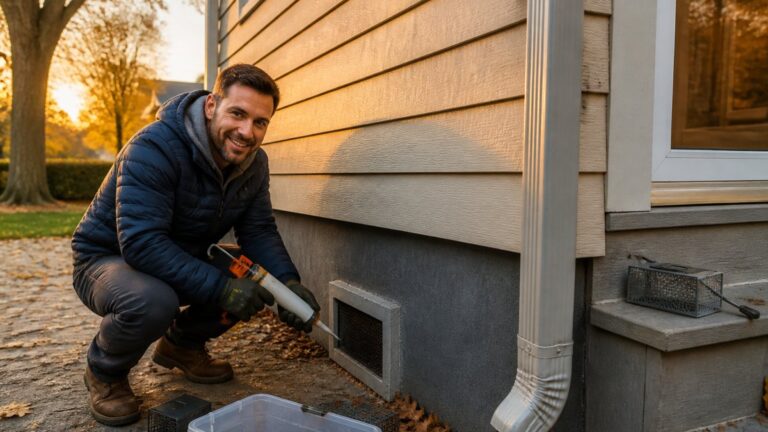
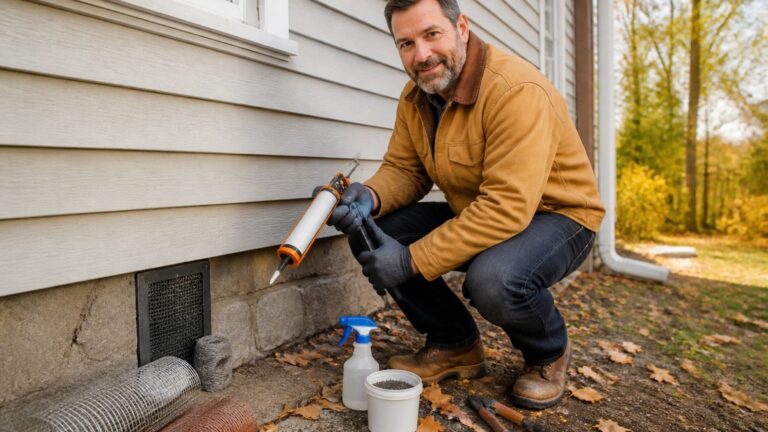
- Utility penetrations next. Cable, gas, dryer vent, and HVAC line sets almost always leave an oversized hole. Pack with copper mesh or stainless steel wool, then seal with exterior-grade sealant.
- Foundation-to-siding joint. This horizontal seam is where mice and boxelder bugs work in. Rake back soil and debris first, then caulk the full length.
- Doors and windows last. These are the easiest to fix and the easiest to overlook.
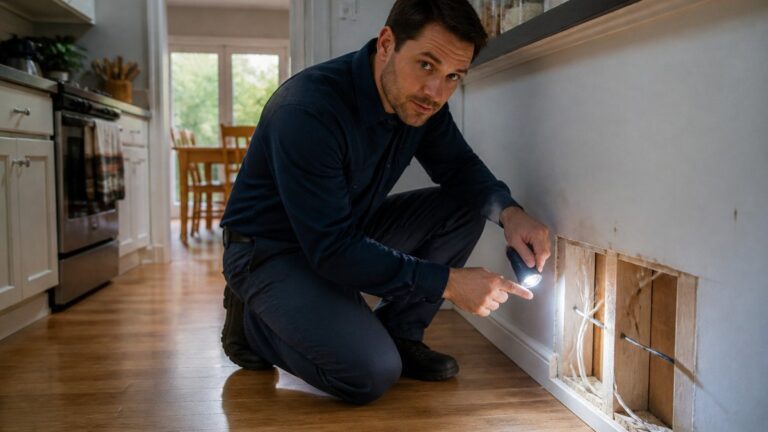
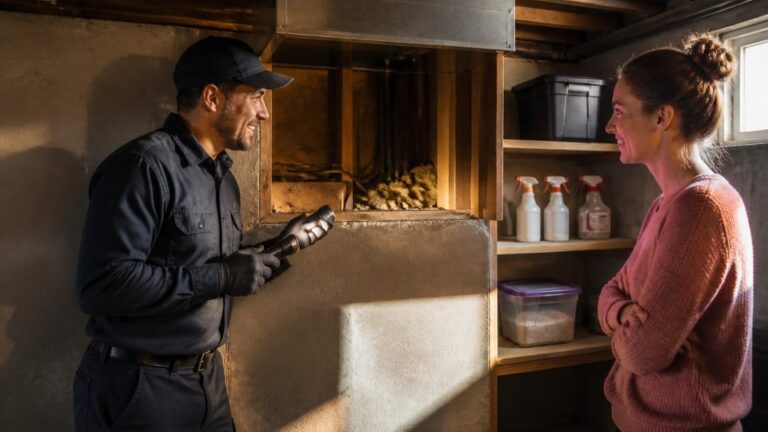
Seal the interior side of a gap only after confirming nothing is living behind it. Sealing an occupied wall void traps pests inside and pushes them into living space.
For a full walkthrough, our guide on sealing entry points to keep mice out before winter covers materials and order of work. If you’re not sure where your gaps are, how to identify rodent entry points shows what to look for.
Doors, Windows, and Weatherstripping
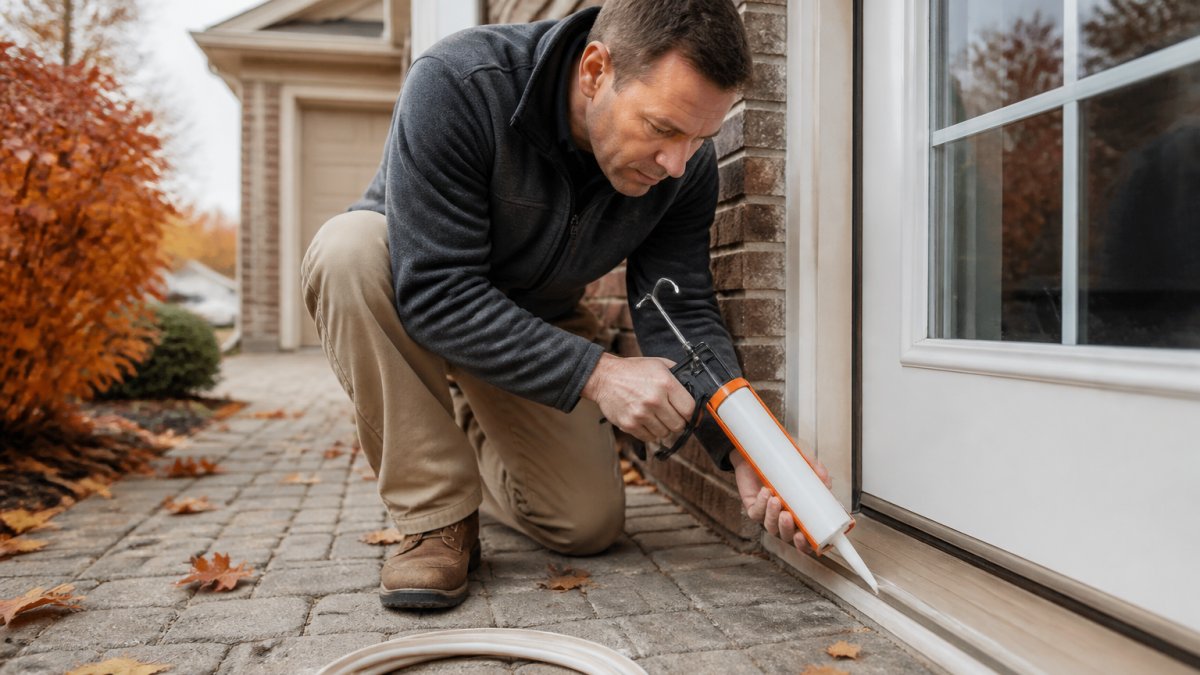
Doors and windows are the easiest entry points to fix and the easiest to overlook. A gap you can slide a pencil under is wide enough for a mouse.
- Replace worn weatherstripping on exterior doors; foam tape is cheap but compresses and fails within a season, so prefer a rigid or magnetic sweep on high-traffic doors.
- Fit door sweeps on any door with visible daylight underneath, and check the threshold seal, not just the bottom of the door.
- Re-caulk window frames where the old bead has cracked, and check the weep holes in the frame, they should drain, not admit insects.
Foundation, Roofline, Vents, and Utility Openings
The upper and lower edges of your house get less attention than doors. They also let in more pests.
Check the foundation for cracks and gaps around pipes. Look up at the roofline for gaps behind fascia and soffit. Cover open vents with fine mesh, quarter-inch hardware cloth is the usual standard for rodent exclusion, and finer mesh for insects.
Sealing works when it is measured, sequenced top-down, and backed with mesh at penetrations. Caulk alone over a large hole is a temporary patch, not exclusion.
Seal in this order, working top-down and outside-in so you never close over an active infestation.
| Step | What to do | Why it matters |
|---|---|---|
| Roofline and soffit | Check gaps behind fascia and soffit-to-wall junctions | Classic entry for cluster flies and lady beetles |
| Utility penetrations | Pack with copper mesh or steel wool, then seal | Cable, gas, dryer vent, HVAC holes are oversized |
| Foundation-to-siding joint | Rake back soil, then caulk the full length | Where mice and boxelder bugs work in |
| Doors and windows | Replace weatherstripping, fit sweeps, re-caulk frames | Easiest to fix, easiest to overlook |
Your Fall Pest Prevention Checklist, Room by Room
A room-by-room sweep catches what an exterior walk misses. Run this list before the first hard frost.
Visit Pest Pro Exterminator For Pest Control Services In Calgary And Surrounding Areas →
- Attic: check for droppings, gnaw marks, and nesting material
- Basement: seal the rim joist, check window wells, clear stored cardboard
- Kitchen: store dry goods in sealed containers, fix leaks under the sink
- Utility rooms: seal around pipes and wiring, check the furnace intake
The pattern holds in every room: remove food, remove water, remove shelter.
Reducing Outdoor Conditions That Attract Pests
Your yard is the staging ground. Pests shelter there first, then move toward the house when it gets cold.
Start with vegetation. Trim shrubs and tree branches back from the siding and roofline. Rake leaf piles away from the foundation.
Next, deal with clutter. Stack firewood off the ground and away from the house.
Finally, fix moisture. Damp soil and leaky downspouts draw pests.
Bringing Outdoor Plants Indoors Without Bringing Pests
Houseplants are a common Trojan horse. Fungus gnats, spider mites, and aphids ride in on soil and leaves, then spread to your other plants.
Before you move anything inside:
- Inspect the leaves, top and bottom, for webbing or sticky residue
- Check the soil surface and the drainage holes
- Isolate the plant in a separate room for a couple of weeks
- Repot into fresh potting mix if you see any activity
Skip the isolation step and you’ll likely be treating the whole collection by midwinter.
Pests Already Inside the Home: Safe Removal and When to Call a Professional
Prevention and indoor control are different jobs. If pests are already inside, the goal shifts from exclusion to removal without making the problem worse, and the right method depends on the species.
Match the removal method to the pest
- Stink bugs and boxelder bugs: do not crush them. Crushing releases a sharp odor, and boxelder bugs leave reddish stains on walls and fabric. Vacuum with a wand attachment, then empty the canister or bag outdoors immediately, a canister left indoors lets the smell and the survivors back out.
- Lady beetles: the same vacuum rule applies. They also secrete a staining fluid when disturbed, so avoid sweeping them into a pile against light-colored surfaces.
- Cluster flies: they gather at sunny windows and in lofts. Vacuum the visible cluster, then investigate the wall void or attic, the ones you see are a fraction of the ones behind the drywall.
- Mice: snap traps set along walls, perpendicular to the wall with the trigger end against it, near droppings or rub marks. Place them where pets and children cannot reach. The University of California Agriculture and Natural Resources rodent guidance names snap traps as the preferred indoor control method.
Never seal an entry point while animals may still be inside. For wildlife in an attic or wall, confirm the animal is out before closing the gap, or you trap it in the structure.
When to call a professional
Call a professional when you see any of these:
- Rodent droppings in food areas or repeated sightings
- Scratching or movement in walls and ceilings
- A recurring infestation after DIY treatment
- Wasps or other stinging insects nesting in the structure
Why exclusion usually beats spraying indoors
Integrated pest management puts habitat change and exclusion ahead of pesticides for overwintering invaders, because a residual spray indoors does little against insects that are sheltering in a wall void rather than feeding. If a pesticide is used, follow the label exactly, it is a legal document, not a suggestion, and keep products away from food, pets, and children. Most practitioners find that sealing the entry point solves the problem a spray only postpones.
Measuring whether it worked
Judge success by indicators, not promises: fewer indoor sightings week over week, no new droppings or rub marks, and a follow-up exterior inspection that finds the gaps you sealed still closed. Recheck after the first hard cold snap, when pressure on entry points peaks.
Booking a Fall Prevention Inspection Before the First Cold Snap
Timing matters more than most people expect. The best window is before the first sustained cold, while pests are still outside and entry points are easy to spot.
Book the inspection in early fall. Our fall pest control timing guide explains how to pick the right week.
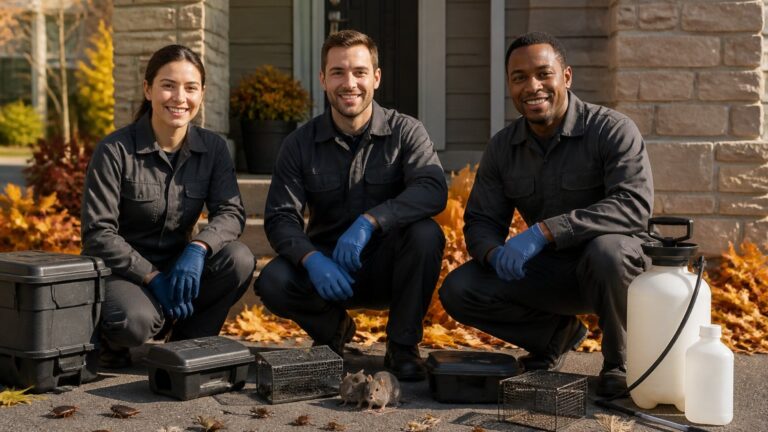
Pest Pro Exterminator has more than 18 years of combined experience in the general pest control industry, and we’re available 24/7 for contact. Our process includes inspection, identification, customized treatment, and ongoing prevention.
Frequently Asked Questions
What insects commonly overwinter inside homes?
The usual indoor overwintering pests are stink bugs, cluster flies, lady beetles, and boxelder bugs, along with spiders and the occasional rodent. Researchers note that insects have limited ability to regulate body temperature, so they rely on sheltered spots to survive thermal stress.
How can I keep insects from entering my home in the fall?
Start outside with an exterior inspection. Then reduce outdoor shelter: clear leaf piles and yard debris, trim vegetation back from the walls, and keep firewood away from the house.
Can outdoor plants bring insects indoors?
Yes. Potting soil, leaves, and stems can carry aphids, fungus gnats, mealybugs, spider mites, and other insects indoors when you move plants in for the season. Before bringing outdoor plants indoors, inspect the leaves and soil, rinse the foliage, and quarantine the plant in a separate room for a couple of weeks. A 2023 study in the journal Insects used mealybugs as an example of a novel overwintering strategy, which is a reminder that some insects can survive on houseplants through the cold months. Check new plants again after two weeks.
When should I call a pest control professional about insects in my home?
Call a professional when indoor sightings continue, when you find rodents or their droppings, or when pests appear in several rooms or units of a building. A professional inspection can help identify the pest problem.
Cold weather is coming whether your home is ready or not. The pests already know where they’re going. Get ahead of them with a free quote or consultation from Pest Pro Exterminator, and let our team inspect, identify, and seal your property before the season turns.