7 Steps to Keep Spiders Out Before Fall and Winter
Last Updated: October 25, 2026
Quick Summary
To keep spiders out before fall and winter, seal cracks and gaps around your home’s foundation, windows, doors, and utility entry points, then remove existing webs and egg sacs while controlling the insects spiders hunt for food. Spiders enter homes following prey insects, so reducing indoor insect populations removes their reason to stay.
- Spiders become more active and visible indoors in fall and winter as they hunt for insects that have moved inside, not because they need warmth.
- Seal entry points using caulk for small cracks and weatherstripping or foam sealant for larger gaps, paying special attention to basement and garage doors.
- Remove active spider webs weekly with a vacuum and dispose of them outside immediately to prevent spiders from re-entering your home.
- Trim vegetation away from your house to remove spider harborage areas near entry points.
- Control indoor insects by using yellow outdoor bulbs, keeping kitchens clean, fixing moisture problems, and sealing vents and chimneys with fine mesh screens.
Table of Contents
- Why Spiders Enter Homes as Weather Gets Colder
- Step 1: Inspect and Identify Common Spider Activity
- Step 2: Seal Cracks, Gaps, and Entry Points
- Step 3: How to Keep Spiders Out Using Exclusion Methods
- Step 4: Remove Spider Webs in the House and Egg Sacs
- Step 5: Use Natural Spider Repellents and Prevention
- Step 6: Reduce Prey Insects That Attract Spiders
- When to Call for Professional Spider Control
- Frequently Asked Questions
Why Spiders Enter Homes as Weather Gets Colder
As temperatures drop, spiders don’t actually come inside to escape the cold. They’re already there. What changes is their behavior. Spiders become more active and visible as they hunt for insects that have also moved indoors. They’re searching for food, not warmth. This is when homeowners notice webs in corners and spiders crawling across walls.
Spiders follow their prey. When insects cluster near your home’s heat sources, windows, doors, and foundation cracks, spiders follow. They build webs where bugs gather. Understanding this relationship is the first step to keep spiders out.
At Pest Pro Exterminator, we’ve helped countless homeowners in the region understand that spider activity peaks in fall and early winter. The good news: you can reduce spider populations significantly by controlling the insects they hunt. Start your preparation now, before the season intensifies.
| Factor | Why It Matters |
|---|---|
| Temperature drop | Triggers spider hunting behavior indoors |
| Insect migration | Prey moves inside, spiders follow |
| Daylight reduction | Spiders become more active at night |
| Moisture changes | Affects insect populations spiders depend on |
Step 1: Inspect and Identify Common Spider Activity
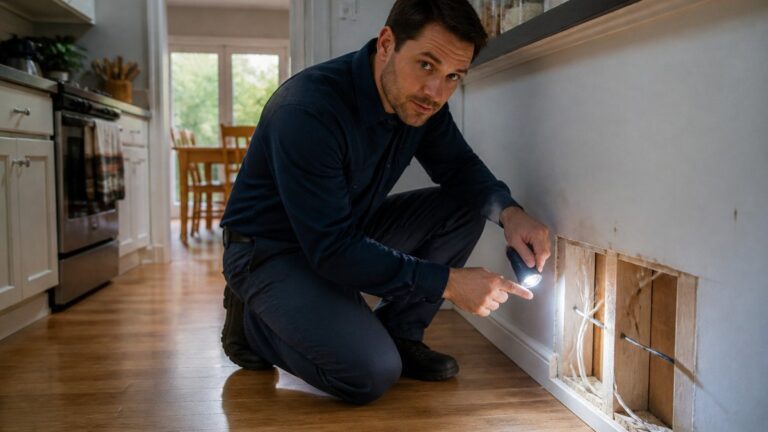
Start with a structured inspection rather than a casual glance. Grab a flashlight, a hand mirror for low corners, and a notepad or phone to log what you find. Work top-down and room-by-room so nothing gets missed.
Where to look, in order:
- Ceiling corners and wall junctions, the classic web anchor points. Check where walls meet ceilings, especially in bedrooms and living areas.
- Window frames and sills, spiders build webs where prey insects gather at light and drafts.
- Behind furniture and stored items, pull furniture a few inches from walls; check behind bookshelves, under beds, and behind picture frames.
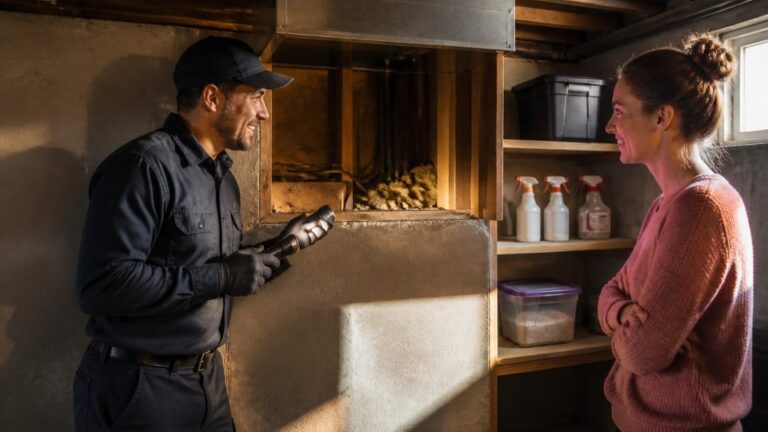
- Basement corners, rafters, and floor drains, damp, undisturbed areas are prime harborage.
- Garage shelves, storage bins, and door corners, attached garages often bridge the gap between outdoors and living space.
- Attic spaces, eaves, and vents, check for egg sacs and webbing around roof vents and insulation.
Identify what you’re seeing. Most spiders found indoors are common house spiders (often funnel-weavers or cobweb spiders) that are harmless and actually help reduce insect populations. They build messy, irregular webs in corners.
Look for egg sacs. These are small, silky pouches, usually gray or tan, often tucked into corners or behind furniture. One sac can contain dozens of spiderlings. Removing egg sacs now prevents a larger population later.
Distinguish active from abandoned webs. Fresh, intact webs with a spider present or visible prey remains indicate active hunting. Dusty, torn, or empty webs mean the spider has moved on.
Log your findings. Note the date, location, and what you saw (live spider, web, egg sac). This baseline lets you measure whether your control efforts are working in later steps.
Take photos of any spider you can’t identify. A clear image helps a professional confirm species without you handling the spider.
Step 2: Seal Cracks, Gaps, and Entry Points
Spiders don’t crawl through solid walls. They enter through cracks, gaps, and openings. Sealing these entry points is your most effective defense against keeping spiders out.
Walk around your home’s exterior. Look for:
- Cracks in foundation concrete
- Gaps around window and door frames
- Openings where pipes or cables enter the house
- Spaces under doors
- Damaged weatherstripping
- Holes in screens
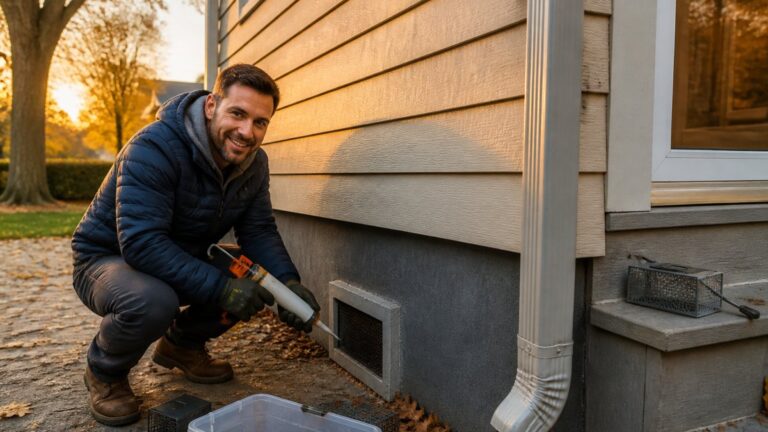
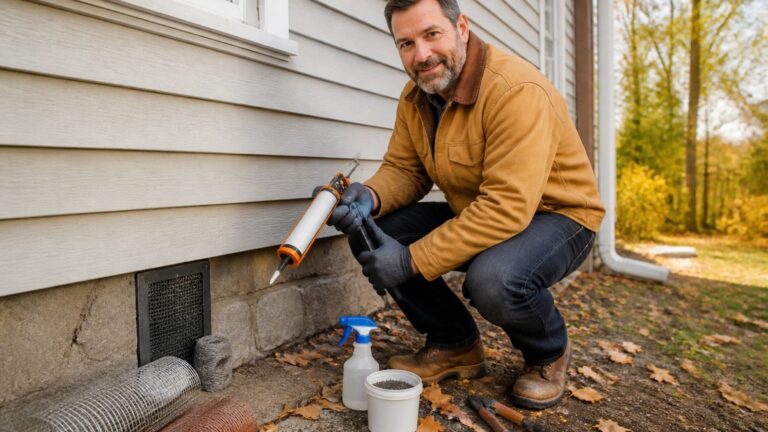
Use caulk for small cracks and gaps. Apply it in a smooth, continuous bead. Let it cure fully before painting. For larger gaps, use weatherstripping tape or foam sealant.
Pay special attention to areas where utilities enter your home. Learn how sealing entry points keeps mice out using the same techniques that work for spiders.
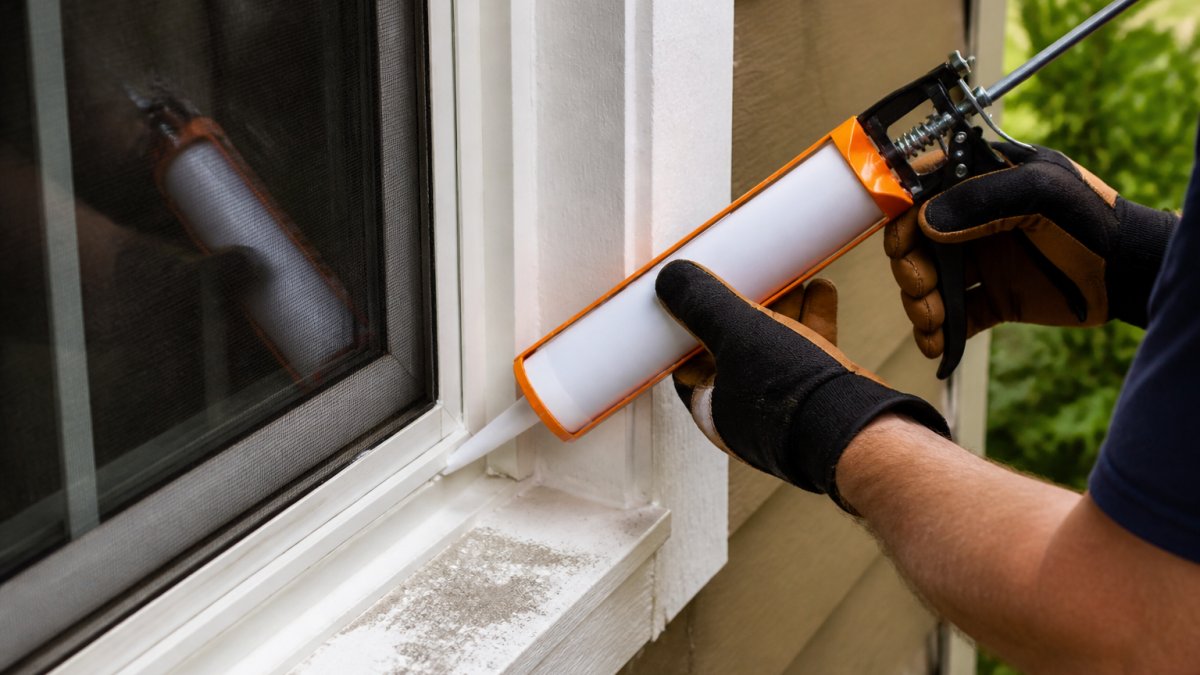
Don’t forget the garage and basement doors. These areas often have gaps at the bottom or sides.
Sealing entry points takes a few hours but prevents months of spider problems. This single step removes the most direct route spiders use to enter homes.
Step 3: How to Keep Spiders Out Using Exclusion Methods
Exclusion means creating barriers spiders cannot cross. Beyond sealing cracks, several exclusion strategies work well.
Install or repair window screens. Screens with tears or holes are useless. Check every screen in your home. Repair small tears with patch kits. Replace damaged screens entirely.
Use door sweeps and threshold seals. These simple devices block gaps at the bottom of doors. Install them on all exterior doors. They’re affordable and take minutes to attach.
Caulk around exterior light fixtures. Lights attract insects, and insects attract spiders. Seal gaps around outdoor lights where spiders can hide or enter.
Trim vegetation away from your home. Spiders hide in plants and bushes. Keep shrubs and tree branches at least 2-3 feet away from your house.
Install door seals on basement windows. These wells collect debris and insects. Spiders congregate there. A seal or grate reduces spider access to your basement.
Exclusion works because it removes opportunity. Spiders can’t enter if there’s nowhere to go. Combine multiple exclusion methods for best results.
Step 4: Remove Spider Webs in the House and Egg Sacs
Removing existing webs and egg sacs reduces the spider population immediately.
For spider webs: Use a vacuum with a hose attachment. Suck up the web, then immediately empty the vacuum bag or canister outside. Don’t leave webs and spiders sitting in your vacuum; they’ll escape back into your home.
Visit Pest Pro Exterminator For Pest Control Services In Calgary And Surrounding Areas →
For egg sacs: These are tougher. Spray them with a general household cleaner or diluted vinegar solution. Wipe away with a cloth. If the sac is on a hard surface, scrape it off with a plastic scraper. Never crush egg sacs indoors; this releases hundreds of baby spiders.
Frequency matters. Check high-activity areas weekly. Remove new webs as soon as you spot them. This prevents spiders from establishing permanent harborage areas in your home.
Removing webs and egg sacs is a quick, chemical-free way to reduce spider populations. It works best as part of a broader prevention plan that includes sealing entry points and reducing prey insects.
Step 5: Use Natural Spider Repellents and Prevention
Natural methods work best as prevention and population reduction, not as a cure for an established infestation.
Peppermint and citrus oils. Mix about 10-15 drops of essential oil with one cup of water in a spray bottle.
Diatomaceous earth (food-grade only). This fine powder damages the waxy outer layer of spiders and insects, causing them to dehydrate.
Vinegar solutions. Mix equal parts white vinegar and water. Spray in problem areas such as corners and window frames.
Keep your home dry. Spiders and their prey need moisture. Fix leaky pipes, improve ventilation in basements and bathrooms, and use a dehumidifier in damp areas.
Declutter storage areas. Spiders hide in boxes, old clothes, and piles of items. Store belongings in sealed plastic containers, keep storage areas organized, and vacuum corners regularly.
Safety first for pets and children. Any spray, dust, or oil, even natural ones, should be applied according to label directions.
Natural methods are not a substitute for sealing entry points and removing prey.
Essential oils can be harmful to pets if ingested or applied directly. Always ventilate and keep treated areas off-limits until dry.
Step 6: Reduce Prey Insects That Attract Spiders
Spiders follow food. Reduce the insects in your home, and spiders have no reason to stay.
Control indoor lighting. Lights attract flying insects. Use yellow or amber bulbs for outdoor lights; they attract fewer insects than white bulbs. Keep porch and entry lights off when not needed.
Eliminate food sources. Keep kitchens clean. Don’t leave food or crumbs on counters or floors. Seal food in airtight containers. Take out garbage regularly. These simple steps reduce the insects that attract spiders.
Fix moisture problems. Many insects need damp environments. Repair leaks, improve drainage, and reduce humidity. Dry homes attract fewer insects and therefore fewer spiders.
Seal cracks and gaps indoors too. Insects enter through the same openings spiders use. Sealing entry points reduces both pest populations.
Use screens on vents and chimneys. These openings allow insects, and spiders, to enter. Cover them with fine mesh screens.
By controlling the insect population, you remove the reason spiders come inside. This approach addresses the root cause rather than just the symptom.
When to Call for Professional Spider Control
DIY methods work for mild spider activity. Some situations require professional help.
Call a professional if: You can also learn about other common house pests in winter to watch for alongside spiders.
- You see multiple active webs daily despite cleaning efforts
- Spiders appear in multiple rooms consistently
- You’re uncomfortable handling spider removal yourself
- You have a large infestation with many egg sacs
- DIY methods haven’t reduced spider activity after 2-3 weeks
- You want comprehensive pest management for your home
Professional pest control specialists have tools and expertise to address spider infestations effectively. They can identify spider species, locate harborage areas you might miss, and apply targeted treatments.
Pest Pro Exterminator offers comprehensive spider control and prevention services tailored to homes in the region. With over 18 years of combined industry experience, our team handles inspections, identification, targeted treatment, and ongoing prevention planning. We work quickly and discreetly to protect your home and peace of mind.
Frequently Asked Questions
How can I keep spiders from entering my home in fall and winter?
Seal cracks and gaps around windows, doors, and foundation lines with caulk or weatherstripping. Remove spider webs and egg sacs regularly to discourage nesting. Reduce indoor lighting that attracts prey insects, and declutter storage areas where spiders hide. Keep outdoor vegetation trimmed back from your home’s perimeter. These steps address both entry points and the conditions that make your home attractive to spiders.
What should I do if I find a spider indoors?
Use a vacuum with a hose attachment to safely remove the spider, or trap it under a glass and release it outside. Avoid crushing spiders indoors, as this can attract more pests. After removal, inspect the area for webs and egg sacs. If you notice repeated spider activity in the same location, it may indicate an entry point or a concentration of prey insects that needs attention.
Does removing webs help control spiders?
Yes. Removing spider webs in the house regularly discourages spiders from settling in your home and signals that the space is actively maintained. Web removal also eliminates egg sacs before they hatch. However, web removal alone is not enough; you must also seal entry points and reduce the insects that attract spiders. Combined with exclusion and pest management, web removal becomes an effective part of your spider control strategy.
How long does professional spider treatment take to work?
Professional spider control typically shows results within 1-2 weeks as targeted treatments eliminate spiders and reduce prey insects. However, results depend on the extent of spider activity, the treatment method used, and ongoing prevention measures. Your pest control professional will recommend a follow-up schedule to monitor activity and ensure the infestation does not return. Combining professional treatment with your own prevention steps speeds up results.
Keeping spiders out starts now, before fall and winter peak season. Seal entry points, remove existing webs and egg sacs, and reduce the insects spiders hunt. These steps take time but prevent larger problems later. If DIY efforts aren’t working, professional spider control can provide the comprehensive solution your home needs. Get started with your inspection this week.