How to Find Mice Nesting Areas Indoors Before Winter
Last Updated: November 3, 2026
Quick Summary
To find mice nesting areas indoors, check dark, warm, tight spots close to food: kitchen cabinets and drawers, behind and under appliances, baseboards, attics, crawl spaces, and wall cavities. Confirm a nest by looking for rice-sized droppings, shredded material, musky odor, and nighttime scratching. Trace dropping trails and rub marks back to where they end, and never cut into a wall to chase a nest.
- Mice scout entry points in early fall, before cold weather pushes them fully inside.
- Mice are nocturnal, so scratching or scurrying after dark is a strong signal.
- The kitchen is almost always ground zero because it offers food, water, and warmth.
- Fresh, light-colored gnaw marks mean recent activity; darkened marks are older.
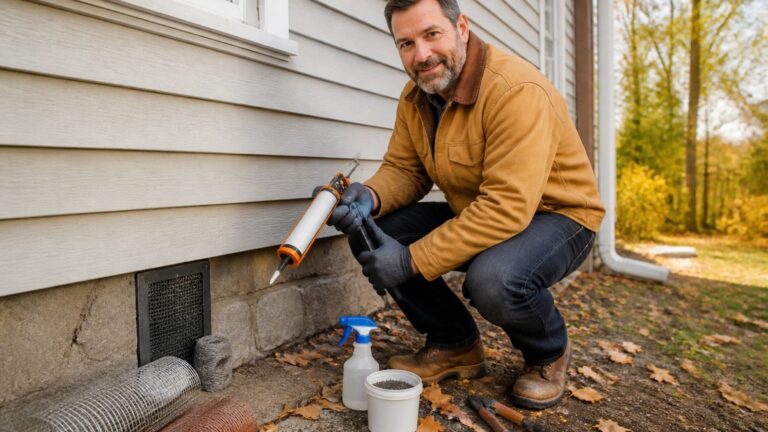
- Seal entry points with steel wool and caulk, since mice chew through soft foam.
Table of Contents
- Why Cold Weather Sends Mice Indoors
- Signs of a Mouse Nest in the House
- Where Do Mice Hide in a House?
- How to Find Mice in Walls and Inaccessible Spaces
- How to Find Mouse Entry Points Around the Home
- Telling an Active Nest From an Abandoned One
- Safe Nest Cleanup and When to Call a Professional
- Booking a Fall Inspection With Pest Pro Exterminator
- Frequently Asked Questions
Why Cold Weather Sends Mice Indoors
When the first hard frost hits, mice start looking for a warm place to spend the winter. Your house is the best option on the block. Learning how to find mice nesting areas indoors starts with understanding why they move in at all.
Mice are not built for cold. They lose body heat fast, and their food supply dries up once the ground freezes. So they follow the warmth. A heated wall cavity or a spot behind the kitchen stove is a lifesaver for them.
Mice that lived outside all summer suddenly need shelter when the first cold snap arrives, and they find it through gaps you would never notice.
Here is what most guides miss: the invasion happens before you see a single dropping. Mice scout entry points in early fall, long before the cold pushes them all the way inside. If you want to understand the full picture, read our breakdown of why mice enter homes when temperatures drop.
Signs of a Mouse Nest in the House
The clearest signs of a mouse nest in the house are droppings, shredded material, and a musky smell that gets stronger in closed spaces. You often find all three in the same spot.
Look for these clues:
- Droppings the size of a grain of rice, usually along walls and in corners
- Urine odor that lingers in cabinets or under the sink
- Shredded paper, fabric, or insulation gathered into a loose pile
- Gnaw marks on wood, wires, or food packaging
- Seed husks and crumbs stashed in a corner
- Scratching or scurrying after dark, when mice are most active
Mice are nocturnal. If you hear movement at night, that is a strong signal. During the day, the nest usually sits empty and quiet.
A common mistake is to clean up the droppings and stop there. The nest is still there, and so are the mice. You have to find the source.
Where Do Mice Hide in a House?
Mice hide in dark, warm, tight spaces close to food. The most common spots are kitchen cabinets, drawers, behind appliances, attics, crawl spaces, and wall cavities.
Here is where we tell homeowners to look first:
- Kitchen cabinets and drawers, especially the ones you rarely open
- Behind and under appliances like the stove, fridge, and dishwasher
- Baseboards and floorboards, where gaps give access to wall voids
- Attics and crawl spaces, the classic winter shelter
- Furniture, inside upholstery or underneath
- Storage boxes holding paper, fabric, or old clothes
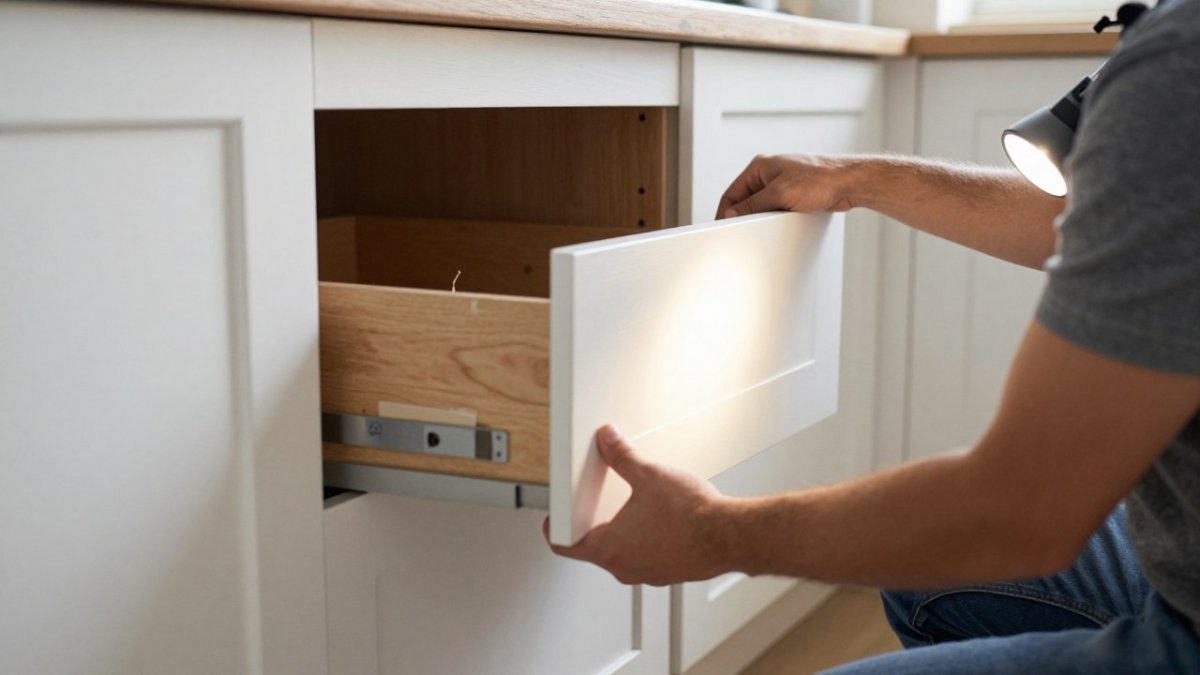
The kitchen is almost always ground zero. It has food, water, and warmth. If you suspect mice in your attic instead, our step-by-step attic removal guide walks through confirming and clearing them out.
How to Find Mice in Walls and Inaccessible Spaces
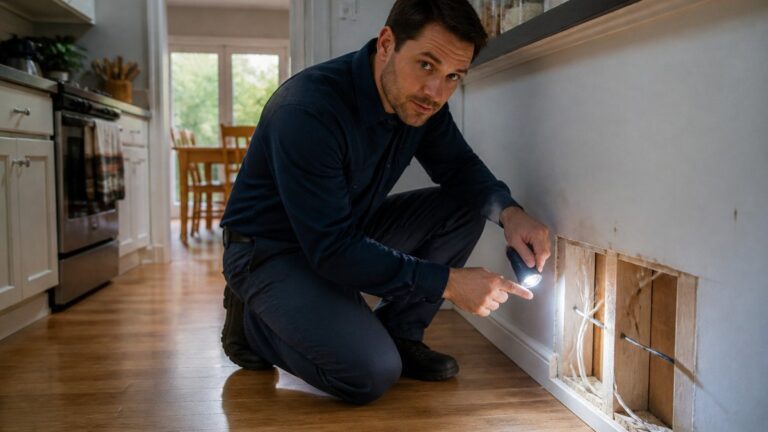
Finding mice in walls comes down to sound, smell, and evidence at the edges. You cannot see into a wall cavity, so you read the signs around it and work backward toward the source.
Start with a quiet room and listen. Scratching, light scurrying, or a faint rustle between the studs points to activity inside. Check the outlets and baseboards on that wall for droppings or greasy rub marks. Mice follow the same routes night after night, and those routes leave a physical trail you can follow.
Here is how to trace activity from signs back to a hidden nest:
- Note where you hear the noise and when. A rustle that starts shortly after lights-out and repeats at the same wall is a strong locator. Mice are most active in the first few hours of darkness.
- Check the nearest outlets, baseboards, and trim for droppings. Droppings cluster along travel edges, not in open floor. The end of a dropping trail usually points toward the nest.
- Look for rub marks and grease stains. Oily smudges along a baseboard or around a pipe penetration show a repeated route. Follow the smudge line.
- Inspect gnaw marks and shredded material at the edges. Fresh, light-colored chew marks on trim or insulation mean recent activity; darkened marks are older.
- Follow the trail toward a wall void, ceiling, or crawl space. Note where the signs stop or disappear into a gap.
- Mark the spot and stop probing once you confirm the area. A piece of painter’s tape on the wall keeps you from re-checking the same spot and helps a professional pick up where you left off.
Watch out: never cut into a wall to chase a nest. You can hit a wire or pipe, and you will spread droppings and urine into the room.
When the nest is sealed inside a cavity, you have three options. Decide based on what you can confirm:
- Monitor if the signs are old, the smell is faint, and you hear nothing for a week. Re-check the same spots and look for fresh droppings before assuming the nest is empty.
- Open the area only if you can do it safely and control the dust, and only after sealing the room and putting on gloves and a mask. This is rarely the right first move for a homeowner.
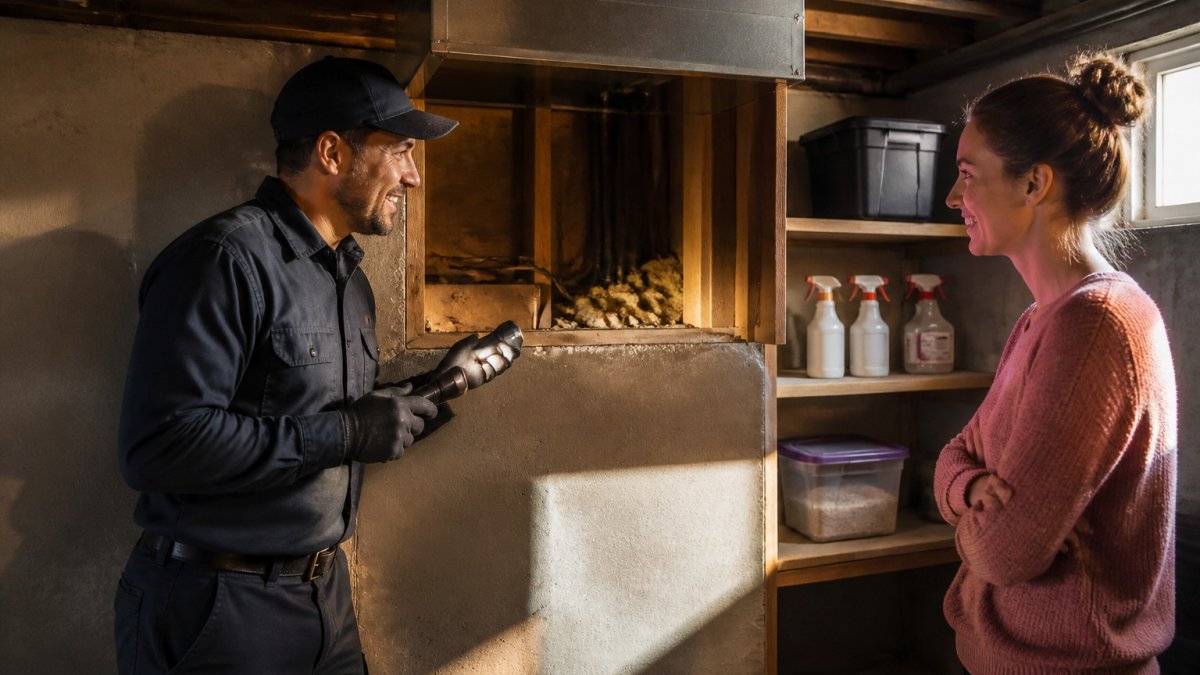
- Call a qualified pest professional if you hear activity, smell a strong odor, or the signs are fresh. A pro can inspect cavities with a borescope, confirm whether the nest is active, and remove it without spreading contamination through the room.
If the nest sits in a space you cannot reach safely, call for help rather than opening the wall yourself.
How to Find Mouse Entry Points Around the Home
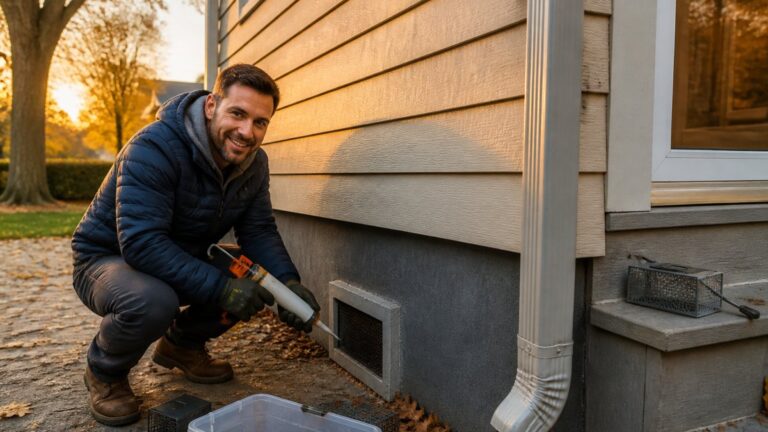
Entry points matter for nest-finding because they tell you where mice are coming from and where they are likely to settle. A gap on the outside maps to a route on the inside, and that route usually ends at a nest.
Visit Pest Pro Exterminator For Pest Control Services In Calgary And Surrounding Areas →
Walk the exterior and inspect these areas:
- Foundation cracks and gaps where the siding meets the foundation
- Around pipes, vents, and utility lines entering the house
- Doors and windows, including the weather stripping and frames
- The garage, especially the gap under the door
- The roof line and soffits, a common route into the attic
- Screens and vents that are torn or loose
As you find each gap, do not just note it, trace it inward. Stand inside the house at the same wall and look for the nearest baseboard gap, pipe penetration, or cabinet back.
A practical sequence for connecting an entry point to an indoor nest:
- Photograph the exterior gap and note which room sits on the other side.
- Inside that room, check the baseboards, outlets, and cabinet backs nearest the gap.
- Follow any dropping trail or rub line away from the wall.
- Note where the trail ends or disappears, that is your candidate nest zone.
Watch out: a gap you can see is rarely the only one. Mice use multiple routes, so finding one entry point does not mean you have found the nest’s only access.
For a detailed walkthrough, see our guide on how to identify rodent entry points. Once you have your list, our article on sealing entry points before winter shows how to close them properly. Seal with steel wool and caulk, not just foam. Mice chew through soft material with ease.
Telling an Active Nest From an Abandoned One
An active nest has fresh droppings, a strong smell, and new material added recently. An abandoned nest is dry, dusty, and free of fresh signs.
Use this quick check:
| Sign | Active Nest | Abandoned Nest |
|---|---|---|
| Droppings | Soft, dark, fresh | Hard, grey, crumbly |
| Smell | Strong urine odor | Faint or gone |
| Nest material | Loosely packed, recent | Compacted, dusty |
| Sounds | Scratching at night | Silent |
| Gnaw marks | Fresh, light wood | Old, darkened |
If you are unsure, clean the area and check back in a few days. Fresh droppings mean the mice are still there. No new signs over a week usually means the nest is dead.
Safe Nest Cleanup and When to Call a Professional
Cleaning a mouse nest safely means protecting yourself first. Mouse droppings and urine can carry germs, so never sweep or vacuum them dry (Hantavirus: Spread, prevention and risks). That sends dust into the air.
Follow these steps:
- Put on gloves and a mask before you start
- Spray the nest and droppings with a disinfectant to dampen dust
- Wipe up with paper towels and bag everything in sealed plastic
- Disinfect the surface and the surrounding area
- Wash your hands and clothes afterward
Keep pets and children out of the room while you work. If the mess is large, or the nest is in a wall or attic, call a professional.
Booking a Fall Inspection With Pest Pro Exterminator
The best time to act is before the cold drives mice all the way inside. A fall inspection finds the gaps and early nests while they are still easy to fix.
Pest Pro Exterminator provides professional residential and commercial pest management in Calgary and Southern Alberta, backed by over 18 years of combined industry experience. A professional inspection can identify the problem and help build a plan that fits your property.
Services are tailored for both residential and commercial properties. If you would rather not crawl through the attic yourself, our mice control service is a practical next step.
Frequently Asked Questions
Where do mice usually build nests inside a house?
Mice nesting areas indoors cluster where warmth, shelter, and nesting material meet. The most common spots are kitchen cabinets and drawers, behind and under appliances such as the fridge and stove, attic insulation, crawl spaces, wall voids, and the gaps behind baseboards. Garages, storage boxes, and upholstered furniture are also used. Check these locations first, because mice rarely nest in open floor space and prefer dark, undisturbed corners within easy reach of a food source.
How can you tell if mice are nesting in your walls?
Scratching and scurrying sounds at night are the clearest clue, since mice are nocturnal. Look for droppings along the base of the wall or on the floor below, greasy rub marks where fur brushes the surface, and small gnaw marks around outlets or trim. A faint urine odor in one room also points to activity inside the cavity. To find mice in walls, tap along the wall and listen for movement, then trace the signs back to the nearest opening.
Is it safe to remove a mouse nest yourself?
Small nests in an open, accessible area can be removed by hand with gloves, a mask, and eye protection, but never dry-sweep droppings or nesting material because that stirs dust into the air. Dampen the area first, bag the waste, and disinfect afterward. If the nest is inside a wall cavity, attic insulation, or a crawl space, leave it to a professional. Those spaces are hard to ventilate and often hold contaminated material that needs proper removal.
How do you stop mice from nesting indoors again next season?
Exclusion is the only lasting fix. Seal gaps around pipes, vents, and the foundation with caulk, steel wool, or mesh, and repair damaged screens and weather stripping. Move firewood and debris away from the exterior walls, store dry goods in sealed containers, and clear clutter from the garage and basement. Because mice can slip through openings far smaller than they look, a thorough inspection of entry points each fall helps catch the gaps you would otherwise miss.
Mice do not wait for the first snowfall. They are already scouting your home. Get ahead of them with a fall inspection from Pest Pro Exterminator. We offer 24/7 contact, customized treatment plans, and discreet service for homes and businesses. Get started with Pest Pro Exterminator and keep mice out before winter settles in.