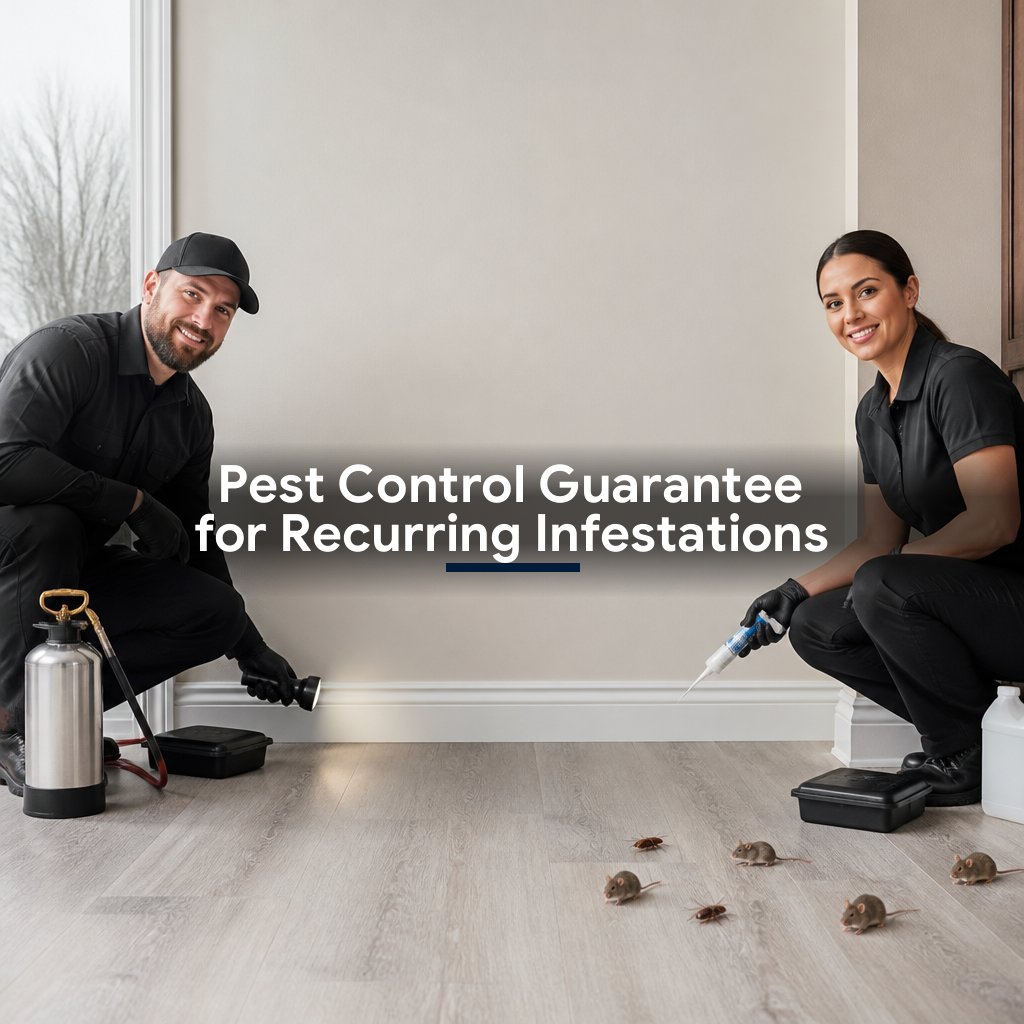
Pest Control Guarantee for Recurring Infestations
Table of Contents
- Understanding Pest Control Guarantee for Recurring Infestations
- What Pest Control Guarantee Terms Actually Cover
- What to Do When Pests Return After Treatment
- One-Time Treatment vs. Recurring Service Plans
- How Often Should Pest Control Be Done
- Fall Pest Prevention Checklist for Winter Readiness
- Preventing Recurring Infestations Long-Term
- Frequently Asked Questions
Last Updated: October 12, 2026
Understanding Pest Control Guarantee for Recurring Infestations
When fall arrives and temperatures drop, mice, insects, and other nuisance pests move indoors. A pest control guarantee protects you financially: if the problem comes back, you’re not paying twice. At Pest Pro Exterminator, we stand behind our work.
Not all guarantees are the same. Some cover only specific pests; others require you to maintain certain conditions. Knowing these details before you sign helps you avoid surprises later.
Ask your pest control provider for their guarantee in writing. Get specifics on which pests are covered, how long the guarantee lasts, and what conditions you must maintain to keep it active.
What Pest Control Guarantee Terms Actually Cover
Most pest control guarantees cover re-treatment if covered pests return during the guarantee period, but details vary widely. Some providers guarantee their work for 30 days, others 90 days or longer. The length matters because recurring infestations often take multiple treatments to fully resolve.
Your guarantee typically covers:
- Re-treatment visits at no charge if covered pests return
- The same type of treatment used in the initial service
- Follow-up inspections to verify the problem is solved
What’s usually NOT covered:
- New pest problems that weren’t present at the first treatment
- Damage caused by pests before or after treatment
- Infestations caused by conditions you created (like leaving food out or removing exclusion barriers)
A Practical Checklist for Comparing Guarantee Terms
Before you sign, compare two or three providers side by side on these items, the fastest way to spot a weak guarantee.
| What to compare | Why it matters | What to look for |
|---|---|---|
| Covered pests | A guarantee that names only one pest leaves you exposed to everything else | A written list of covered pests, including mice, rats, ants, cockroaches, spiders, and stored-product pests (see Pest Pro Exterminator’s pest control services) |
| Guarantee length | Short windows expire before slow-breeding pests are fully eliminated | 90 days or longer for general pests; longer for bed bugs and rodents |
| Re-treatment terms | Some plans charge a service fee even when the guarantee applies | “No additional charge” stated in writing, with no trip fee or material fee |
| Response time | A guarantee without a response window can leave you waiting weeks | A stated window, such as 48 to 72 hours for urgent sightings |
| Required customer actions | Missed preparation steps are the most common reason claims are denied | A clear list of what you must do before and after each visit |
| Exclusions | Structural repairs, sanitation problems, and new construction gaps are often excluded | Written exclusions you can read before signing |
| Transfer and cancellation | Moving or pausing service can end coverage | Terms for transferring the guarantee to a new owner or pausing service |
Conditions That Keep a Guarantee Active
A guarantee is a two-way agreement. Providers commonly require you to:
- Follow all preparation instructions before each visit
- Keep the property reasonably clean and free of accessible food and water
- Maintain exclusion work, such as door sweeps, screens, and sealed cracks
If you skip preparation or remove exclusion materials, the provider can treat the return visit as a new infestation rather than a guarantee claim, the most common reason homeowners pay twice.
How to Verify Whether an Infestation Is Actually Recurring
Not every sighting after treatment means the guarantee applies. Use these signals:
- Surviving pests: The same species appears in the same areas within days of treatment, often in lower numbers.
- Newly introduced pests: A different species appears, or activity starts near a new entry point such as a delivery box or garage door.
- Normal post-treatment activity: Brief increases in sightings can happen as pests move away from treated zones, usually settling within one to two weeks.
Document the species, location, and timing; that record determines whether the visit counts as a guarantee claim or a new service call.
If you don’t follow the preparation instructions (like removing clutter or sealing entry points), your guarantee may be void. The provider needs you to hold up your end of the agreement for the guarantee to stay active.
Ask for the guarantee in writing before you sign. If a provider won’t put the covered pests, response time, and re-treatment terms in the contract, treat that as a warning sign.
What to Do When Pests Return After Treatment
Pests sometimes return even after professional treatment; this doesn’t mean the first treatment failed. New pests may enter from outside, conditions in your home may attract them back, or the initial infestation was larger than detected. When you spot activity again, work through this sequence to protect your guarantee claim.
Step 1: Document the Evidence
Before you call, build a simple record; providers use it to decide whether the visit is a guarantee claim or a new service call.
- Note the date and time of each sighting
- Photograph the pest, droppings, gnaw marks, or nesting material
- Record the exact location (room, wall, cabinet, or entry point)
A written log with photos beats a phone call that says “I saw a mouse again.”
Step 2: Contact Your Provider Promptly
Most guarantees require you to report new activity within 7 to 14 days. Call as soon as you notice signs; waiting can push your claim outside the guarantee period. Have your account number, last service date, and documentation ready, and ask directly: “Is this covered under my guarantee?”
Step 3: Confirm Guarantee Eligibility
Before the visit, confirm with your provider:
- Is the pest species covered under your plan?
- Is your service plan still active and current?
- Did you complete all required preparation steps?
If any answer is no, ask what the visit will cost before agreeing to it, and get that answer in writing.
Step 4: Schedule the Follow-Up Visit
Most providers offer priority scheduling for guarantee claims, with a common response window of 48 to 72 hours for urgent sightings and one week for routine follow-ups. If your provider misses the contracted response time, note the delay in writing.
Step 5: Prepare the Property Again
As with the first treatment, follow preparation steps: remove clutter, seal entry points, and follow all provider instructions. Follow-ups often target areas the first service missed, and severe infestations may need multiple treatments.
Step 6: If the Problem Persists, Escalate
If pests return after a guarantee re-treatment, or your provider misses a scheduled visit, you have options:
- Ask for a supervisor or account manager. Front-line scheduling staff may not have authority to approve additional visits.
- Request a written explanation. Ask why the infestation persists and what the next treatment step is.
- Review your contract. Check the guarantee length, covered pests, and any dispute or cancellation clause.
- Put your complaint in writing. Email or letter creates a record and often speeds up resolution.
- Check consumer protection resources. Provincial and territorial consumer affairs offices publish guidance on service contracts and dispute resolution; industry associations may also offer a complaint process. Learn more about consumer protection.
- Consider a second opinion. An independent inspection can confirm whether the infestation is active and whether the treatment plan is appropriate.
Measuring Whether Your Plan Is Actually Working
Don’t rely on vague promises. Track these indicators:
- Number of pest sightings per week, by species and location
- Whether activity is spreading to new rooms or staying in one area
- Findings from each inspection visit
If sightings drop steadily and inspections come back clear, the plan is working. If activity holds steady or spreads after two or three treatments, ask for a revised plan in writing.
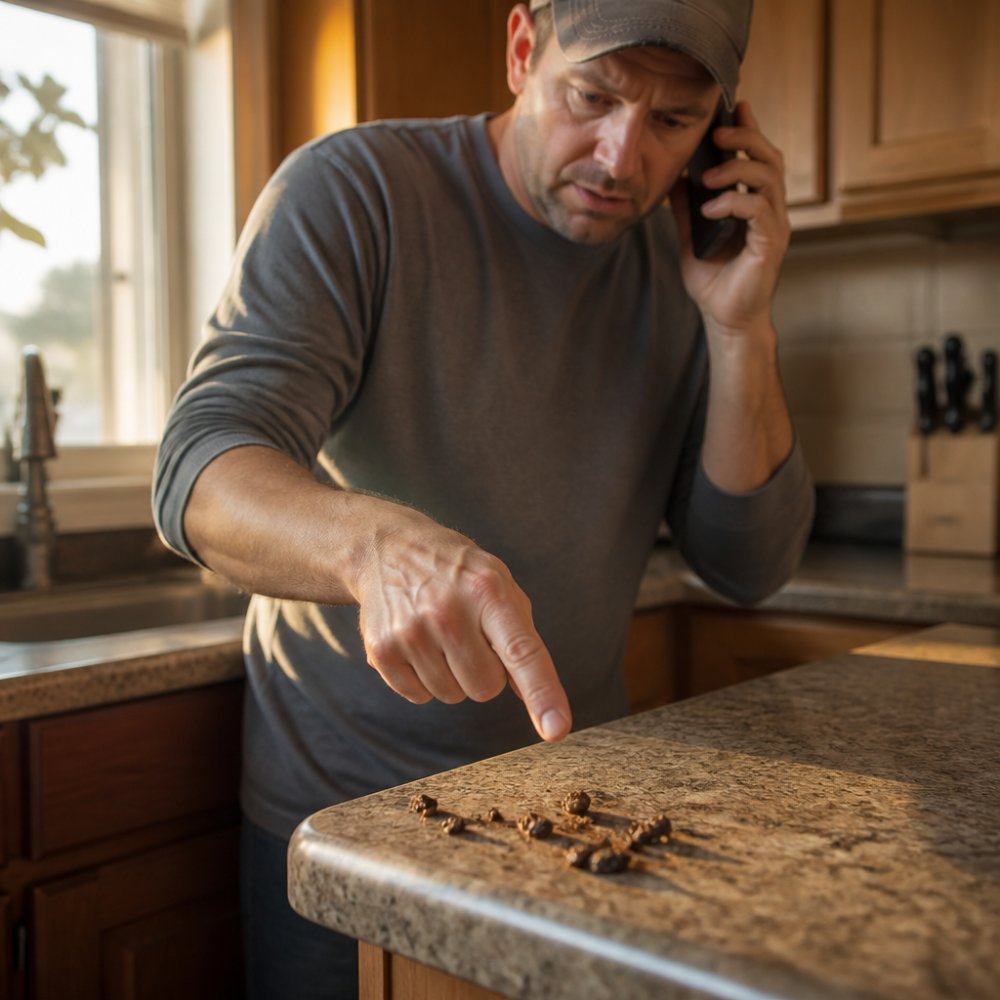
Document everything, report quickly, and confirm coverage before the visit. If the problem persists after a guarantee re-treatment, escalate in writing and use consumer protection resources if needed.
One-Time Treatment vs. Recurring Service Plans
You have two main options: a single treatment or an ongoing service plan. Your choice depends on your situation, budget, and pest history.
One-time treatment:
Pros:
- Lower upfront cost
- Good for minor pest problems
- Works if you catch an infestation early
Cons:
- Pests may return after the guarantee period ends
- You pay again if re-treatment becomes necessary
- No ongoing monitoring or prevention
Recurring service plan:
Get A Free Pest Control Quote Today →
Pros:
- Regular monitoring catches new problems early
- Prevents infestations before they start
- Often includes guarantee coverage for the entire service period
Cons:
- Higher monthly or quarterly cost
- Requires commitment to a service schedule
- You’re paying even if no pests appear
For fall and winter, many homeowners choose recurring plans: as temperatures drop and pests seek shelter, ongoing prevention stops problems before they start.
How Often Should Pest Control Be Done
Service frequency depends on your pest history, property type, and season; there’s no one-size-fits-all answer.
For one-time treatments:
Most providers recommend a single visit, then monitoring for 30 to 90 days. If pests return during this window, the guarantee covers re-treatment at no cost.
For recurring service plans:
- Residential properties: monthly or quarterly visits are typical
- Commercial properties: weekly or bi-weekly service is common for high-risk areas like restaurants
- Seasonal service: many homeowners increase frequency in fall and winter when pests are most active
Fall and winter require more frequent attention: as outdoor temperatures drop, indoor pest activity increases, and many professionals recommend monthly service from October through March.
Your provider should assess your property and recommend a schedule based on:
- Type of pests in your area
- Your property’s construction and condition
- History of past infestations
Most properties benefit from monthly service during fall and winter, then quarterly service the rest of the year. This schedule prevents infestations while managing costs.
Fall Pest Prevention Checklist for Winter Readiness
As temperatures drop, pests move indoors. Preparing now stops problems before they start. This checklist helps you secure your property against fall and winter pests.
Exterior preparation:
- Seal cracks and gaps around windows and doors with caulk or weatherstripping
- Check foundation for cracks and repair with concrete sealant
- Trim tree branches and shrubs away from the house (at least 1 meter)
Interior preparation:
- Remove clutter from basements, attics, and crawl spaces
- Store food in sealed containers (mice can chew through paper and cardboard)
- Take out garbage regularly and use sealed bins
Before professional treatment:
- Clear access to areas where pests are active
- Remove pets and cover fish tanks if requested
- Vacuum thoroughly before the service visit
Preventing Recurring Infestations Long-Term
Stopping pests once is one thing. Keeping them away permanently is another. Long-term prevention requires ongoing effort and professional support.
The best defense is removing what pests need to survive: food, water, and shelter. Attack all three and you eliminate recurring problems.
Remove food sources:
- Store all food in airtight containers
- Don’t leave pet food out overnight
- Clean up crumbs and spills immediately
Eliminate water sources:
- Fix leaky pipes under sinks and in basements
- Ensure gutters and downspouts work properly
- Remove standing water in plant pots and saucers
Seal entry points:
- Caulk cracks around windows and doors
- Repair foundation cracks
- Install door sweeps on exterior doors
Maintain your property:
- Keep landscaping trimmed and away from the house
- Remove dead trees and branches
- Don’t stack firewood against the house
Professional pest control works alongside these prevention steps.
Protecting your home from fall and winter pests requires planning and action.
Pest Pro Exterminator helps homeowners and businesses prevent recurring infestations through regular monitoring, professional treatment, and customized prevention plans. Contact us today for a free consultation and discover how we can protect your property year-round. Learn more about pest prevention from the Government of Canada
Frequently Asked Questions
What does a pest control guarantee usually cover?
A pest control guarantee typically covers re-treatment of the same pest species at no additional charge if activity returns within the guarantee period, usually 30 to 90 days. Coverage depends on conditions: you must follow pre-treatment preparation steps, maintain an active service plan, and report pest activity promptly. Most guarantees exclude damage already present, wildlife exclusion work, or infestations caused by new entry points. Always confirm what specific pests are covered and any conditions required to keep the guarantee active.
Does a pest control guarantee include repeat visits if pests return?
Yes, most guarantees include follow-up treatments at no additional cost if the same pest returns during the guarantee period. However, this applies only if you report the activity within the timeframe specified in your service contract and meet all conditions, such as maintaining the property as agreed and keeping appointments. If pests return after the guarantee expires, you may need to pay for a new treatment or renew your service plan. Review your contract to understand the exact timeline and any limits on the number of free follow-up visits.
How can I prevent mice and insects from entering my home in fall and winter?
Seal all cracks, gaps, and holes larger than a grain of rice around windows, doors, pipes, and foundation. Install weatherstripping on doors and windows, and use caulk on exterior openings. Store food in airtight containers, remove standing water, and trim vegetation away from your home’s exterior. Keep your attic and basement dry and well-ventilated. Remove clutter and debris that provide hiding spots. Regular inspection of entry points before cold weather arrives significantly reduces the risk of infestation.
What should I ask a pest control company about recurring infestations?
Ask whether they offer a guarantee if pests return, what the guarantee covers, how long it lasts, and what conditions you must meet to keep it active. Inquire about their inspection process, whether they recommend a one-time treatment or ongoing maintenance plan, and how often service visits occur under different plans. Request details on what preparation steps you need to take before treatment and what happens if pests are found during a follow-up visit. Ask for references from other customers and whether they provide written documentation of treatment and findings.