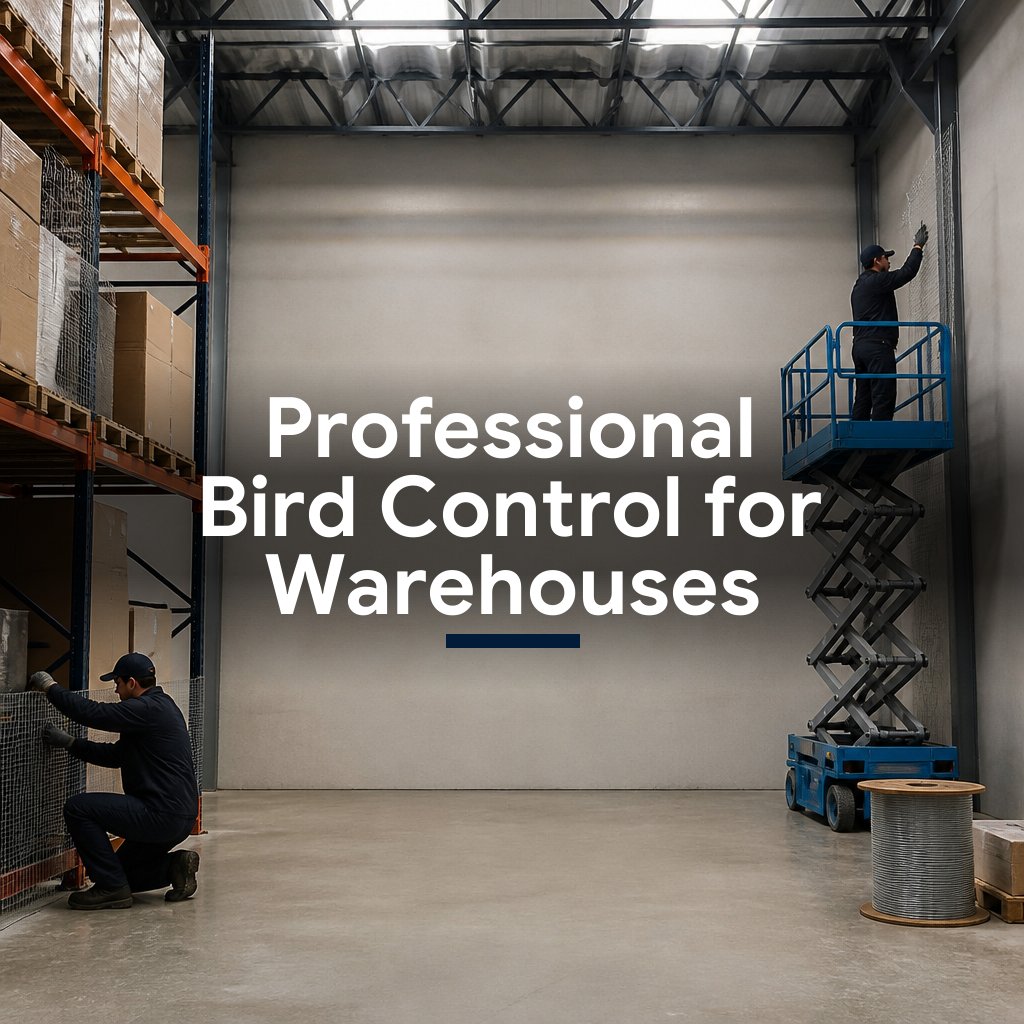
Professional Bird Control for Warehouses
Table of Contents
- Why Bird Control Matters in Warehouses
- Bird Droppings Health Risks in Warehouses
- Assessing Your Warehouse for Bird Activity
- Warehouse Bird Netting Installation and Setup
- Preventing Bird Nesting in Rafters and High Spaces
- Other Effective Deterrent Methods for Commercial Properties
- Maintenance and Long-Term Bird Management
- Frequently Asked Questions
Last Updated: October 11, 2026
Why Bird Control Matters in Warehouses
Bird infestations in warehouses are far more than a nuisance. When pigeons, sparrows, and starlings establish themselves in industrial spaces, they create operational chaos and serious liability.
The real cost isn’t just cleanup. Birds damage insulation, clog drainage systems, and create fire hazards when they nest near electrical equipment. For warehouse operators, professional bird control for warehouses becomes a critical operational decision, not an optional add-on. The longer you wait, the more entrenched the problem becomes, and the more expensive the solution.
At Pest Pro Exterminator, we approach warehouse bird management as a systems problem. It’s not about eliminating every bird, it’s about making your facility inhospitable to nesting and roosting while protecting your operations and reputation. The difference between a reactive cleanup and a proactive exclusion strategy is often the difference between a one-time cost and an ongoing expense.
Bird Droppings Health Risks in Warehouses
Bird droppings pose documented health hazards that go beyond surface-level contamination. When droppings accumulate in warehouses, they create airborne particles that workers inhale, particularly in spaces with poor ventilation or high air movement from loading equipment.
The primary concern is histoplasmosis, a respiratory infection caused by fungal spores found in bird droppings. Workers exposed to concentrated bird waste can develop serious lung complications. Beyond histoplasmosis, bird droppings carry bacteria like Salmonella and E. coli that contaminate food storage areas, equipment, and handling surfaces.
For food-related warehouses or facilities near food processing, this risk escalates dramatically. A single bird infestation can trigger health inspections, inventory holds, or regulatory action. Beyond health risks, droppings are highly acidic and corrode metal surfaces, damage painted finishes, and degrade roofing materials. The structural damage accumulates silently until repairs become expensive.
Professional bird control for warehouses directly addresses these health and safety exposure points. Exclusion methods prevent new contamination while removal of existing droppings eliminates the immediate hazard. This is why we recommend addressing bird activity as soon as you detect it; the cost of prevention is always lower than the cost of remediation.
Assessing Your Warehouse for Bird Activity
Before implementing any bird control strategy, you need to understand the scope and nature of the problem. A proper assessment identifies entry points, nesting locations, and the species involved; each factor changes your approach.
Start with a visual inspection of your facility’s exterior. Look for droppings accumulating on ledges, windowsills, and roof edges. Check for nesting material in rafters, ventilation openings, and corners where roof lines meet walls. Listen for bird calls during early morning and late afternoon when activity peaks. Document the species you observe; pigeons behave differently than sparrows, and starlings have different roosting preferences than gulls.
Inside the warehouse, examine high spaces where birds are likely to nest: above suspended ceilings, in ductwork, along structural beams, and near loading bays where doors open frequently. Look for droppings trails that indicate regular flight paths. Check for damage to insulation, wiring, or stored goods that suggests prolonged bird presence.
A systematic inspection checklist helps:
- Document entry points (gaps in doors, damaged weatherstripping, open vents)
- Photograph roosting and nesting sites
- Note bird species and estimated population size
- Record dates and times of peak activity
- Identify areas where droppings are heaviest
This assessment becomes your baseline for measuring the success of whatever bird control method you choose. At Pest Pro Exterminator, we use this same approach to develop a customized exclusion and deterrent plan tailored to your specific facility layout and bird behavior patterns.
Warehouse Bird Netting Installation and Setup
Bird netting is the most effective long-term solution for professional bird control for warehouses because it creates a physical barrier that prevents birds from accessing roosting and nesting areas. Unlike deterrents that rely on making spaces uncomfortable, netting eliminates access entirely.
Proper installation is critical to effectiveness. Netting must be installed tightly with no gaps where birds can squeeze through or become trapped. The mesh size matters; use mesh appropriate for most bird species, as this prevents entry while allowing air and light to pass through. Larger mesh allows smaller birds to penetrate; smaller mesh creates maintenance problems from debris accumulation.
Installation typically focuses on high-risk areas: loading bays, warehouse overhangs, gaps between roof sections, and open-sided structures. The netting is secured using stainless steel cable, clips, and fasteners that won’t corrode or degrade. Installation height and angle are critical; netting must extend far enough to prevent birds from flying around it, and angles should direct birds away from entry points rather than creating pockets where they can land.
Key installation considerations include:
- Access points: Secure all openings where birds can enter, including dock doors, ventilation systems, and roof penetrations
- Tension and support: Netting must be kept taut to prevent sagging where birds could rest or nest
- Material durability: Use UV-resistant netting rated for your climate zone to prevent deterioration
- Maintenance access: Design installations that allow for cleaning and inspection without removing the entire system
- Compliance with building codes: Ensure netting doesn’t block emergency exits or violate fire safety regulations
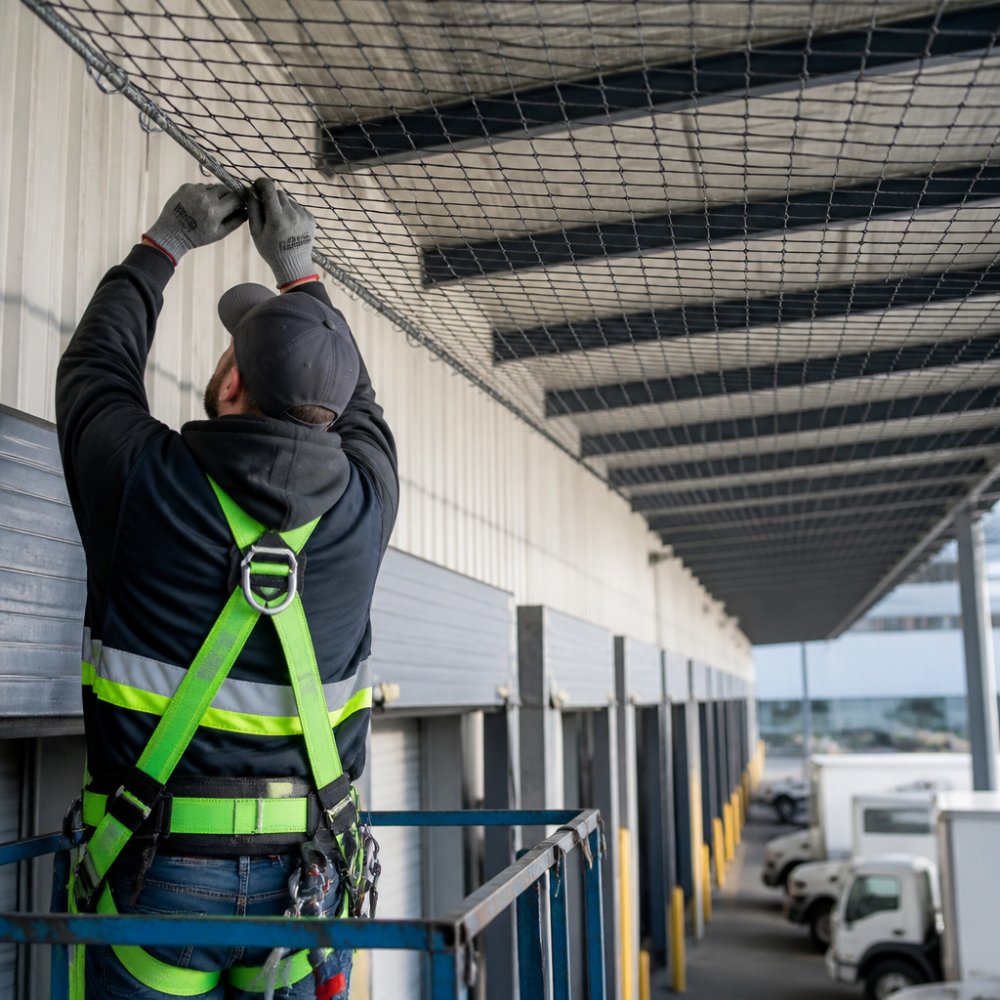
Maintaining a sterile environment free from avian debris is essential for facilities that must strictly adhere to bonded warehouse requirements to ensure the integrity of imported goods stored within the rafters.
Preventing Bird Nesting in Rafters and High Spaces
Rafters and high structural spaces are bird magnets because they offer protection from predators and weather while remaining invisible to daily operations. Once birds establish nesting sites in these areas, they return year after year, making prevention far easier than removal.
Preventing nesting requires making these spaces unattractive or inaccessible. The most effective approach combines exclusion with deterrents. Exclusion means sealing gaps and openings where birds can enter high spaces. Deterrents make roosting uncomfortable without causing harm.
Bird spikes are a proven deterrent for ledges, beams, and flat surfaces where birds land. The spikes don’t injure birds; they simply make landing uncomfortable by preventing them from settling. Spikes work best on narrow surfaces like pipes, cable trays, and beam edges. Installation requires securing them with adhesive or fasteners, and they need periodic cleaning to remove debris.
Slope modification is another exclusion technique. Adding angled panels to flat ledges prevents birds from landing by removing the stable surface they need. This works particularly well on window ledges, roof edges, and structural protrusions.
For open rafter systems, installing wire or cable systems creates barriers that prevent birds from flying into nesting areas. The wires are positioned to block access while remaining visually discrete and not interfering with warehouse operations.
Addressing entry points prevents birds from reaching high spaces in the first place. Seal gaps around:
Get A Free Pest Control Quote Today →
- Ventilation ducts and exhausts
- Cable and pipe penetrations
- Damaged soffit and fascia
- Gaps between roof sections and walls
- Broken or missing sealant around windows
Regular inspection of these areas catches new damage early, preventing bird access before infestations establish. This preventive approach is far more cost-effective than dealing with active nesting and the cleanup that follows.
Other Effective Deterrent Methods for Commercial Properties
While netting and exclusion form the foundation of professional bird control for warehouses, supplementary deterrents enhance effectiveness and address areas where physical barriers aren’t practical.
Laser deterrents emit focused light beams that disorient birds and make them uncomfortable in treated areas. Birds perceive the laser as a physical threat and avoid the space. Laser systems work best in large open areas like warehouses with high ceilings.
Sound deterrent systems use distress calls and predator sounds to create an environment birds perceive as dangerous. These systems work when combined with other methods, as birds habituate to sounds alone.
Strobe lights and motion-activated lighting deter roosting by creating an environment that feels unstable and threatening. Birds prefer dim, stable roosting sites. Bright, flashing lights make these areas unattractive. Strobe systems work best in combination with netting or exclusion, as they prevent birds from settling but don’t prevent entry.
Trapping and removal become necessary when bird populations are already established and exclusion alone won’t resolve the problem. Live traps allow for humane relocation of birds to appropriate habitats away from your facility. This method requires expertise to avoid injuring birds and to ensure compliance with wildlife protection regulations.
A comparison of methods shows their relative strengths:
| Method | Best For | Limitations | Long-Term Effectiveness |
|---|---|---|---|
| Bird netting | Loading bays, overhangs, large open areas | Installation cost and time | Excellent if maintained |
| Spikes and deterrents | Ledges, beams, narrow surfaces | Limited to specific surfaces | Good for prevention |
| Laser systems | Large open warehouses | Requires clear sightlines | Moderate without other methods |
| Sound systems | Supplementary deterrent | Birds habituate over time | Moderate alone |
| Trapping and removal | Active infestations | Labor-intensive, regulatory compliance | Temporary without exclusion |
The most effective approach combines multiple methods. Netting handles the primary barrier, spikes prevent roosting on remaining surfaces, and supplementary deterrents address gaps. This layered strategy creates an environment where birds find no suitable roosting or nesting locations and move to other areas.
Maintenance and Long-Term Bird Management
Installing bird control measures is only the beginning. Long-term success requires ongoing maintenance and monitoring to prevent birds from adapting or finding new entry points.
Quarterly inspections catch damage early. Check netting for tears, degradation, or gaps that have developed. Examine exclusion seals around penetrations and openings; weather, temperature cycling, and vibration from equipment can compromise seals over time.
Cleaning is essential for netting systems. Debris accumulation creates weight stress on the netting and can create pockets where birds rest. Regular cleaning also prevents birds from perceiving the netting as a suitable landing surface.
Document your maintenance activities. Keep records of inspections, cleaning dates, repairs, and any bird activity you observe. This documentation shows regulatory compliance if health inspectors visit and provides data for evaluating whether your bird control strategy is working.
Seasonal adjustments improve effectiveness. Before fall and winter when birds seek shelter, conduct a thorough inspection and reinforce weak points. Spring inspections check for nesting activity that may have occurred during winter months.
Professional monitoring services provide ongoing oversight without requiring your staff to manage the details. This approach ensures your facility stays protected without creating additional burden on your operations team.
The goal of long-term management is making your warehouse an unattractive environment for birds while maintaining a clean, safe facility for your workers.
Bird infestations in warehouses create health hazards, operational disruptions, and costly damage that compound over time. The solution isn’t managing birds, it’s making your facility inhospitable to them through professional exclusion and deterrent strategies.
Frequently Asked Questions
Why is professional bird control necessary for warehouse food safety?
Birds carry pathogens that contaminate food products, packaging, and processing surfaces. Their droppings introduce bacteria, fungi, and viruses that pose serious health risks. Professional bird control removes this contamination source and helps warehouses maintain compliance with food safety regulations. A proactive approach prevents costly recalls, product loss, and reputational damage.
What are the most effective bird deterrents for high-ceiling warehouses?
Bird netting is the most reliable solution for large spaces, physically blocking entry while allowing ventilation. Laser deterrents work well in open areas where birds gather. Spikes and ledge deterrents protect specific roosting spots. Strobe lights and ultrasonic devices offer supplementary protection. The best approach combines multiple methods tailored to your warehouse layout and bird species present.
How often should warehouse bird control systems be inspected?
Inspect netting, spikes, and deterrent devices monthly for damage, debris, or gaps. Weather, bird activity, and equipment wear create maintenance needs year-round. After installation, schedule professional inspections quarterly for the first year, then twice annually. Regular monitoring catches problems early, extends equipment life, and maintains continuous protection against bird infestations.
Are there humane bird control methods for industrial buildings?
Yes. Exclusion methods like netting and sealing entry points remove access without harming birds. Deterrents such as spikes, netting, and sound devices encourage birds to relocate naturally. Professional removal and relocation services capture birds humanely for transport to suitable habitats. These approaches protect your warehouse while respecting animal welfare and meeting ethical standards.
How do bird infestations impact warehouse operational costs?
Bird droppings damage inventory, equipment, and building materials, leading to product loss and repair expenses. Contamination requires cleaning and sanitization, consuming labor and time. Health code violations result in fines or temporary closures. Worker illness from exposure to bird-borne pathogens increases absenteeism. Early intervention through professional bird control prevents these cascading costs and protects your bottom line.
What should I look for during a warehouse bird control inspection?
Check rafters, ledges, and roof edges for nesting materials, droppings, and feathers. Inspect entry points including gaps around vents, doors, and damaged siding. Look for roosting patterns and bird activity during dawn and dusk. Document problem areas with photos. This assessment helps professionals recommend targeted solutions and gives you a baseline to track improvement after treatment begins.