How to Prevent Mice in Kitchen During Winter
Table of Contents
- Why Mice Invade Kitchens When Cold Weather Arrives
- Signs of Mice in the Kitchen to Watch For
- How to Seal Gaps to Keep Mice Out
- How to Store Food to Prevent Mice
- Eliminate Water Sources and Moisture
- How to Get Rid of Mice Safely
- Winter Maintenance Checklist for Rodent Prevention
- Frequently Asked Questions
Last Updated: October 8, 2026
Why Mice Invade Kitchens When Cold Weather Arrives
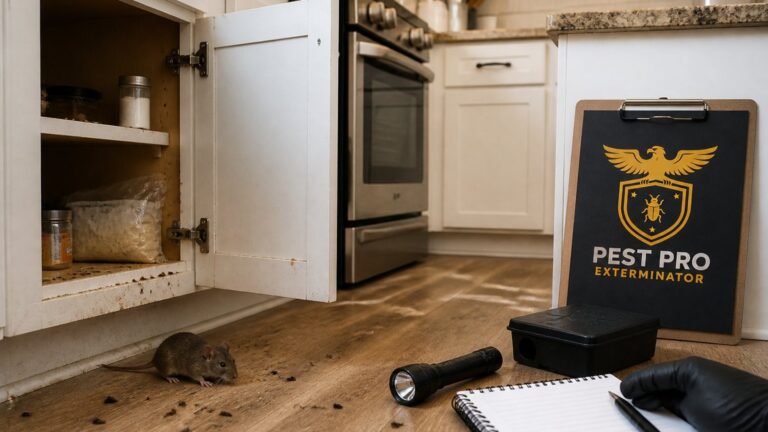
When temperatures drop, mice don’t hibernate, they actively search for warm shelter and food. Your kitchen is their ideal target, offering heat, accessible food, and protection from the elements.
Mice can squeeze through gaps as small as a dime, and a single mouse can contaminate food and surfaces with droppings and urine (Rats and mice). We see a dramatic spike in rodent activity starting in September and continuing through winter.
The good news: prevention works. To prevent mice in kitchen, seal entry points, store food properly, and eliminate water sources before they move in.
Signs of Mice in the Kitchen to Watch For
Spotting early warning signs means you can act before a small problem becomes an infestation.
Droppings and urine marks appear along baseboards, under sinks, and behind appliances.
Gnaw marks on food packaging, wood, and electrical wires indicate active feeding and nesting, mice chew constantly to wear down their teeth.
Unusual sounds at night, scratching, squeaking, or scurrying in walls, suggest mice are moving through your home.
Foul odors from urine and droppings build up in hidden areas.
Damaged food containers and scattered crumbs show where mice have been foraging. Check your pantry regularly.
If you see even one mouse, you likely have more. Mice reproduce rapidly in warm environments, with females producing 5-10 litters per year. Early action prevents a full infestation.
How to Seal Gaps to Keep Mice Out
Sealing entry points is the most effective rodent-proofing strategy, but generic advice misses where kitchens actually fail. Mice gain access through tiny openings around pipes, vents, and structural gaps, and kitchens have more of these than any other room. Inspect your kitchen thoroughly, then work through the vulnerabilities below.
Using Steel Wool and Caulk for Small Cracks
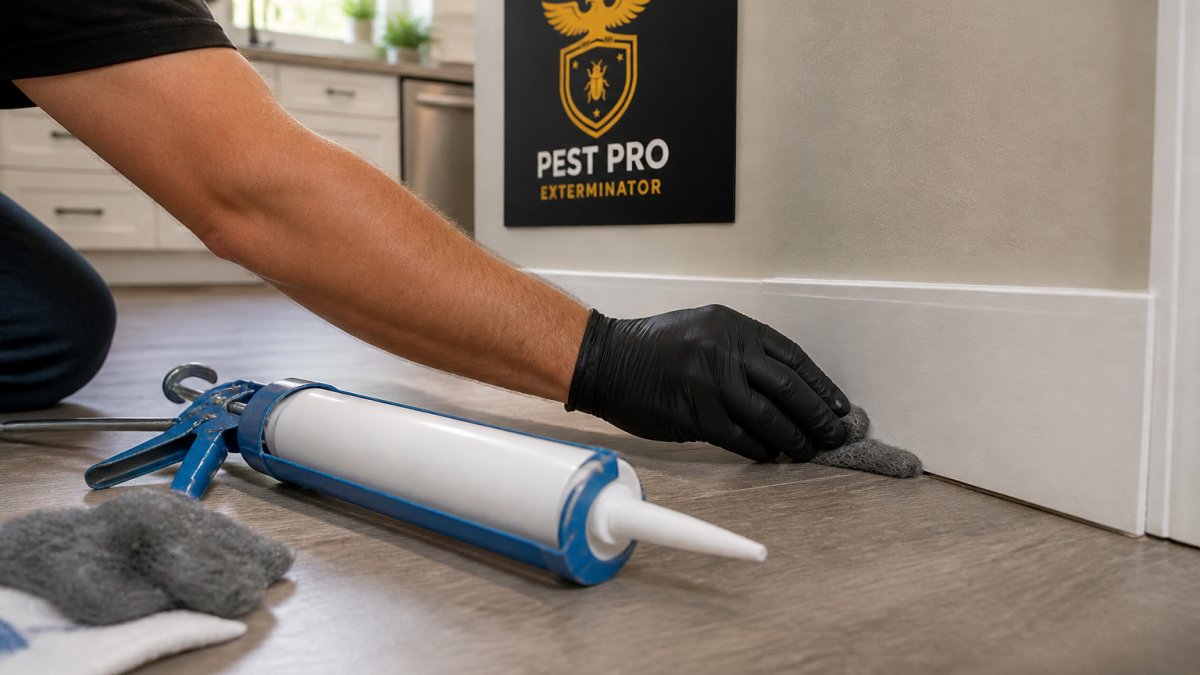
Steel wool creates an effective barrier because mice cannot chew through it.
Use coarse-grade steel wool (grade 0 or coarser) rather than fine pads, which mice can pull apart. Copper mesh lasts longer in damp areas because it won’t rust near plumbing.
Focus on where utilities enter your kitchen: water lines under the sink, gas lines, and electrical conduits.
Apply caulk smoothly around the steel wool and let it cure fully. For gaps over half an inch, use expanding foam first, then trim excess and caulk over it.
Mice test gaps repeatedly before moving on. A properly sealed gap will be tested but not breached. If you see fresh gnaw marks around a sealed area, reapply caulk, the sealant may have cracked.
Kitchen-Specific Vulnerabilities Most Guides Miss
Generic checklists skip the spots where kitchens actually leak mice. These are the highest-yield areas to inspect:
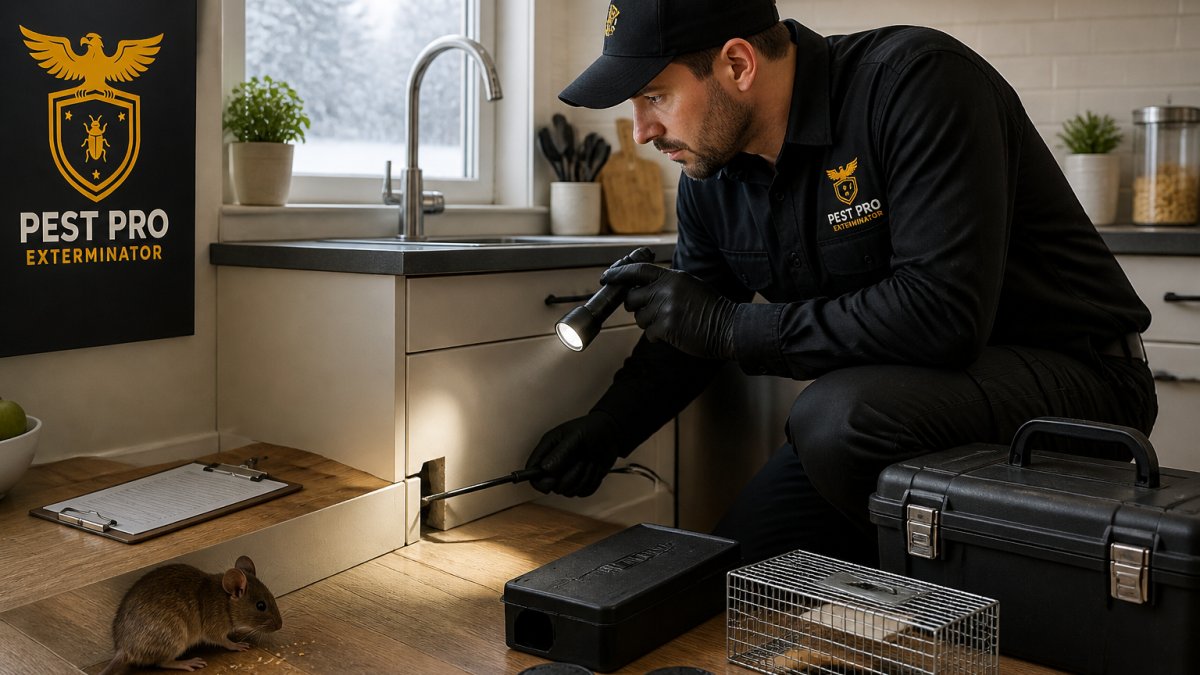
Under-sink plumbing penetrations. Builders often leave a wide, unsealed gap where drain and supply lines pass through the cabinet floor or back wall. Pack copper mesh or steel wool around each pipe, then seal with caulk.
Dishwasher and washing machine hoses. The cutout where hoses pass through the cabinet side or floor is a common entry.
Pantry and cabinet baseboards. The gap where the toe-kick meets the floor is often wider than it looks.
Range hood and exhaust ducting. If the exterior collar isn’t sealed, mice climb the duct and enter at the wall penetration.
Dishwasher air gap and sink sprayer holes. Extra holes drilled for accessories that were never installed are open doors.
Installing Weather Stripping on Doors and Windows
Gaps under doors and around windows are major entry points. Install door sweeps on exterior doors, brush-style or rubber-based sweeps eliminate the gap and take minutes to install. Check the sides and top of the frame too; a dollar bill shouldn’t slide through when the door is closed.
For windows, use adhesive-backed weather stripping around the frame. Mice can climb, so seal windows on all levels, and pay attention to the sash-to-frame gap on older double-hung windows. Check window wells for cracks, seal any gaps, and consider a window well cover.
Sealing Utility Line Penetrations
Pipes and utility lines passing through walls often leave gaps, common entry points for mice seeking warm interior spaces.
Locate where water lines, gas lines, and electrical conduits enter your kitchen from outside. Fill the gap around each pipe with expanding foam, trim excess, and cover with caulk. For large penetrations, use pipe collars or escutcheons so the seal doesn’t crack as the pipe expands and contracts.
Check where your dryer vent exits the building, these vents are warm and attractive to mice. Install a vent cover with a one-way flap that lets air out but blocks entry.
Do not rely on spray foam alone around pipes that get hot. Foam can crack as the pipe expands and contracts, reopening the gap. Always back foam with steel wool or copper mesh so the barrier survives movement.
How to Store Food to Prevent Mice
Food storage directly impacts whether mice stay or leave. Mice forage at night, and accessible food sources encourage them to nest nearby. Proper storage is essential to prevent mice in kitchen and removes the primary reason they invade.
Using Airtight Containers for Pantry Items
Transfer all dry goods from original packaging into airtight containers. Mice can chew through paper, cardboard, and plastic bags. Glass or heavy plastic containers with tight-sealing lids prevent access.
Store these containers on shelves away from the floor and walls. Keep them off the counter overnight.
Label containers with contents and dates. Rotate stock so older items are used first. Check containers regularly for signs of tampering.
Get A Free Pest Control Quote Today →
Pantry organization matters. Keep food away from the backs of cabinets where mice hide. Ensure shelves are clean and free of crumbs.
Kitchen Cleaning and Crumb Removal
Crumbs are a mouse’s daily food source. Thorough cleaning eliminates the easy meals that keep mice in your kitchen.
Daily: Wipe counters and stovetop after meals, sweep or vacuum the floor, empty trash (especially food waste), clean under appliances, and wash dishes immediately.
Weekly: Move appliances and clean behind them, wipe inside cabinets and drawers, clean refrigerator coils, and sanitize under the sink and around pipes.
Monthly: Check for grease buildup on the stovetop and vents, inspect cabinet corners for droppings, look for gnaw marks on wood, and verify caulk and weather stripping remain intact.
A clean kitchen is the first line of defense. Mice need food to survive, removing accessible crumbs forces them to either leave or rely on stored goods you’ve secured in airtight containers.
Eliminate Water Sources and Moisture
Mice need water daily, so eliminating moisture removes another reason they stay.
Fix leaking pipes under sinks immediately, even a slow drip provides enough water for a mouse population. Check hot and cold lines and drain pipes.
Wipe down sink areas before bed, and ensure your kitchen exhaust fan vents outside to remove cooking humidity. Check for condensation around windows and pipes and wipe it away regularly.
How to Get Rid of Mice Safely
If mice have already entered your kitchen, removal becomes necessary. The approach depends on whether you have pets or young children and how established the infestation is. Chemical baits and some traps pose real risks to cats, dogs, and children, so a pet-safe plan is safer for the whole household.
Pet-Safe Deterrents and Natural Methods
Natural deterrents work best as prevention rather than elimination.
Peppermint oil has a strong scent many mice dislike.
Clove oil works similarly, though determined mice often ignore it.
Ultrasonic plug-in repellents have inconsistent results, and some pets can be stressed by the high-frequency sound.
Snap traps are highly effective. Place them perpendicular to walls where mice run, trigger end against the wall, and bait with peanut butter.
Electronic traps deliver a quick kill and are less messy.
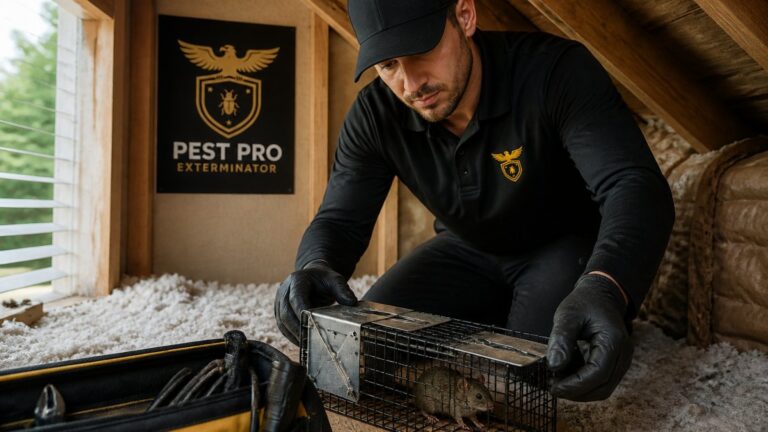
Live traps are humane but require immediate action, mice can’t survive long without food or water. Release them well away from the home.
What to avoid with pets in the house:
- Never use anticoagulant rodenticide baits indoors, a pet that eats a poisoned mouse or the bait can suffer serious bleeding disorders. If you must use bait, restrict it to tamper-resistant stations pets can’t reach.
- Don’t use glue boards where pets can step on them; a pet that contacts one can suffer skin and fur damage.
- Don’t leave snap traps set overnight in open areas where a pet could trigger them.
A Simple Decision Framework
Use this to choose the right approach for your situation:
| Situation | Best first step |
|---|---|
| One or two mice, no pets | Snap traps along walls, plus sealing |
| Mice present, pets in home | Electronic traps or secured snap traps in pet-inaccessible areas |
| Multiple mice, signs everywhere | Seal entry points first, then traps; consider professional help |
| Mice in walls or ceiling | Professional inspection, DIY rarely resolves this |
| Recurring activity after sealing | Professional exclusion and monitoring |
When to Call a Professional
Professional pest control becomes necessary when:
- Mice continue to appear after prevention and removal attempts
- You’re uncertain about the extent of the infestation
- You hear activity inside walls, ceilings, or between floors
- You need to treat a commercial kitchen or rental property
A professional inspection identifies entry points you may not see, confirms whether the infestation is active, and sets up monitoring. This matters because mice removed without sealing will simply be replaced by new mice from outside.
Pet-safe removal is a two-part job: choose methods that will not harm your animals, and seal the entry points so new mice cannot replace the ones you remove. Traps alone, without exclusion work, rarely solve a kitchen mouse problem for good.
Winter Maintenance Checklist for Rodent Prevention
Use this checklist monthly during fall and winter to maintain rodent-proofing. Consistent effort prevents mice from establishing themselves in your kitchen.
| Task | Frequency | What to Check |
|---|---|---|
| Inspect entry points | Weekly | Caulk, weather stripping, door sweeps |
| Check for droppings | Weekly | Under sink, baseboards, behind appliances |
| Clean kitchen thoroughly | Daily | Counters, floors, under appliances |
| Verify food storage | Weekly | Containers sealed, no spills, pantry organized |
| Test traps | Daily | If in use, check for activity |
| Inspect pipes and vents | Monthly | For new gaps or damage |
| Review exterior walls | Monthly | For new entry points or damage |
Mark these tasks on your calendar. Consistency is key, mice exploit any gap in your defense.
Homeowners who want to prevent mice without constant professional visits. This checklist keeps your defenses strong and catches problems early.
Preventing mice in your kitchen during winter requires sealing entry points, storing food properly, and eliminating water sources. These steps work together to make your kitchen an unattractive target.
If prevention fails or you discover an active infestation, professional help ensures complete elimination. Our team uses proven exclusion techniques and monitoring to stop mice before they cause damage. Health Canada’s guidance on rodent control and food safety confirms that professional pest management is often necessary for complete elimination.
Frequently Asked Questions
What smell do mice absolutely hate?
Mice have a strong scent sensitivity and dislike peppermint oil and clove oil. These natural deterrents can be placed on cotton balls near entry points or in pantry areas. However, scent-based methods work best as part of a comprehensive prevention strategy that includes sealing entry points and proper food storage. Relying on smell alone rarely prevents mice in your kitchen during winter.
Where should you look for mouse entry points in a kitchen?
Check around baseboards, under sinks, where pipes penetrate walls, around window frames, and near door sweeps. Mice can fit through openings as small as a dime. Inspect the areas where utility lines enter your kitchen and look for cracks and crevices in walls or floors. Structural integrity is critical, gaps around appliances and cabinets are common entry points rodents use to access food.
How should you store food to prevent mice?
Transfer pantry items into airtight containers rather than leaving boxes or bags open. Store pet food in sealed containers overnight. Keep your pantry organized so you can spot signs of rodent activity quickly. Remove crumbs immediately after meals and wipe down kitchen surfaces daily. Mice forage for any accessible food source, so sanitary conditions and proper food storage together create an inhospitable environment.
When should you call a pest control professional for mice?
Contact a professional if you see multiple mice, find nesting materials, or notice an infestation that persists after you’ve sealed entry points and cleaned thoroughly. If you run a commercial kitchen or restaurant, professional pest management is essential to maintain health and safety compliance and protect your reputation. Professionals can identify structural vulnerabilities you may miss and implement exclusion strategies tailored to your property.