Humane Wildlife Removal for Attic Damage: Fall Guide
Table of Contents
- Why Fall Sends Wildlife Into Your Attic
- Signs of Animals in the Attic: What to Check This Week
- What You’ll Need Before You Start
- Step 1: Confirm the Entry Point and the Animal
- Step 2: Plan Humane Wildlife Removal
- Step 3: Wildlife Attic Damage Repair and Cleanup
- Step 4: Mice in Attic Prevention Before the Cold Sets In
- Common Mistakes That Bring Wildlife Back
- Frequently Asked Questions
Last Updated: October 8, 2026
Why Fall Sends Wildlife Into Your Attic
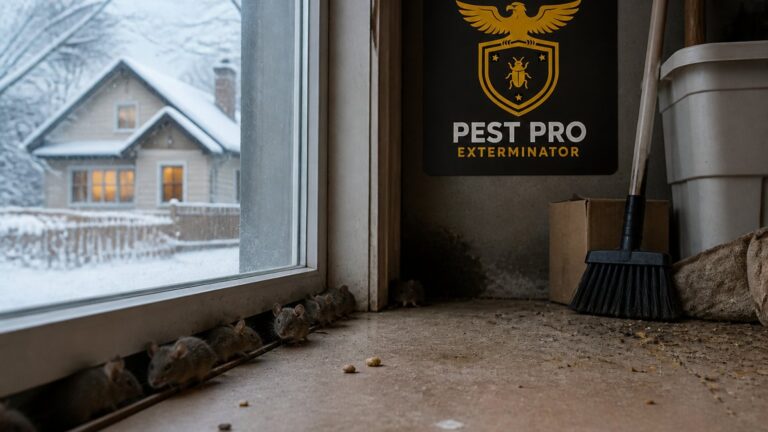
When the first cold snap hits, mice, squirrels, and raccoons start looking for a warm place to spend the winter. Your attic is usually the first stop. This is why humane wildlife removal for attic damage becomes a priority for homeowners every fall, and why Pest Pro Exterminator handles these calls all season long across Calgary and Southern Alberta.
The pattern repeats every year. Outdoor food sources thin out, overnight temperatures drop, and animals that spent summer in trees or under decks start testing the edges of your roofline. A gap the width of a thumb is enough for a mouse. A loose soffit vent is an open door for a squirrel.
Below, we break down the warning signs to check this week, the tools you need, and a four-step plan that removes the animal and keeps it out.
Exclusion, not trapping alone, is what solves a fall wildlife problem. If you seal nothing, you will be doing this again next October.
Signs of Animals in the Attic: What to Check This Week
The clearest signs of animals in the attic are scratching or scurrying sounds at dawn and dusk, a musky ammonia smell, stained ceiling drywall, and droppings near insulation or vents. Check these four things before the weather turns hard.
Walk your home’s exterior first. Look for chewed fascia, bent gutter guards, and gaping soffit vents.
Then go inside with a flashlight. Here is what each clue usually means:
- Scratching at night: mice or rats, active after dark
- Heavy thumping at dawn: squirrels or raccoons heading out to feed
- Ammonia smell: urine soaking into insulation
- Brown ceiling rings: moisture from droppings or a blocked vent
- Torn insulation: nesting material pulled apart
Sounds, Smells, and Stains by Species
Different animals leave different evidence, and matching the sign to the species decides your whole approach.
| Sign | Likely Animal | Where You’ll Notice It |
|---|---|---|
| Light scratching, night | Mice | Walls, ceiling, near kitchen |
| Loud thumping, dawn | Squirrels | Upper attic, roof edges |
| Heavy shuffling, night | Raccoons | Large open attic spaces |
| Greasy rub marks | Rats | Along beams and joists |
| Strong ammonia odor | Any rodent | Insulation, enclosed corners |
Get the species wrong and you will buy the wrong equipment. A live trap sized for a mouse will not hold a raccoon, and a one-way door set for a squirrel will not work on a colony of mice.
What You’ll Need Before You Start
Gather your gear before you climb into the attic. Working in a cold, cramped space is no time to realize you forgot something.
- Respirator (N95 or better): rodent droppings carry dust you should not breathe
- Heavy gloves and coveralls: protection from bites and sharp debris
- Bright flashlight or headlamp: attics have poor lighting
- Knee pads: joists are hard on your knees
- Camera or phone: document damage for insurance
- Notebook: track entry points and evidence
- Sealant, wire mesh, and steel wool: for later exclusion work
One safety note before anything else. In Alberta, bats are protected under provincial wildlife law, and you cannot handle or exclude them during certain months. Never seal a bat entry point without confirming the rules first. If you are unsure what you are dealing with, stop and get expert eyes on it.
Step 1: Confirm the Entry Point and the Animal
Find the entry point before you plan any removal. Stand outside at dusk and watch for movement along the roofline, then match the gap size to the animal.
A mouse needs a hole the size of a pencil eraser. A squirrel needs a gap about the size of a tennis ball. Raccoons push through openings the size of a dinner plate.
Check these common spots:
- Soffit vents and roof returns
- Chimney flashing and gaps
- Dryer and bathroom exhaust vents
- Loose siding and foundation gaps
- Gable vents with torn screens
Mark every gap you find with tape. You will seal them in Step 4, after the animal is out.
Step 2: Plan Humane Wildlife Removal
Humane wildlife removal means getting the animal out without harming it, then blocking the way back in. The right method depends on the species and whether young animals are present.
One-Way Doors, Live Traps, and When to Step Back
One-way doors let an animal leave and stop it from returning. They work well for squirrels and raccoons with a single, clear entry point.
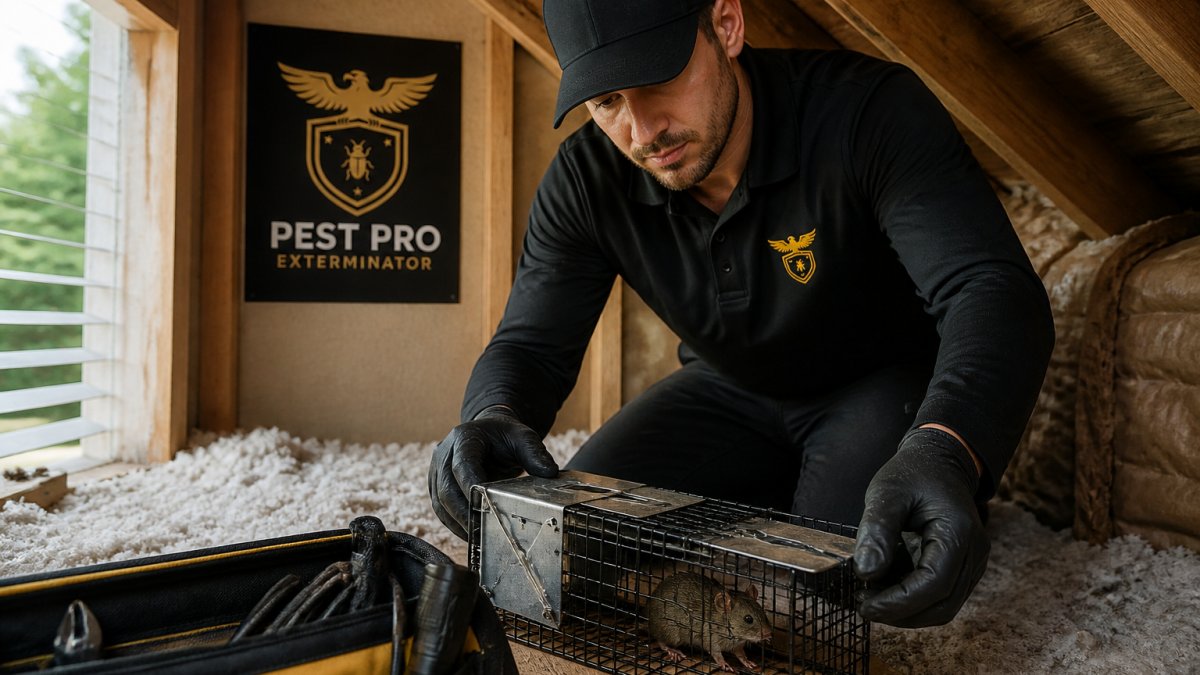
Live traps catch the animal so you can relocate it. Bait them with the food the animal is already eating, and check them often.
Get A Free Pest Control Quote Today →
- One-way door: best for a single entry and a mobile animal
- Live trap: best when you know the species and can check it daily
- Step back: if you hear young animals, or if the animal is a bat
Baby animals change everything. A mother will tear apart your repair work to get back to her young. If you suspect kits or pups are inside, wait until they can move on their own, or call a professional.
Sealing an entry point while an animal is still inside traps it in your attic. It will then chew through drywall, wiring, or ductwork to escape, and the damage gets far worse.
Step 3: Wildlife Attic Damage Repair and Cleanup
Wildlife attic damage repair starts with removing contaminated insulation, disinfecting the space, and replacing chewed materials. Skipping cleanup leaves odors that attract the next animal.
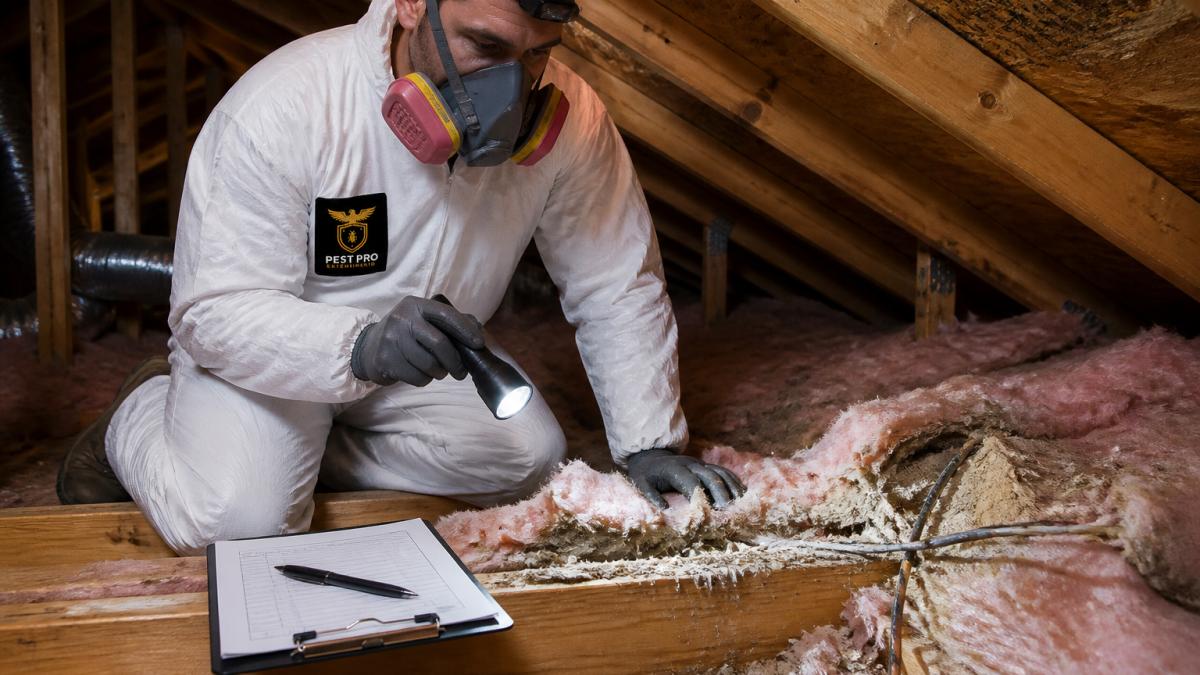
Work through the attic in this order:
- Remove soiled insulation and bag it for disposal
- Disinfect and deodorize all affected surfaces
- Replace chewed wiring and damaged vapor barrier
- Re-insulate the cleared areas
- Seal every entry point with wire mesh and steel wool
Chewed wiring is the item most homeowners miss. Rodents gnaw on wire insulation, and that is a fire risk you cannot see from the hallway. Have an electrician check any run with chew marks before you close the wall back up.
Step 4: Mice in Attic Prevention Before the Cold Sets In
Mice in attic prevention comes down to three habits: seal gaps, cut off food, and remove shelter. Do all three before the first hard freeze.
Seal the exterior first. Use steel wool for small gaps and wire mesh for larger vents, then seal around pipes and cables where they enter the house.
Then make the yard less inviting:
- Trim tree branches back from the roof
- Move firewood away from the foundation
- Store bird seed in sealed metal bins
- Clear leaf piles and yard waste
- Keep garbage lids tight
Inside, keep stored items in plastic bins rather than cardboard. Cardboard is nesting material. A clean, sealed attic gives wildlife nowhere to settle.
Walk your roofline once in early fall and once after the first snow. Fresh tracks in snow show you exactly where animals are still getting in, which is far easier than hunting for gaps in summer.
Common Mistakes That Bring Wildlife Back
The biggest mistake is trapping the animal and skipping the exclusion work. Within weeks, a new animal moves into the same gap.
Here is what we see most often:
- Sealing too early: traps the animal inside and worsens the damage
- Skipping disinfection: leftover scent pulls in the next tenant
- Ignoring small gaps: a pencil-width hole is an open door for mice
- Using the wrong trap size: the animal escapes and avoids traps after
- Handling bats or raccoons alone: both carry health risks and legal rules
One honest limitation: DIY removal works for a single mouse or squirrel with one clear entry point. It falls apart with a colony, a raccoon with young, or bats in the roofline. That is when a professional inspection saves you money and time.
That is also where we come in. At Pest Pro Exterminator, we inspect, identify the species, remove the animal humanely, repair the damage, and seal your home so it stays sealed. Our team brings over 18 years of combined experience, works discreetly around your schedule, and is available 24/7 for contact. Every plan is built around your specific pest problem, not a one-size-fits-all treatment.
Frequently Asked Questions
How can you tell if wildlife is living in your attic?
Listen after dark for scratching, scurrying, or thumping above the ceiling, since mice, squirrels, and raccoons are most active at night. Look for droppings near insulation or along joists, dark grease rub marks at entry holes, yellow urine stains on ceiling drywall, and shredded insulation or chewed wire. A musky or ammonia smell that builds over several days is another strong sign. If you find two or more of these together, treat the attic as occupied and keep everyone out until the animal is confirmed gone.
How do professionals remove wildlife from an attic humanely?
Professional humane wildlife removal starts with a full inspection to identify the species, count the animals, and find every entry point. The technician then uses one-way doors, live traps, or hand removal, and checks for dependent young before sealing anything. Once the attic is confirmed empty, entry points are closed with heavy-gauge mesh and hardware cloth. Because provincial rules govern how certain species may be handled, a licensed technician confirms the animal is gone before any exclusion work begins.
Can you seal an attic entry point while an animal is still inside?
No. Sealing an occupied attic traps the animal inside, and it will usually tear through soffit, shingles, or vent screens to escape, often into the living space below. It also separates mothers from dependent young, which then die in the walls and create a severe odor problem. Confirm the attic is empty using a one-way door, a monitoring camera, or a follow-up inspection before closing any gap, even a small one.
How can you prevent mice and other pests from entering your attic in fall and winter?
Walk the exterior in early fall and seal every gap wider than a pencil, since mice fit through openings around 6 millimetres. Stuff steel wool or copper mesh into gaps around pipes, vents, and cable entries, then cover them with sealant or hardware cloth. Trim tree branches back at least 2 metres from the roof, keep garbage and birdseed in sealed containers, and repair loose soffit, fascia, and roof flashing. Recheck the attic and exterior once the first hard frost arrives.
Fall wildlife problems rarely fix themselves. The longer an animal stays in your attic, the more insulation, wiring, and drywall it damages, and the harder the cleanup gets. Pest Pro Exterminator offers humane wildlife removal, full attic damage repair, and customized prevention plans for homes and businesses across Calgary and Southern Alberta. Get started with Pest Pro Exterminator and head into winter with a sealed, animal-free attic.