How to Get Rid of Mice in an Attic: 7-Step Guide
Table of Contents
- Signs of Mice in Attic: What to Look For First
- How to Seal Entry Points for Mice
- Setting Up a Trapping Program That Works
- Attic Insulation Damage From Mice
- Sanitation, Disinfection, and Dropping Safety
- When to Call a Pest Management Professional
- Frequently Asked Questions
Last Updated: September 26, 2026
Signs of Mice in Attic: What to Look For First
Attic mice leave clear evidence long before you ever see one. Learning to read that evidence is the fastest way to confirm an infestation and choose the right response.
The most reliable signs are droppings, urine trails, and pheromone markers. These three clues tell you mice are active now, not just passing through.
Droppings, Urine Trails, and Pheromone Markers
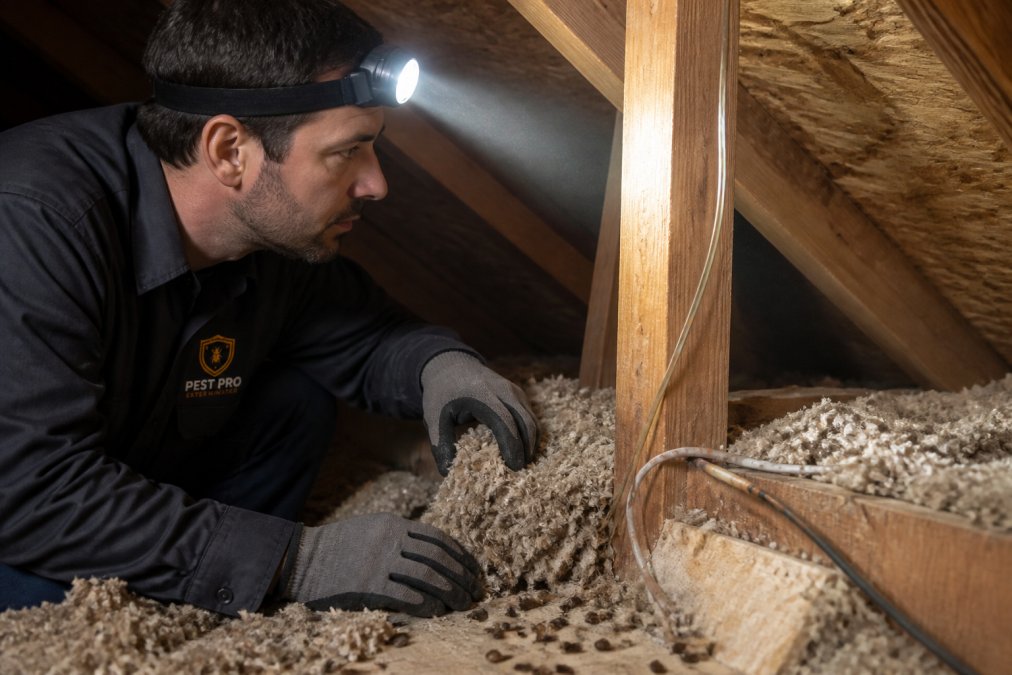
Mouse droppings look like dark grains of rice, roughly the size of a pencil tip. Fresh droppings are soft and shiny; older ones turn gray and crumbly. You’ll usually find them along wall edges, near insulation, and under stored boxes.
Urine trails show up as yellowish stains under UV light. Mice also leave pheromone markers, scent trails that guide other mice to the same routes. This is why one mouse often becomes many.
- Droppings: check corners, rafters, and along baseboards
- Urine: dark stains on wood or insulation, strongest smell in closed spaces
- Pheromone markers: greasy rub marks along walls and beams
Noises, Nesting Materials, and Chewed Wires
Scratching and scurrying sounds at night point to active mice. They’re most vocal in the quiet hours, usually just after dark and before dawn.
Nesting materials include shredded paper, insulation fibers, fabric, and dried plant matter. Finding a nest means the infestation is established, not new.
Chewed wires are the most serious sign. Mice gnaw constantly to wear down their teeth, and electrical wiring is a common target. This creates a real fire risk, so treat chewed wiring as urgent.
How to Seal Entry Points for Mice
Sealing entry points is the single most effective long-term fix for attic mice. Mice can squeeze through gaps as small as a pencil eraser, roughly 6 mm, so sealing is a job that demands care and a methodical inspection.
Inspect From the Outside In
Start on the exterior and work inward. A common pattern is to inspect in this order:
- Roofline and fascia, look for gaps where the roof meets the wall, and around chimney flashing.
- Soffit and eaves, check for separated seams and torn vent screens.
- Vents and utility penetrations, dryer vents, bathroom exhausts, and HVAC lines are frequent entry points.
- Foundation and sill plate, cracks here can lead upward into wall cavities and then the attic.
- Interior attic, once inside, check along the top plate, around plumbing stacks, and where wiring enters.
Materials That Actually Stop Rodents
Mice chew through foam, plastic, and soft wood. Use materials they cannot get through, and combine them for larger openings.
- Steel wool, pack tightly into small gaps, then seal over it with caulk or mortar. Mice can pull loose wool out, so compression matters.
- Hardware cloth (galvanized mesh), use 6 mm or smaller mesh for vents and larger openings. This blocks mice while keeping air flowing.
- Caulk and sealant, use a rodent-resistant sealant for cracks around pipes and frames. Standard latex caulk alone is not enough.
- Mortar or concrete patch, for foundation cracks and larger holes, mortar is the durable choice.
- Metal flashing, for gaps at the roofline or around vents where chewing is likely.
Mice chew through spray foam and plastic mesh within days. If you seal a gap with soft material only, the infestation will continue and you’ll waste the effort.
Seasonal Timing for Exclusion
Fall and winter are the critical months for exclusion. As outdoor temperatures drop, mice move indoors seeking warmth and food. Sealing before the first cold snap prevents mice from entering and nesting inside during breeding cycles. If you seal in late winter or spring, you may trap mice inside the attic, where they will continue to breed and cause damage. The best window is late summer to early fall, before mice begin their seasonal migration indoors.
A Note on DIY vs. Professional Exclusion
DIY exclusion works well for accessible, visible gaps. However, roofline and soffit work often requires ladder safety and may be beyond the reach of many homeowners. If you cannot safely access the entry points, or if the infestation is already established, professional exclusion is the more reliable path. The cost-benefit depends on the height and complexity of your roofline and the number of entry points. Climbing up to seal these gaps provides an ideal opportunity for inspecting for roof leaks that might otherwise go unnoticed until water damage occurs.
Setting Up a Trapping Program That Works
A trapping program beats scattered traps every time. The goal is steady pressure, not one lucky catch.
Set snap traps along walls, since mice travel with their bodies against edges. Place them near droppings and rub marks. Check traps daily and reset them.
For live traps, release mice far from the home, well away from any structure. Bait stations work for monitoring, not for quick removal.
A simple trapping rhythm:
BOOK A FREE QUOTES OR CONSULTATION! →
- Set 6 to 10 traps near active signs
- Check and reset every day
- Move traps if catches stop
- Keep going for two weeks after the last catch
Attic Insulation Damage From Mice
Mice ruin insulation by tunneling, nesting, and leaving droppings throughout. Damaged insulation loses its ability to hold heat, which raises energy costs and can create cold spots in the home.
Which Insulation Types Attract Mice
Not all insulation is equally attractive to rodents. Understanding the difference helps you decide what to replace and what to monitor.
- Fiberglass batts, mice tunnel through them easily, and the fibers offer little resistance. Once soiled, batts lose loft and must be replaced.
- Cellulose, made from recycled paper, cellulose is soft and easy to tunnel through. It also holds moisture and odor from droppings, making it a common target.
- Spray foam, closed-cell spray foam is the most rodent-resistant option. Mice can chew the surface, but they cannot tunnel through cured foam. It also seals air gaps.
- Mineral wool, denser than fiberglass and less attractive to mice, though not fully resistant. It holds up better to tunneling than batts.
- Loose-fill, easy to tunnel through and difficult to clean once contaminated. Removal is usually the only option.
Assessing the Damage
Look for compressed areas, visible tunnels, nesting material, and droppings. A common pattern is to find damage concentrated near entry points and along the edges of the attic, where mice travel.
If the insulation is compressed or soiled, it should be removed, not patched. Contaminated material carries odor and health risks, and patching over it leaves the source of the problem in place.
Remediation Sequence
For attic insulation damage from mice, the safest approach follows a strict order:
- Remove affected insulation, bag and seal it for disposal.
- Disinfect the attic space, treat the decking and framing, not just the visible spots.
- Seal all entry points, this must happen before new insulation goes in.
- Replace insulation, choose a rodent-resistant type where possible, such as closed-cell spray foam or mineral wool.
New insulation should go in only after all entry points are sealed. Otherwise, mice return and the cycle repeats.
If you are replacing insulation, this is the moment to upgrade to a rodent-resistant material. The labor is already being done, the material choice is the difference between solving the problem and repeating it.
Sanitation, Disinfection, and Dropping Safety
Droppings and urine carry real health risks, including hantavirus (Hantavirus: Spread, prevention and risks). Never sweep or vacuum dry droppings, since this sends dust into the air (Hantavirus: Spread, prevention and risks).
Follow these safety steps:
- Wear gloves and an N95 mask
- Spray droppings with disinfectant before removal
- Use paper towels, then seal waste in double bags
- Disinfect the whole area, not just visible spots
- Wash hands and clothing afterward
For heavy contamination, attic decontamination is best left to trained professionals with proper equipment.
When to Call a Pest Management Professional
Call a professional when the infestation is large, widespread, or hard to reach. Signs include strong odor, heavy droppings, chewed wiring, or mice in multiple rooms.
Professionals handle the full job: inspection, exclusion, trapping, sanitation, and prevention. They also know where mice get in and how to seal those spots for good.
At Pest Pro Exterminator, we handle residential and commercial rodent problems with a full process: inspection, monitoring, and prevention.
DIY works for small, early infestations. Once you find chewed wires or heavy droppings, the risk outweighs the savings. That’s the point where a pro pays for itself.
Frequently Asked Questions
What do mice eat in an attic?
Mice in an attic eat almost anything they find: stored birdseed, cardboard, paper, insulation backing, and even soap. They also travel into the kitchen for food when the attic runs dry. Removing all food sources, sealing pantry items in glass or metal containers, and clearing bird feeders near the roofline cuts off their supply. Without a reliable food source, mice move on faster and a trapping program becomes more effective.
How long do mice stay in the attic?
Mice stay in an attic as long as it offers warmth, shelter, and a food source. In a heated home, that can mean year-round residency. A single female can produce five to ten litters per year, so a small problem becomes an infestation within months. Removing food, sealing entry points, and running a trapping program shortens their stay. If mice have been present for weeks, expect insulation damage and contaminated nesting materials that need removal.
What are the most effective ways to remove mice from an attic?
The most effective approach combines snap traps placed along walls and rafters, exclusion work to seal every entry point larger than a pencil eraser, and sanitation to remove droppings and nesting materials. Live traps and bait stations work in some situations but require careful placement away from pets and children. A pest management professional can identify hidden entry points, set a trapping program, and confirm the attic is clear before sealing it.
How do I prevent mice from getting back into my attic?
Prevention means sealing every gap: foundation cracks, ventilation gaps, soffit and eaves, and any opening around pipes or cables. Use steel wool, caulk, and mesh screen rather than expanding foam alone, which mice chew through. Trim tree branches back from the roofline, store birdseed in sealed containers, and schedule an annual attic inspection. Exclusion work done correctly keeps mice out for years, not weeks.