Winter Rodent Proofing: Best Methods for Your Home
Table of Contents
- Why Rodents and Nuisance Insects Move Indoors When the Weather Turns
- Signs of Mouse Infestation in Winter: What to Look For Before It Spreads
- Best Materials for Rodent Proofing: A Durability Guide
- A Structural Vulnerability Audit: Sealing Entry Points Before the Freeze
- Commercial Rodent Prevention Strategies for Fall and Winter
- Pet and Child Safety: Choosing Methods That Protect Everyone
- Your Seasonal Timeline: When to Act and What to Do Each Month
- Conclusion: Staying Ahead of Winter Rodent Proofing
- Frequently Asked Questions
Last Updated: October 2, 2026
Why Rodents and Nuisance Insects Move Indoors When the Weather Turns
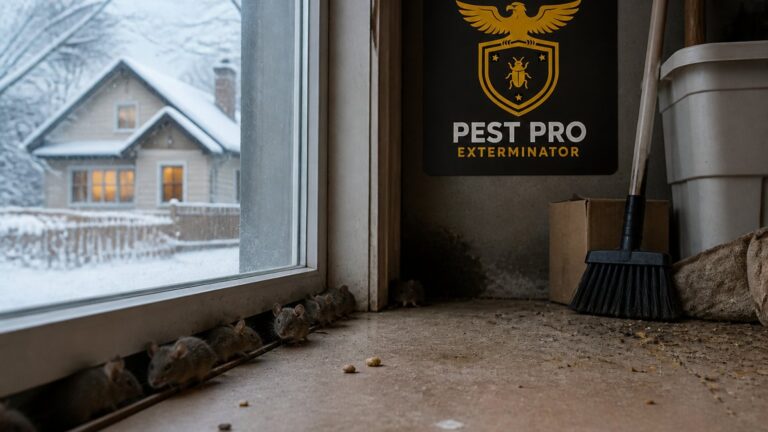
When overnight temperatures in Alberta drop toward freezing, mice, voles, and overwintering insects start looking for the same thing you are: a warm, dry space with a reliable food source.
The window matters more than most homeowners realize. Once the ground freezes and snow covers the exterior perimeter, you can no longer seal foundation gaps, trench along a wall, or inspect a crawl space properly.
Below, we cover which materials hold up, which structural weak points to audit first, and a month-by-month timeline.
Rodent proofing is a deadline-driven task, not a maintenance preference. The exterior perimeter must be sealed before the ground freezes, because frozen soil makes foundation-level exclusion work impractical.
Signs of Mouse Infestation in Winter: What to Look For Before It Spreads
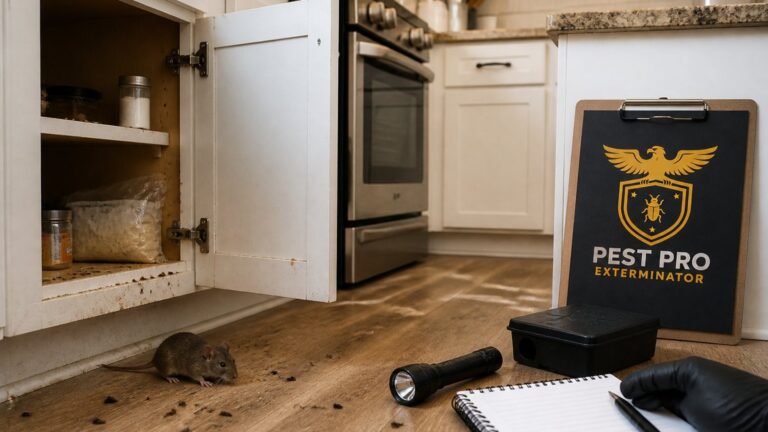
The clearest early sign of a mouse infestation in winter is fresh droppings along wall edges, inside cupboard corners, and behind appliances. Mice travel with their bodies against vertical surfaces, so evidence clusters where a flashlight beam rarely reaches.
Cold weather changes rodent behavior in ways that make detection easier. Mice that spent October foraging outdoors move to interior routes in November and December, concentrating activity along the same paths nightly.
Droppings, Chew Marks, and Grease Trails
Three indicators reveal how long a problem has existed and roughly how many animals are involved:
- Droppings: Fresh droppings are dark and soft; older ones are grey and brittle. A scattered pattern suggests a few mice moving through; dense accumulation suggests a nest nearby.
- Chew marks: Mice gnaw constantly to wear down their incisors. Look for fresh wood shavings below a chewed baseboard or around a pipe penetration. Chewing on electrical cabling is the most serious finding and warrants immediate attention.
- Grease trails: Oils from rodent fur leave dark smudges along baseboards, pipe runs, and insulation edges. A visible grease trail means a well-established route.
Listen as well. Scratching inside a wall cavity or above a ceiling after midnight reliably indicates rodents are using the void as a highway between the exterior and a food source.
Chewed electrical cabling is a fire risk, not a cosmetic problem. If you find fresh gnaw marks on wiring, treat it as urgent and get the circuit inspected rather than simply setting traps and waiting.
Best Materials for Rodent Proofing: A Durability Guide
The best materials for rodent proofing are those a mouse cannot chew through, push aside, or rust out within a season. Steel wool alone is a common mistake: mice pull it apart and it rusts when exposed to moisture. The materials below survive a determined rodent.
Steel Wool, Hardware Cloth, and Sealants That Hold Up
| Material | Best Use | Why It Holds Up | Main Limitation |
|---|---|---|---|
| Stainless steel fill fabric | Gaps around pipes, small cracks | Coarse stainless strands resist gnawing and rust | Needs manual cutting to size |
| Galvanized steel mesh | Vents, larger openings | Small aperture blocks passage, allows airflow | Must be fastened, not just wedged |
| Rodent-proof door sweeps | Base of exterior doors | Steel mesh core inside a rubber seal | Requires basic tools to install |
| Exterior-grade sealant | Sealing mesh and fill in place | Flexible, weather-resistant | Not rodent-proof on its own |
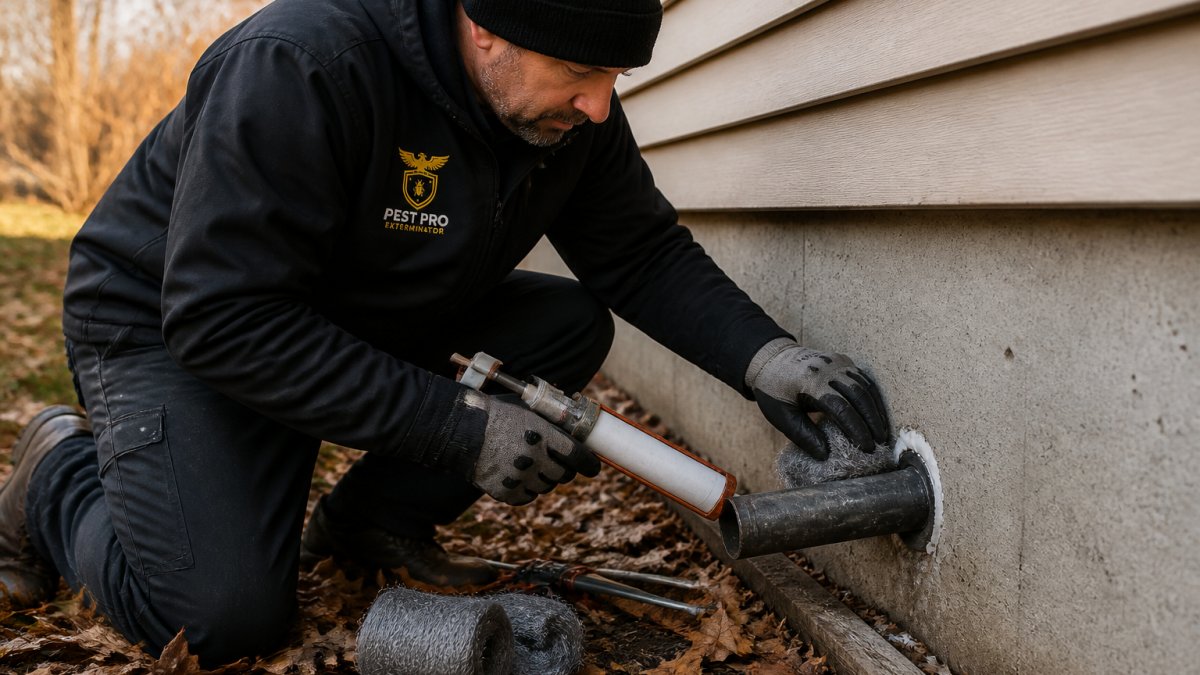
Stainless steel fill fabric such as Xcluder’s rodent control product line is the standard for irregular gaps because it compresses into voids and cannot be chewed apart the way plain steel wool can. For larger openings, galvanized mesh cut to shape and screwed into place is the durable choice.
The rule that matters: never rely on expanding foam or caulk alone. Rodents chew straight through both. Sealant locks mesh and fill fabric in position; it is not the barrier itself.
Pack fill fabric slightly wider than the gap so it compresses on insertion. A loose plug gives a mouse a grip point to pull it free. Cut, compress, then seal the edges with exterior-grade caulk.
A Structural Vulnerability Audit: Sealing Entry Points Before the Freeze
A structural vulnerability audit is a systematic walk of your building’s exterior, checking every point where the envelope is interrupted.
Work the perimeter in one direction and record findings as you go. The most commonly missed entry points are:
- Foundation cracks: Even hairline cracks at the sill plate widen with freeze-thaw cycling. Probe them with a screwdriver; if the tip enters, a mouse can follow.
- Utility penetrations: Gas, electrical, and water lines entering through the foundation leave an annular gap, among the most frequent entry points we find.
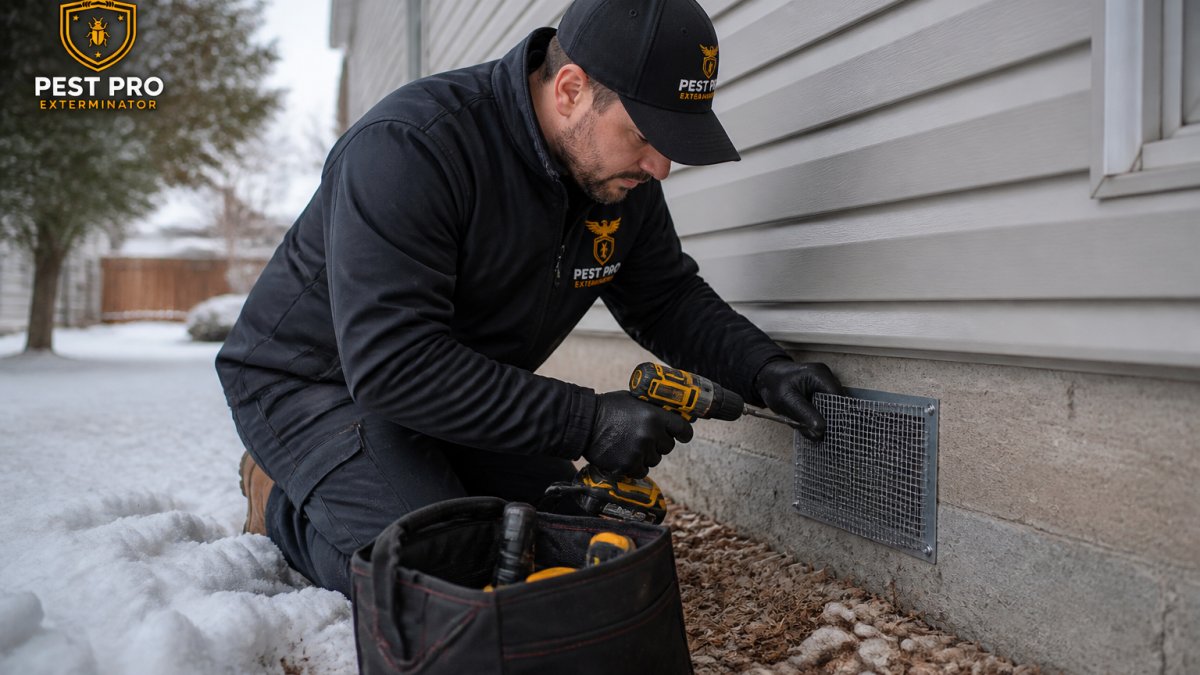
- Ventilation screens: Dryer, attic, and crawl space vents covered in plastic or fine insect mesh get chewed open. Replace with galvanized hardware cloth.
- Garage and sill gaps: The gap between a garage door frame and the wall, and the sill-to-foundation joint, are common and easy to overlook.
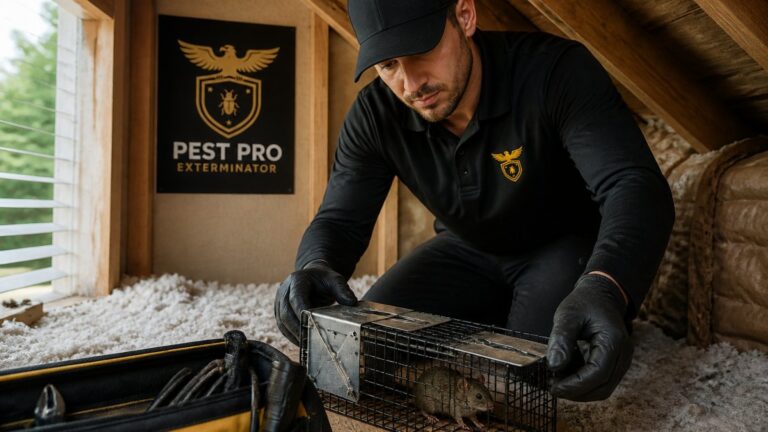
Check the roof line too. Mice and squirrels access attics through gaps at the fascia, around chimney flashing, and at soffit intersections. Once inside, attic insulation becomes nesting material and the void a heated corridor into the living space.
Sealing an entry point while rodents are still inside traps them in the wall cavities, where they die and create odor and insect problems. Confirm the building is clear before you close the last gap.
Commercial Rodent Prevention Strategies for Fall and Winter
Commercial rodent prevention strategies differ from residential work in one critical respect: the consequences of failure are regulatory and reputational, not just uncomfortable. A rodent sighting in a restaurant or high-rise affects health and safety compliance, tenant relations, and public trust, changing what a prevention program must document, not just what it must do.
The Exterior Perimeter Is Where Commercial Programs Succeed or Fail
In a commercial building, the exterior perimeter is longer, more complex, and shared across tenants. The highest-risk zones are consistent across property types:
- Dumpster pads and waste storage. Food waste within 1 metre of a wall is an open invitation. Keep pads intact, lids closed, and the area swept nightly.
- Loading dock seals. Dock levelers and door seals wear out faster than any other building component. A gap at the dock door is a direct route into a warehouse or kitchen.
- Utility rooms and mechanical spaces. These rooms often have gas, electrical, and water line penetrations never sealed after construction. They are warm, quiet, and rarely inspected.
- Building addition joints. Where a building’s original structure meets a later addition, the joint is often sealed with materials that have since failed, one of the most commonly missed entry points in multi-tenant properties.
Coordination Across Units and Tenants
For property managers running multi-unit buildings, the work must be coordinated. Sealing one unit’s entry point while the neighbouring unit stays open simply moves the problem sideways. A shared wall, utility chase, or roof void means a rodent problem in one unit is a rodent problem in the building.
The practical implication: commercial prevention programs need a building-wide inspection, not a unit-by-unit response, recording every penetration, failed seal, and gap at the exterior envelope, with a remediation schedule.
Documentation and Monitoring
Commercial programs also need a monitoring component residential work often skips. Locked bait stations, tamper-resistant traps, and scheduled inspection records create a paper trail demonstrating due diligence, part of health and safety compliance for food-handling businesses, and evidence of maintenance for property managers.
Monitoring frequency should match risk. A restaurant with daily waste generation needs more frequent checks than an office building with no food storage.
Residential and Commercial: The Same Perimeter, Different Stakes
The exterior perimeter is the same physical boundary in both cases. What changes is the scale, the number of stakeholders, and the documentation required. A homeowner can seal a foundation crack and move on; a commercial property manager must record the repair, schedule the next inspection, and demonstrate the envelope is maintained.
Get A Free Pest Control Quote Today →
Commercial properties and multi-unit residential buildings that need documented exterior perimeter inspection and ongoing monitoring rather than one-off treatments.
For buildings that need discreet service, the work is scheduled around operating hours so it does not disrupt tenants, guests, or diners. The goal is a sealed perimeter and a documented program, not a visible presence.
Pet and Child Safety: Choosing Methods That Protect Everyone
Pet and child safety should drive your choice of method before you buy anything. The two categories that carry real risk are rodenticides and glue boards, and both are avoidable in most household situations.
Traps are the safer route when placed correctly:
- Use snap traps inside tamper-resistant stations, or live traps, and check them daily.
- Place traps inside cabinets, behind appliances, and in wall voids, never in open floor areas.
- Keep bait stations locked and out of reach if you use them at all.
- Store all trapping equipment away from food preparation surfaces.
For households with young children or pets, exterior exclusion work is the safest intervention available because it removes the problem without introducing a toxin or an adhesive into the living space.
Your Seasonal Timeline: When to Act and What to Do Each Month
The seasonal timeline decides whether your exclusion work is finished in time. Prevention and extermination are two different jobs with two different timelines: prevention is a fall project, extermination is a winter response. Conflating them is why so many homeowners end up sealing a building that still has rodents inside.
Pre-Winter Prevention Window: September Through November
This is the window when exterior work is still possible. The ground is soft, sealants cure properly, and you can trench along a foundation or inspect a crawl space without fighting frozen soil.
| Month | Priority | Action |
|---|---|---|
| September | Perimeter audit | Walk the exterior, record cracks, gaps, and vent condition. Probe foundation cracks with a screwdriver; if the tip enters, a mouse can follow. |
| Early October | Exclusion | Seal foundation cracks, utility penetrations, and vents with stainless steel fill fabric and galvanized mesh. |
| Late October | Door and window sealing | Install rodent-proof door sweeps and weather stripping. Check garage door frame-to-wall gaps and sill-to-foundation joints. |
| November | Sanitation and storage | Move food into sealed containers, clear clutter, manage waste. Remove exterior debris piles within 1 metre of the foundation. |
Two items deserve emphasis. Sanitary storage and clutter elimination are not housekeeping preferences; they remove the food and nesting materials that make an interior attractive once a rodent is inside.
Active Infestation Response: December Through March
Once the ground freezes and snow covers the exterior perimeter, foundation-level exclusion work becomes impractical. This is the response window, not the prevention window. The goal shifts from sealing the building to removing the animals already inside and preventing spread.
- Confirm the species. Mice, voles, and squirrels leave different evidence and require different trap placement. A professional inspection identifies the species before treatment begins.
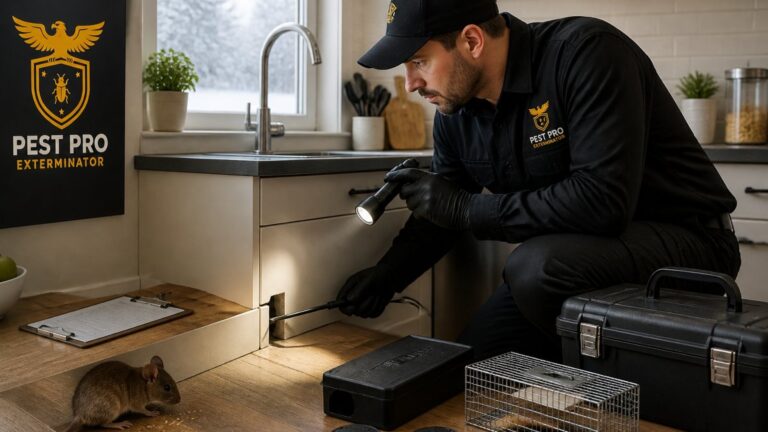
- Locate interior routes. Check wall voids, ceiling cavities, and behind appliances. Rodents use the same paths night after night, so evidence clusters along baseboards and pipe runs.
- Trap before you seal. Sealing an entry point while rodents are still inside traps them in wall cavities, where they die and create odor and insect problems. Confirm the building is clear before closing the last gap.
- Monitor for new activity. Fresh droppings, chew marks, and grease trails indicate ongoing access. If activity continues after trapping, a second entry point remains open.
If you miss the October window, the work does not become impossible, but it becomes harder and more expensive. Book a professional inspection rather than attempting foundation-level exclusion in frozen ground.
Do not seal exterior gaps in December or January if you have not confirmed the building is clear. Winter sealing without an interior inspection is the most common cause of odor complaints in February.
What Changes Month to Month
The single biggest variable is ground condition. September and early October allow trenching, probing, and sealant application at foundation level.
The second variable is rodent pressure. As overnight temperatures drop toward freezing, mice that spent October foraging outdoors move to interior routes. Activity that was sporadic in September becomes concentrated in November and December, which is why monitoring matters more in the response window.
Conclusion: Staying Ahead of Winter Rodent Proofing
The challenge with winter rodent proofing is timing. Every week you delay narrows the window for exterior work, and the animals are not delaying at all.
Pest Pro Exterminator brings 18+ combined years of industry experience to residential and commercial properties across Calgary and Southern Alberta, with a process built on inspection, identification, customized treatment, and ongoing prevention.
Book a free quote or consultation with Pest Pro Exterminator and get your exterior perimeter sealed before the season turns.
Frequently Asked Questions
Why do rodents seek shelter in buildings during winter?
Rodents look for warmth, food, and nesting materials once outdoor temperatures drop. In Alberta, mice and rats move toward foundations, garages, and attics as fields and yards lose cover. Gaps as small as a dime let mice through, so exterior perimeter control before the first hard freeze is the most effective way to keep them out. Sealing entry points and removing food scraps reduces the welcome mat.
What are the most common entry points for mice in residential structures?
Foundation cracks, utility penetrations, dryer vents, attic vents, and gaps under exterior doors are the usual suspects. Garage corners and crawl space hatches also see frequent traffic. A perimeter inspection with a flashlight at dusk helps you spot droppings, chew marks, and grease trails. Sealing these with steel wool, hardware cloth, and door sweeps closes the easiest routes before winter.
What materials are best for sealing rodent entry points?
Steel wool and stainless steel fill fabric block small cracks because rodents cannot chew through metal. Galvanized hardware cloth covers larger vents and foundation gaps while allowing airflow. Caulking seals gaps around pipes, and heavy-duty door sweeps with a metal mesh core close the space under exterior doors. Weather stripping around windows and utility openings adds another layer of protection.
Are there specific winter preparation steps for commercial properties?
Commercial rodent prevention strategies include sealing loading dock gaps, inspecting utility penetrations, and keeping waste areas clean and covered. Restaurants and warehouses should schedule perimeter inspections before the cold sets in, since rodents follow food and warmth. Ongoing monitoring, sanitation, and clutter elimination in storage rooms prevent small problems from becoming health and safety issues during winter.
How does exterior perimeter control prevent winter infestations?
Exterior perimeter control stops rodents before they get inside. Trimming vegetation back from the foundation, sealing cracks, and installing door sweeps and ventilation screens removes the routes mice use to enter. Because rodents follow established paths, blocking those paths early in fall is more effective than trapping indoors later. Pair it with sanitary storage and clutter elimination for the best results.
What type of insulation do rodents hate?
Rodents avoid insulation that is dense, inorganic, or treated to resist nesting. Fiberglass batts are less appealing than soft cellulose, and some mineral wool products are naturally resistant because the fibers irritate rodents. However, no insulation stops an infestation on its own. Sealing entry points and removing nesting materials matter more than the insulation type in an attic or crawl space.